
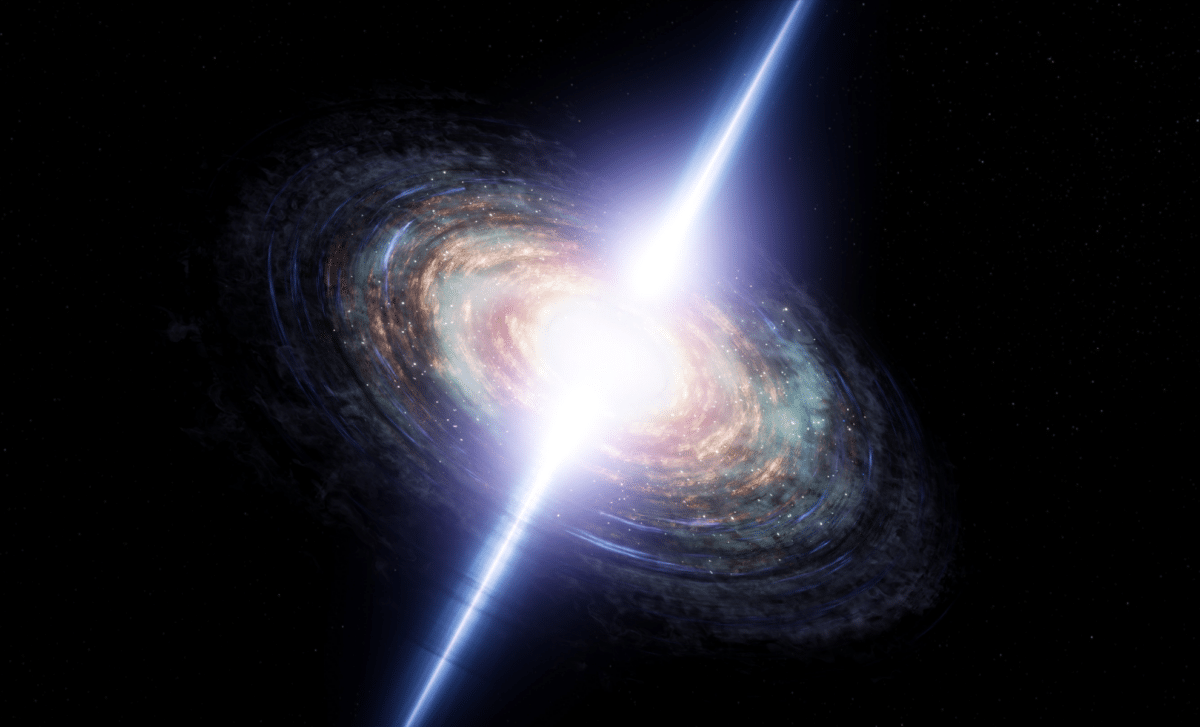
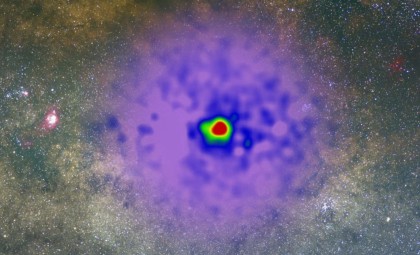
Far beyond our solar system, researchers have detected a source emitting gamma rays with energies exceeding 100 TeV, far surpassing typical observations. Revealed in 2021 by the Large High Altitude Air Shower Observatory (LHAASO), LHAASO J2108+5157 stands out as a mysterious object in the ultra-high energy gamma-ray universe. Despite being among the most intense sources discovered, it lacks a recognizable counterpart across traditional electromagnetic wavelengths including radio, optical, or infrared bands.
Unraveling the Enigma of LHAASO J2108+5157
LHAASO J2108+5157 first emerged in data collected by the LHAASO team during their comprehensive ultra-high energy gamma-ray survey in 2021. This source is distinctive not only due to its emission beyond 100 TeV but also because no related emissions have been detected at radio, optical, or infrared frequencies.
Typically, astrophysical sources emitting such energetic gamma rays are linked to phenomena like supernova remnants, pulsar wind nebulae, or active galactic nuclei. However, this source defies established classifications, as no corresponding objects have been located nearby. Additionally, its precise distance remains unknown, complicating efforts to determine its nature and origin.

The authors of the study note,
“The absence of a clear counterpart at radio, optical, or infrared wavelengths, together with the incomplete viability of standard galactic scenarios and the unknown distance, makes LHAASO J2108+5157 a persistent mystery.”
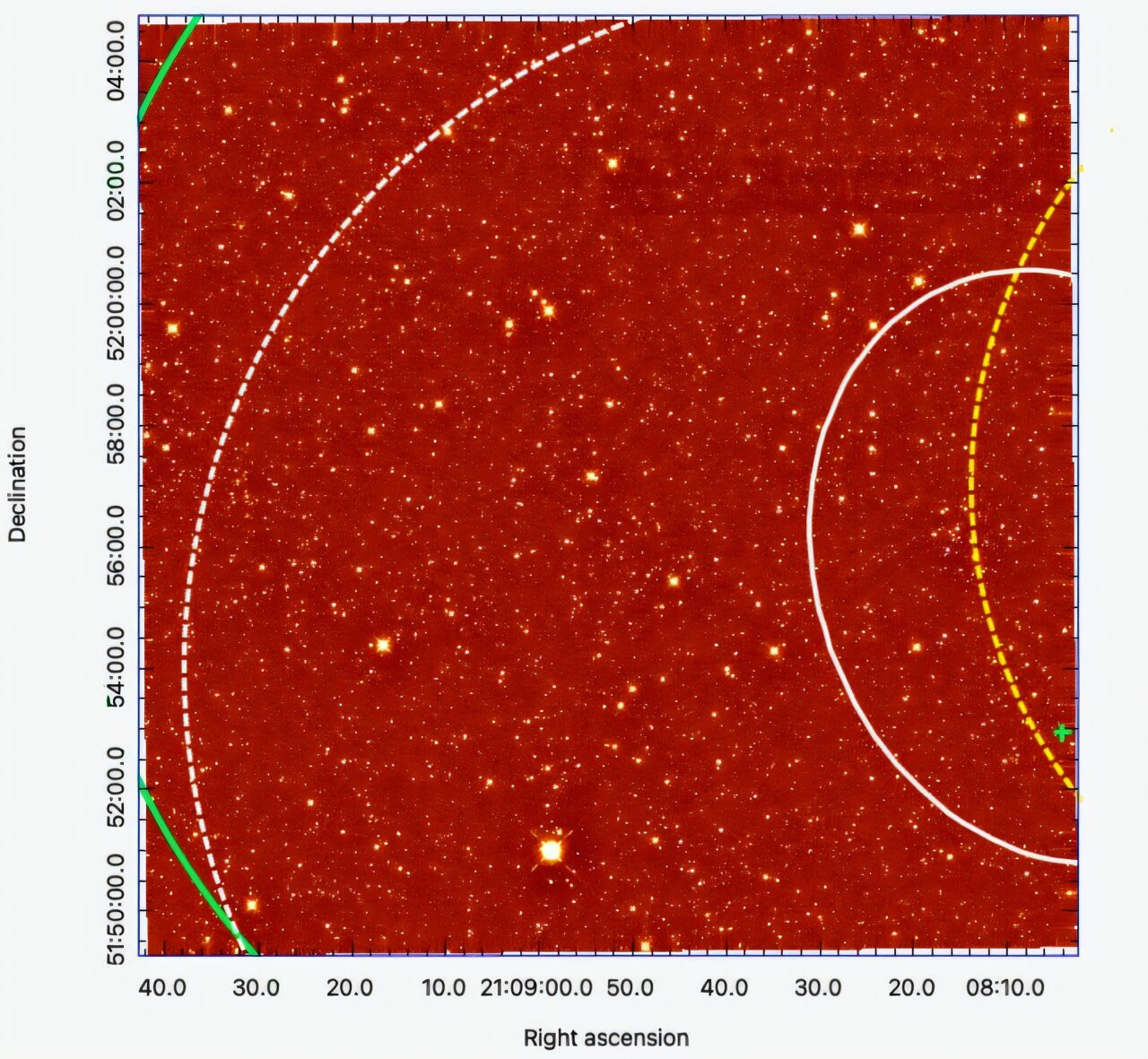
Since there is no obvious counterpart at accessible wavelengths, traditional techniques for identifying the source’s origin fall short, leaving astronomers puzzled about what this gamma-ray emitter really is. This uncertainty places LHAASO J2108+5157 among the most confounding objects in the realm of high-energy astronomy.
Examining the Near-Infrared Clues: Spanish Astronomers’ Investigation
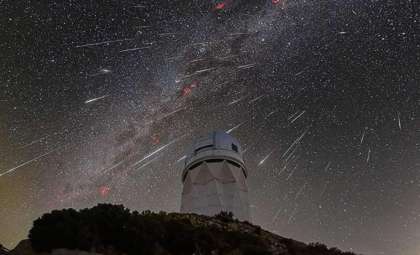
To dig deeper into the mystery, a team from Spain headed by Josep Martí at the University of Jaén employed near-infrared observations, which can unveil obscured cosmic features invisible in visible light. Utilizing both archival data and new observations from the Calar Alto Observatory (CAHA), their aim was to find any structures that might shed light on the gamma-ray source’s origin—particularly looking for high-energy related formations like supernova remnants or jet-driving objects.
Their thorough study, published on ArXiv, yielded no definitive results. They sought signs of typical high-energy indicators like shocked gases or supernova shells but found none. A notable detection was a radio source exhibiting extended bipolar jets, previously considered a microquasar candidate. Given that microquasars, which involve stellar-mass black holes, can emit powerful gamma radiation, this candidate was of interest. However, subsequent analysis indicated this radio object did not exhibit features consistent with galactic microquasars.
Radio Source Reconsidered: Microquasar or Background Galaxy?
The radio jet source initially suggested a microquasar, a system where a black hole accretes material and produces high-energy jets, often linked to gamma-ray emission. However, investigation into its near-infrared profile revealed a faint accretion core and odd structural traits, implying it is more likely a distant radio galaxy unrelated to LHAASO J2108+5157.
This finding ruled out one potential explanation for the gamma-ray emission, refining the search but not resolving the mystery. Since this background galaxy cannot account for the ultra-high energy gamma rays, the origin remains elusive. As the researchers point out, “Our analysis reveals no convincing counterpart within the positional uncertainty, leaving LHAASO J2108+5157 as an enigmatic ultra-high energy emitter that requires deeper observations.” This underscores the need for continued investigation.
Ongoing Mysteries and the Path Ahead
The fact that researchers have yet to identify a firm counterpart does not signify an end, but rather a new phase in exploration. These findings highlight the challenges of uncovering the nature of intensely energetic cosmic phenomena. LHAASO J2108+5157’s emissions suggest it may represent an entirely new type of astrophysical source or a rare evolutionary stage far beyond current understanding.
The team concludes that "more sensitive and comprehensive observations are critical to solve the enigma," signaling the importance of advancing observational capabilities. As next-generation telescopes come online, the astronomical community eagerly anticipates revisiting this source to unlock its secrets. This ongoing puzzle illustrates how each discovery in the cosmos often leads to deeper questions yet to be answered.
- Categories:
- Physics






0 comments
Sign in to Comment