
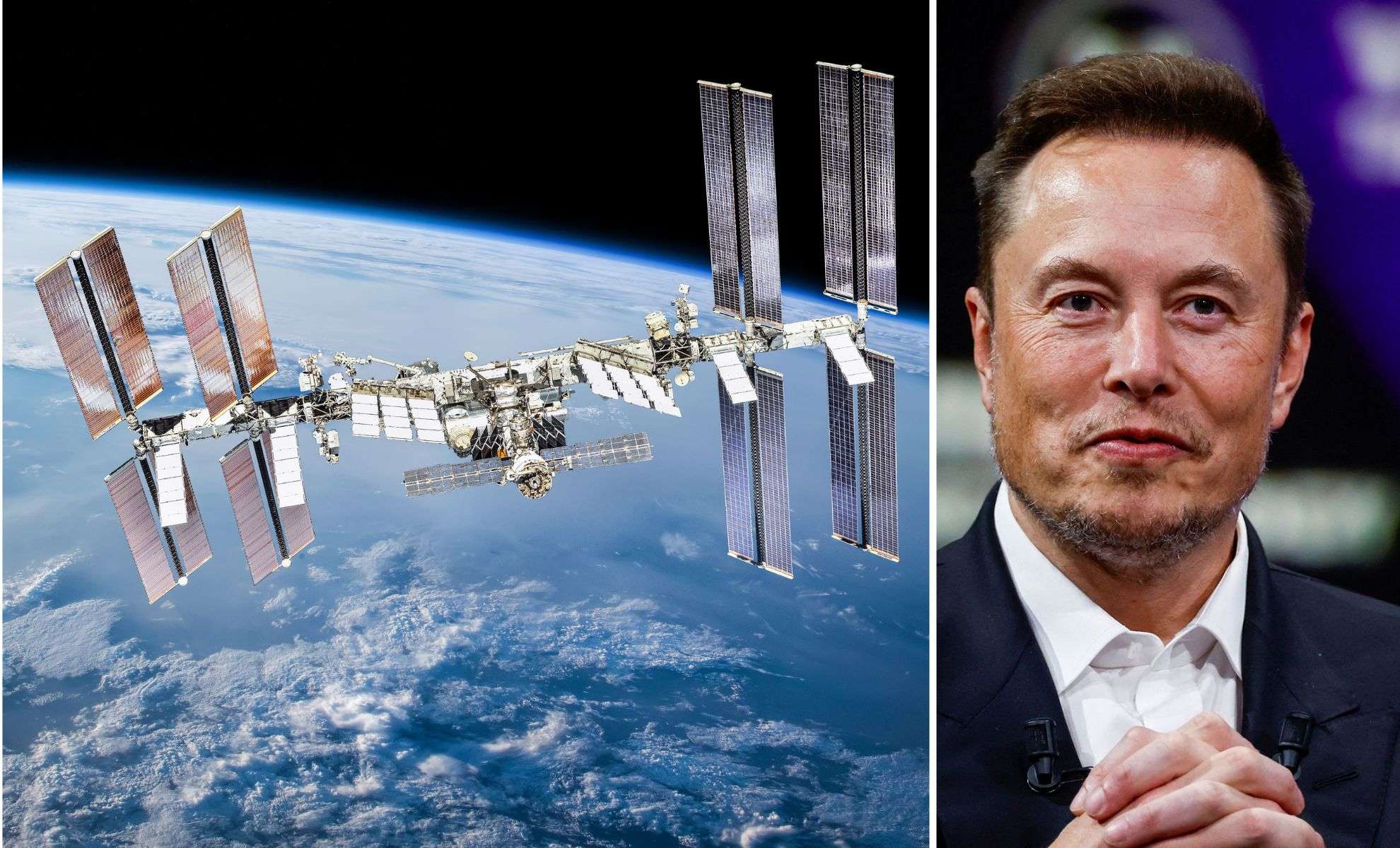
Elon Musk has recently expressed his opinion that the International Space Station (ISS) has reached the end of its useful life and that space exploration priorities should pivot toward Mars missions. In a post on X (formerly Twitter), the SpaceX CEO stated the ISS now offers “very little incremental utility” and suggested initiating plans to deorbit the station much sooner than planned—proposing to do so within two years, which contrasts with NASA’s current schedule targeting 2030.
Musk’s statements have ignited considerable discussion in the space community. While NASA and its international collaborators continue to leverage the ISS for scientific experiments and crew training, Musk maintains that the station is becoming outdated and that investment should be redirected to advancing human settlement on Mars.
Could the ISS Be Deorbited Sooner?
As reported by Space.com, NASA and its partners worldwide—including the Canadian Space Agency, European Space Agency, Japan Aerospace Exploration Agency, and Russia’s Roscosmos—have agreed on a plan to operate the ISS through 2030. A deorbiting vehicle, which SpaceX is developing, is expected to guide the station’s controlled descent, ensuring it reenters the atmosphere safely and burns up over the Pacific Ocean, avoiding inhabited regions.

Nevertheless, Musk contends that extending operations to 2030 is unnecessarily long and advocates for a more rapid shutdown. “The decision is up to the President, but my recommendation is as soon as possible. I recommend two years from now,” Musk stated on X.
This perspective coincides with Russia’s position, as Roscosmos has signaled intentions to withdraw from the ISS program earlier, currently committing through 2028 only. In contrast, NASA remains committed to the 2030 timeline, emphasizing the ISS’s vital role in research, training, and technology development.
Musk’s Agenda: Skip the Moon, Head Straight for Mars
Musk’s advocacy to retire the ISS early is part of his larger vision to prioritize human expansion on Mars, minimizing lunar exploration efforts. In a December X post, he criticized NASA’s Artemis program, labeling the Moon a “distraction” and insisting humanity should focus directly on Mars.
NASA, on the other hand, holds firm on the importance of lunar missions. Their current agenda involves leveraging the ISS and upcoming commercial stations for scientific breakthroughs, lifesupport systems testing, and long-term mission preparation. Officials emphasize that the Artemis program is a critical step toward sustainable lunar habitation, a prerequisite to far-reaching Mars travel.
Responding to Musk’s remarks, NASA reiterated their commitment to the ISS:
“NASA’s current mission plans call for using the International Space Station, and future commercial space stations, in low Earth orbit to conduct groundbreaking science, as well as a training ground for crewed missions to the Moon and Mars. We’re looking forward to hearing more about the Trump Administration’s plans for our agency and expanding exploration for the benefit of all.”
The Future Path for the ISS
Despite Musk’s push for an accelerated ISS deorbit plan, NASA and international partners seem set on maintaining the station’s operation until 2030’s end. At the same time, private spaceflight companies like SpaceX, Blue Origin, and Axiom Space are progressing on commercial orbital stations that could eventually succeed the ISS as hubs for research.
The ongoing debate about the ISS’s lifespan underlines a pivotal period for spaceflight. Whether NASA adheres to its timeline or Musk’s proposal gains traction, humanity stands on the cusp of a transformative era aimed at advancing human presence beyond Earth, potentially landing humans on Mars sooner than anticipated.
- Categories:
- News












0 comments
Sign in to Comment