
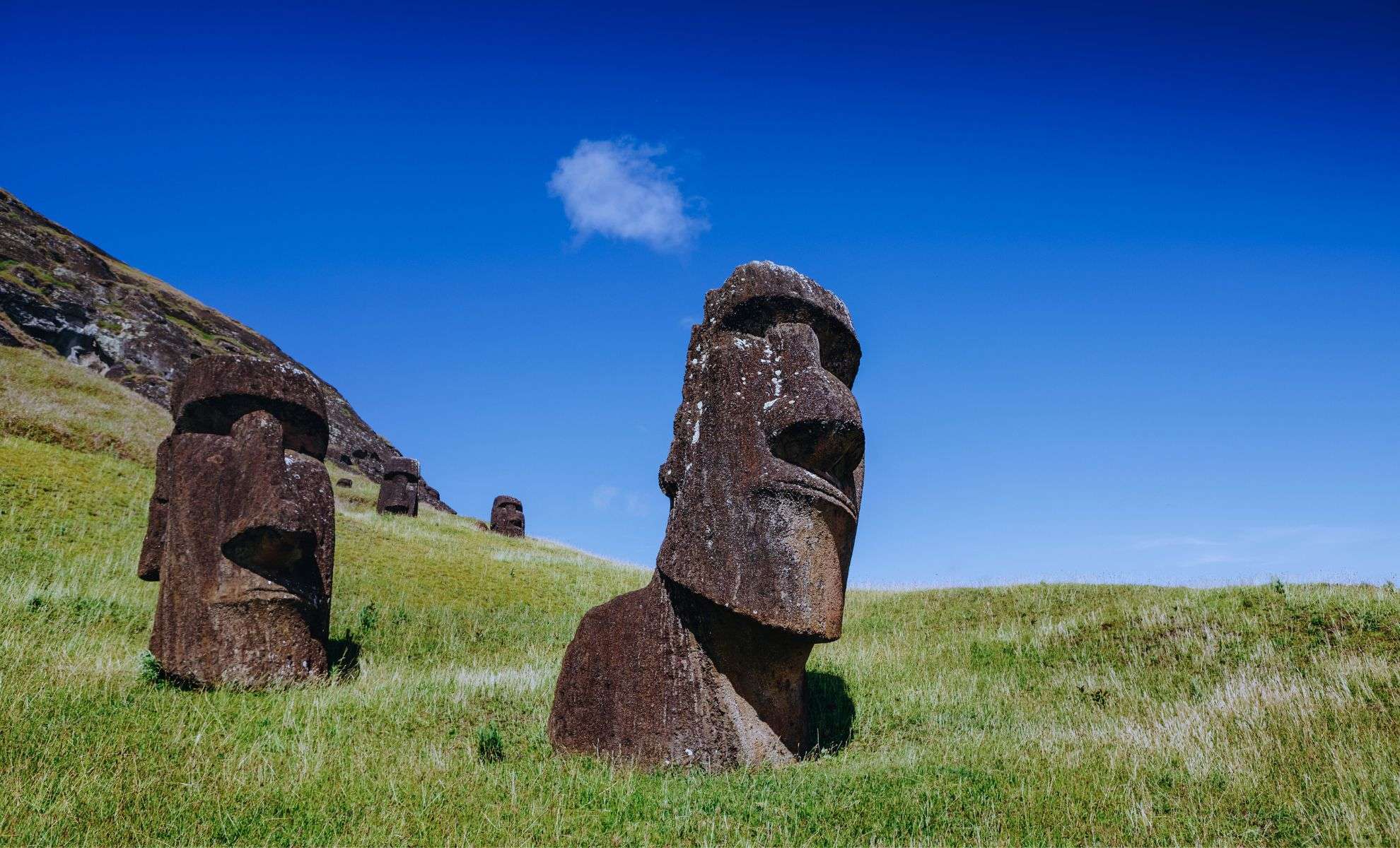
For decades, scholars have wondered how the ancient inhabitants of Easter Island managed to relocate their enormous moai statues, each weighing several tons. A recent study published in the Journal of Archaeological Science, led by Carl Lipo from Binghamton University, reveals a fascinating solution: the statues were transported by making them “walk.” By combining principles of physics, 3D modeling, and practical field tests, the researchers showed how the Rapa Nui people utilized ropes and a rocking technique to move these massive figures across the island.
The Mechanics Behind Moving Easter Island’s Moai
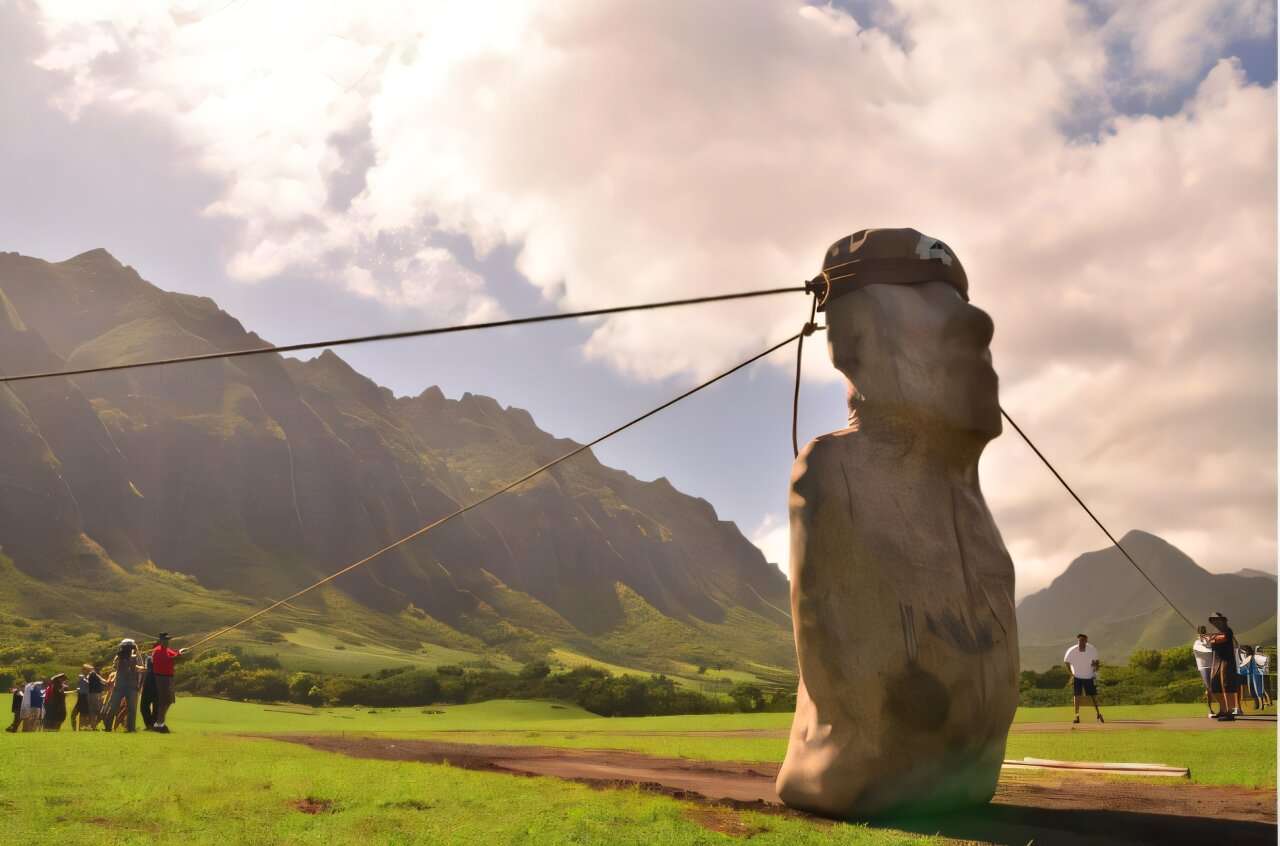
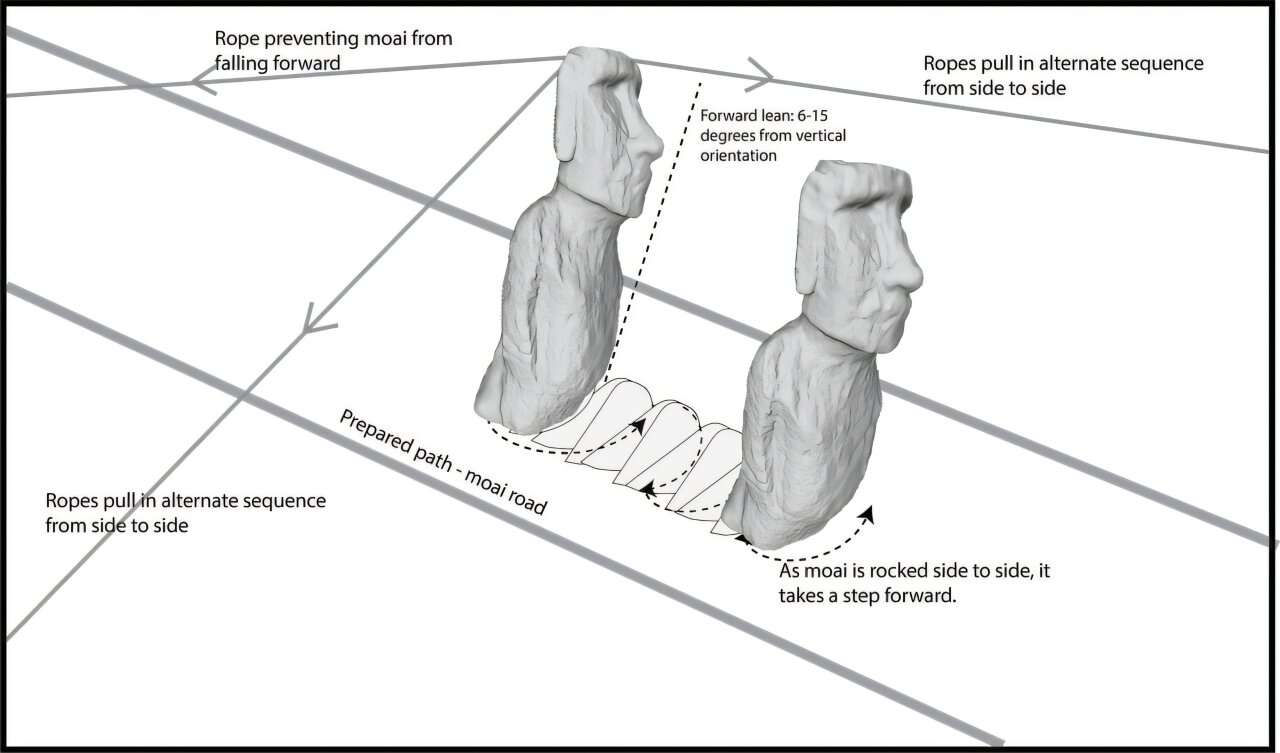
The statues were shifted with a zigzagging, upright rocking motion that made the task manageable. “Once the statue starts moving, the effort required is minimal—people pull with just one arm,” Lipo explained. The trickiest part was initiating the rocking, but after that, moving the moai was surprisingly efficient.
The team analyzed the statues’ design, pinpointing features that facilitated this movement, like their broad, D-shaped bases and a distinctive forward tilt. To test their theory, they constructed a 4.35-ton replica with these traits and, with only 18 participants, successfully transported it 100 meters in 40 minutes, proving the method is viable even for large-scale statues.

The Role of Roads in Moving the Moai
The investigation also uncovered that the roads on Easter Island were purpose-built to facilitate statue transport. These 4.5-meter-wide, concave-shaped pathways provided essential stability, helping the statues remain upright as they were rocked forward. Lipo noted, “It appears that every time they moved a statue, they created a path.”
Rather than following random routes, these roads were part of a carefully organized system. The Rapa Nui likely cleared a section, moved a statue along it, then prepared the next segment before continuing. “They were probably clearing a path, moving the moai, then clearing the next stretch again, progressing in stages. So there was a lot of effort dedicated to maintaining these roads,” Lipo explained. This approach helped ensure the statues remained balanced and eased their transport significantly.
Confirming the “Walking” Theory
The new evidence strongly validates the idea that the moai were moved using a deliberate rocking motion. Previous theories, such as dragging or rolling the statues, have been mostly debunked. Lipo emphasized that the experimental results support the concept that the statues were effectively “walked” from their origin quarry to the ceremonial sites.
The research team integrated high-resolution 3D scans with practical experiments to test their hypothesis. They examined the statues’ distinctive construction and replicated the transport process with a large-scale moai model. Their findings demonstrate that this technique is effective, even for the biggest statues, representing the only plausible explanation for how the iconic moai were relocated across Easter Island.
- Categories:
- News





0 comments
Sign in to Comment