

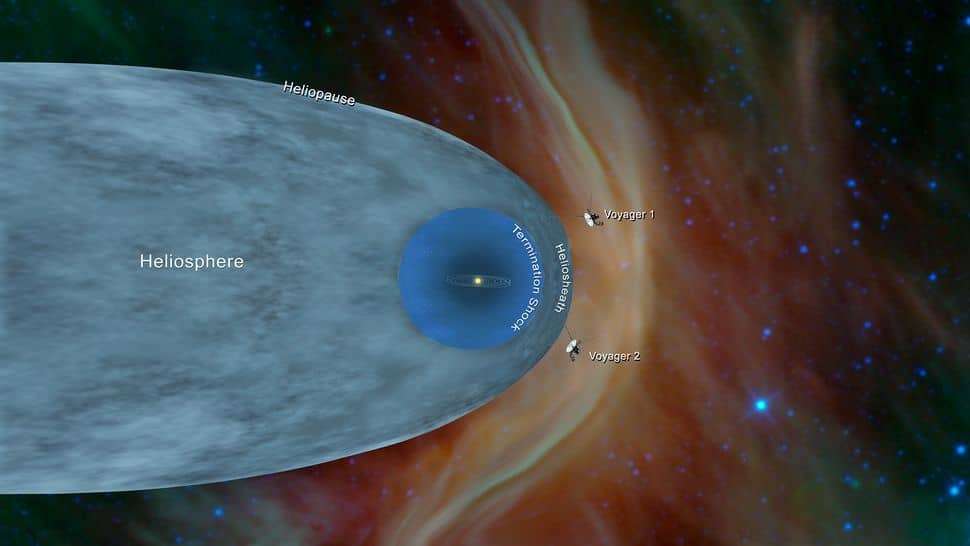
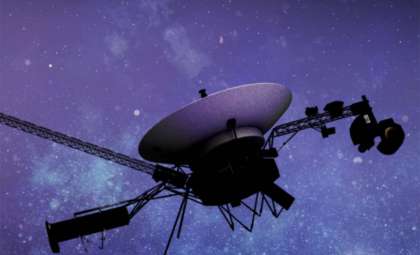
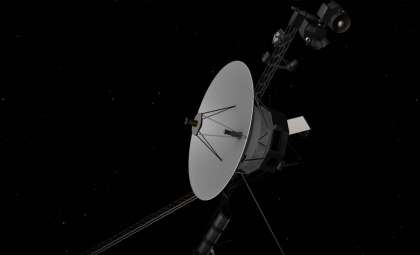
NASA has powered down one of the vital scientific instruments aboard Voyager 2 as decreasing power threatens the spacecraft’s longevity. Since its launch in 1977, Voyager 2 has journeyed over 12.8 billion miles (20.5 billion kilometers) from Earth, currently investigating the interstellar medium beyond the Sun’s outer boundary known as the heliosphere. Its energy comes from a gradually diminishing plutonium source, causing a continuous reduction in the electricity available to run its systems.
Turning Off the Plasma Instrument
The instrument recently switched off is the plasma science device, a key sensor that tracked the flow and composition of charged particles. This device was crucial for verifying when Voyager 2 crossed into interstellar space in 2018, offering data on the shift from solar wind to the unknown environment beyond. Over time, its usage has declined, with readings now collected only once every three months during the spacecraft’s full spin.
NASA’s engineering team, after careful evaluation, authorized the shutdown. “The team has confirmed that the switch-off command was executed without incident and the probe is operating normally,” stated NASA’s Jet Propulsion Laboratory. Shutting down the plasma instrument helps conserve limited power, with other key instruments remaining active. This action marks the seventh instrument to be deactivated out of the original ten, leaving just a few functioning as Voyager 2 continues its distant exploration.

Addressing Energy Constraints
Both Voyager 1 and Voyager 2 derive power from radioisotope thermoelectric generators (RTGs), which convert heat from the decay of plutonium-238 into electrical energy. At mission start, Voyager 2’s RTGs produced around 470 watts, but power output diminishes by roughly 4 watts each year as fuel decays. This steady decline necessitates stringent energy management to keep the spacecraft operational for as long as possible.
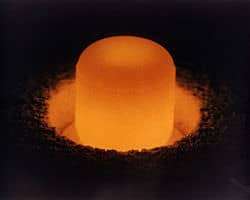
The recent shutdown aligns with NASA’s ongoing approach to prolong the mission. Engineers have progressively disabled non-essential systems, including select heaters and instruments that no longer contribute significantly to science objectives.
Maintaining Voyager 2's Scientific Mission
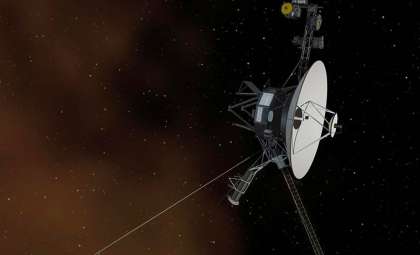
As Voyager 2 travels deeper into the interstellar medium, ensuring its communication and operational integrity becomes increasingly challenging. Signals take nearly 18 hours to traverse the vast distance between Earth and the probe, demanding precise and deliberate commands. According to NASA, the remaining active instruments include a magnetometer, which measures cosmic magnetic fields, and a cosmic ray detector, responsible for sensing high-energy particles originating beyond our solar system. These instruments continue to provide valuable insight into the environment beyond the Sun’s influence.
NASA aims to keep Voyager 2 functional into the 2030s, though by that time only a single scientific instrument might remain operational. The plasma instrument’s orientation and its limited recent contributions influenced the decision to retire it from service.
An Enduring Exploration Milestone
Despite the gradual loss of instruments, the Voyager program remains a landmark achievement for NASA. Since their 1977 launches, Voyager 1 and Voyager 2 have transformed knowledge of the outer planets and now probe the mysteries of interstellar space. Voyager 2 is uniquely notable for being the only spacecraft to visit both Uranus and Neptune, delivering invaluable imagery and scientific data of these ice giants. Its ongoing journey into interstellar space continues to offer unparalleled observations of an unexplored cosmic region.
Though the shutdown of the plasma science instrument signifies the close of a significant chapter, Voyager 2’s role as a window into the interstellar medium persists. Each additional year of operation highlights the remarkable dedication and skill of the scientists and engineers supporting this historic mission. The Voyager Interstellar Mission stands as a testament to humanity’s quest to explore beyond known boundaries, and even with reduced instrumentation, Voyager 2’s voyage into the cosmic unknown continues.
- Categories:
- Astronomy ,
- News ,
- Space ,
- Nasa






0 comments
Sign in to Comment