
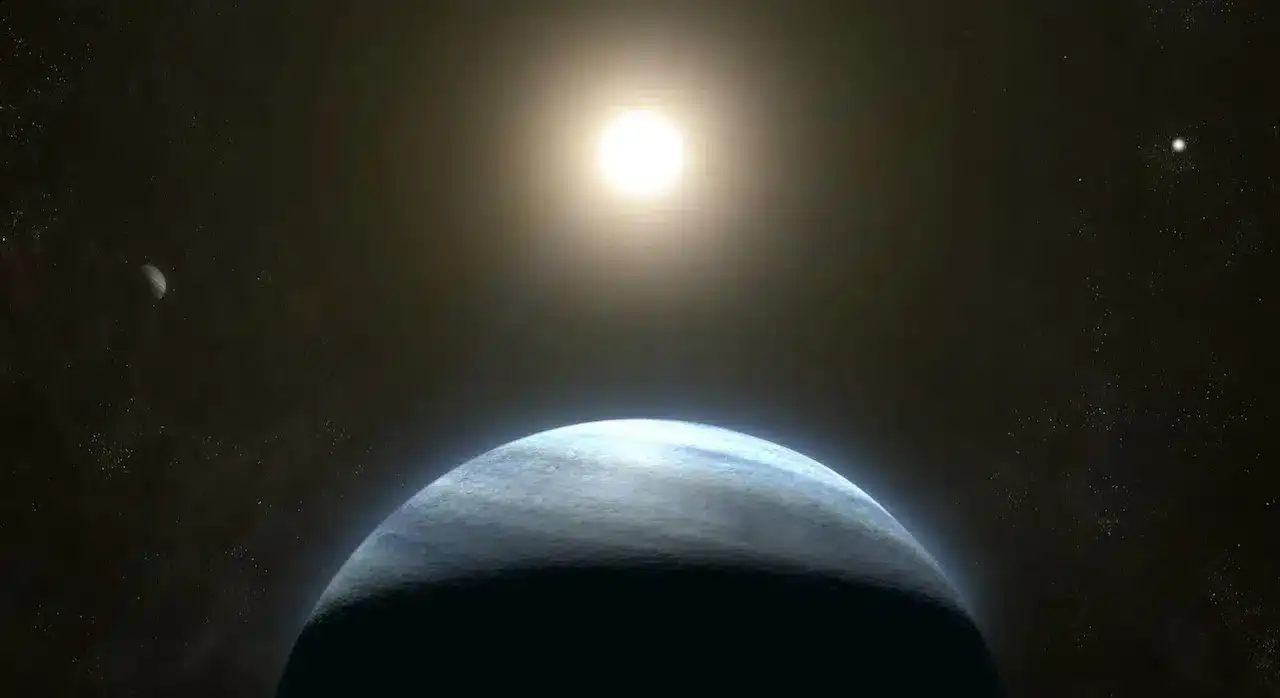
NASA’s Transiting Exoplanet Survey Satellite (TESS) has unveiled an extraordinary find: a mini-Neptune exoplanet located in a system of two stars.
Named TOI 4633 c, this planet is remarkable due to its intriguing traits and its position inside the habitable zone of its stellar environment. This discovery opens new possibilities for exploring the potential habitability of such planets and their moons, broadening the horizons of exoplanet science.
Details of the TESS Find
The exoplanet TOI 4633 c orbits one star in a binary system featuring two Sun-like stars bound by gravity. With an orbital period of 272 days, it resides comfortably within the region where liquid water might be stable on a planet’s surface—often referred to as the habitable zone.

Although the planet's thick, gaseous atmosphere likely rules out surface habitability, its placement within this zone presents fascinating opportunities to deepen our understanding of planetary formation in complex stellar environments.
Distinctive Orbital Properties
TOI 4633 c distinguishes itself with a notably extended orbital period compared to most planets detected via transit, which typically complete orbits in just days or weeks. Its 272-day journey around its star places it among a rare group of planets with extended orbits—fewer than 200 known to exceed 100 days, and only around 40 surpassing 250 days.
This extended orbit within a binary star setup offers a unique laboratory for examining how such systems impact planetary development and stability, challenging long-standing astronomical theories.
Exploring Habitability Prospects
While TOI 4633 c itself may be inhospitable due to its thick, Neptune-like atmosphere, the potential presence of a moon orbiting this planet ignites excitement about possible habitable environments beyond the planet’s surface.
Such exomoons might harbor conditions conducive to life, akin to the fictional world Pandora in the film "Avatar," expanding the scope of life-searching missions beyond planets themselves to their satellite companions.
Rethinking Planetary Formation Models
The existence of TOI 4633 c in a binary star system with stars orbiting each other every 230 years poses new questions for astrophysicists. The dynamic, eccentric orbits combined with a long-period transiting planet challenge conventional models of how such complex systems form and sustain stability over cosmic timescales.
These findings prompt revisions to current theories, offering fresh insights into gravitational interactions shaping planetary and stellar evolution.
How TOI 4633 c Was Discovered and Analyzed
TOI 4633 c was identified through TESS’s transit detection technique, which tracks subtle dimming when a planet crosses in front of its star. Subsequent radial velocity observations hinted at a second planet with a 34-day orbit that doesn’t transit from Earth’s viewpoint, pending further verification.
Combining transit data with radial velocity measurements enriches understanding of the entire planetary system's architecture and enhances refinement of theoretical models.
Broader Significance for Binary Star Systems
The discovery of TOI 4633 c adds valuable knowledge about exoplanets in binary star environments, which are widespread within our galaxy. The relatively close orbit of the stars and the planet’s long path make it a compelling subject for studying how binary dynamics influence planetary system formation and habitability zones.
Insights gathered here promise to inform examination of similar systems, shedding light on the conditions that may support life in diverse cosmic settings.
- Categories:
- Astronomy ,
- News ,
- Space ,
- Nasa







0 comments
Sign in to Comment