
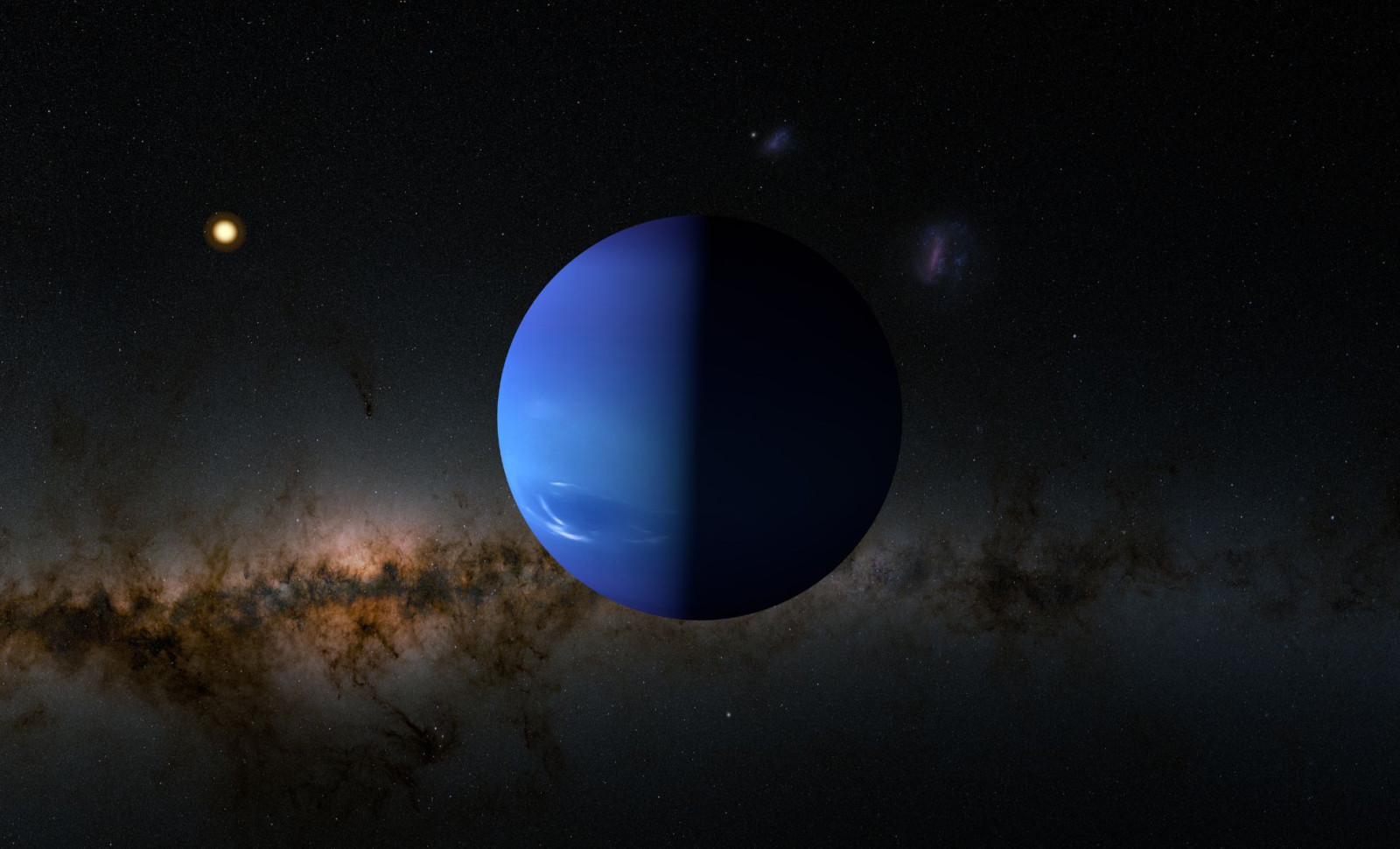
Recent simulations indicate that matter deep within Uranus and Neptune may exist in an extraordinary state. Under extreme pressures and temperatures, carbon hydride could assume a unique superionic phase.
The study of planetary interiors has intensified as discoveries of over 6,000 exoplanets continue to expand our cosmic perspective. Scientists merge observational data, laboratory experiments, and computational models to better understand planetary formation, evolution, and magnetic field generation.
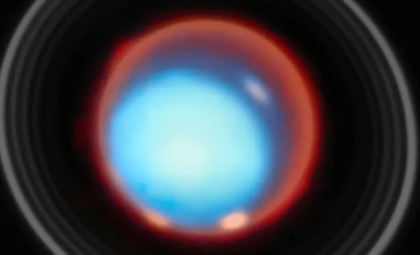
Within our Solar System, the gas giants Uranus and Neptune are thought to harbor layers known as “hot ices” beneath their gaseous exteriors. These layers consist of compounds such as water, methane, and ammonia, which, when subjected to extreme environments, exhibit surprising physical properties.

Modeling the Interiors of Ice Giants
Researchers Cong Liu and Ronald Cohen employed sophisticated quantum simulations alongside machine learning to explore these conditions. Their work, appearing in Nature Communications, tested pressures ranging from 500 to 3,000 gigapascals and temperatures between 4,000 and 6,000 kelvin.
The focus was on carbon hydride (CH), a simple chemical combination prevalent in planetary cores. Under such intense conditions, its behavior diverges drastically from Earth-based observations.
Discovery of a Helical Superionic Phase
The standout finding involved the emergence of a quasi-one-dimensional superionic state. Here, carbon atoms establish a rigid lattice, while hydrogen atoms traverse spiral, almost corkscrew pathways through this structure. Ronald Cohen commented:
“This newly predicted carbon-hydrogen phase is particularly striking because the atomic motion is not fully three-dimensional. Instead, hydrogen moves preferentially along well-defined helical pathways embedded within an ordered carbon structure.” That makes it different from other known superionic materials.
Superionic matter is already unique due to its hybrid solid-liquid nature, but this case displays remarkably directional hydrogen movement.
Implications for Planetary Magnetic Fields
The directional hydrogen flow could influence the transmission of heat and electricity inside ice giants, factors that are crucial to magnetic field generation.
The irregular magnetic fields of Uranus and Neptune might be explained by such materials exhibiting this distinctive internal behavior.
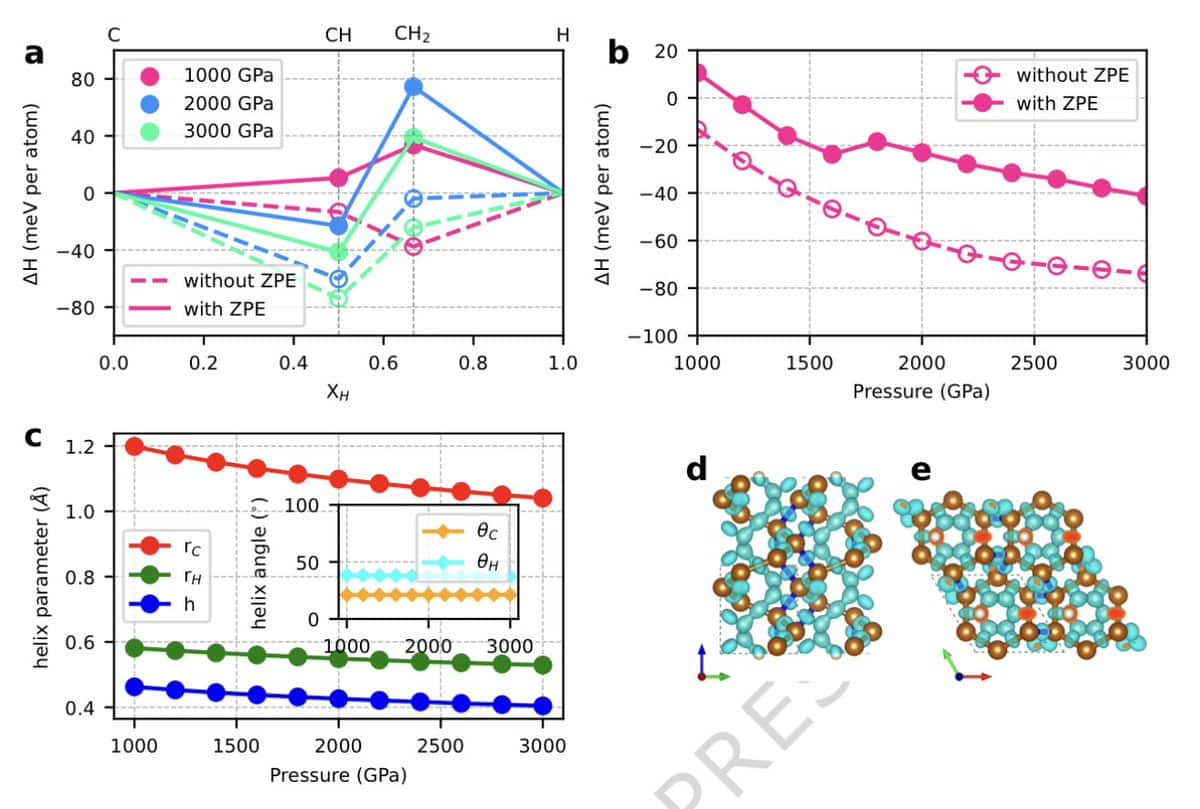
As Cong Liu noted, while carbon and hydrogen are common in such environments, their combined properties at giant-planet scales remain not thoroughly understood.
“Carbon and hydrogen are among the most abundant elements in planetary materials, yet their combined behavior at giant-planet conditions remains far from fully understood.”
This research highlights how elemental materials can exhibit unexpected phenomena when subjected to the intense environments deep inside planets.
- Categories:
- Astronomy








0 comments
Sign in to Comment