
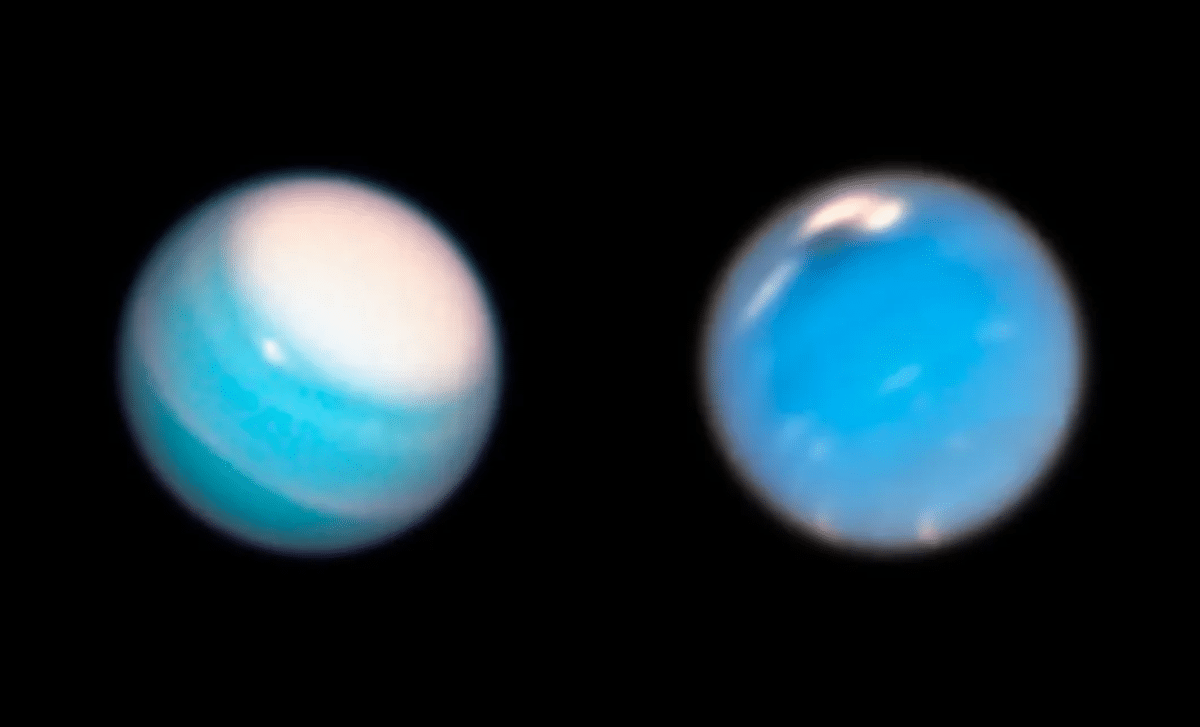
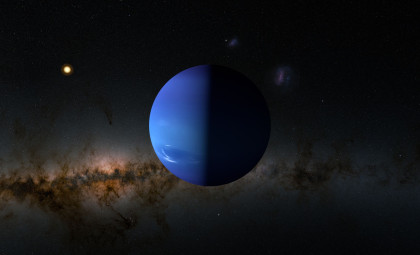
For many years, Uranus and Neptune have been regarded as the frozen, distant giants of our solar system, primarily composed of ices beneath dense, stormy atmospheres. Known as the “ice giants,” this designation has shaped the scientific view of these outer planets. However, recent research published in Astronomy & Astrophysics challenges this traditional view, proposing that these planets might actually have outer layers rich in rocky material rather than dominated by ice.
Rethinking the 'Ice Giant' Label
For decades, the dominant theory classified Uranus and Neptune separately from hydrogen-helium dominated giants like Jupiter and Saturn. It was believed these two outer giants contained substantial amounts of water, ammonia, and methane ices underneath their atmospheres. Their characteristic blue color, primarily due to atmospheric methane, reinforced their identity as frozen, icy planets at the solar system's edge.
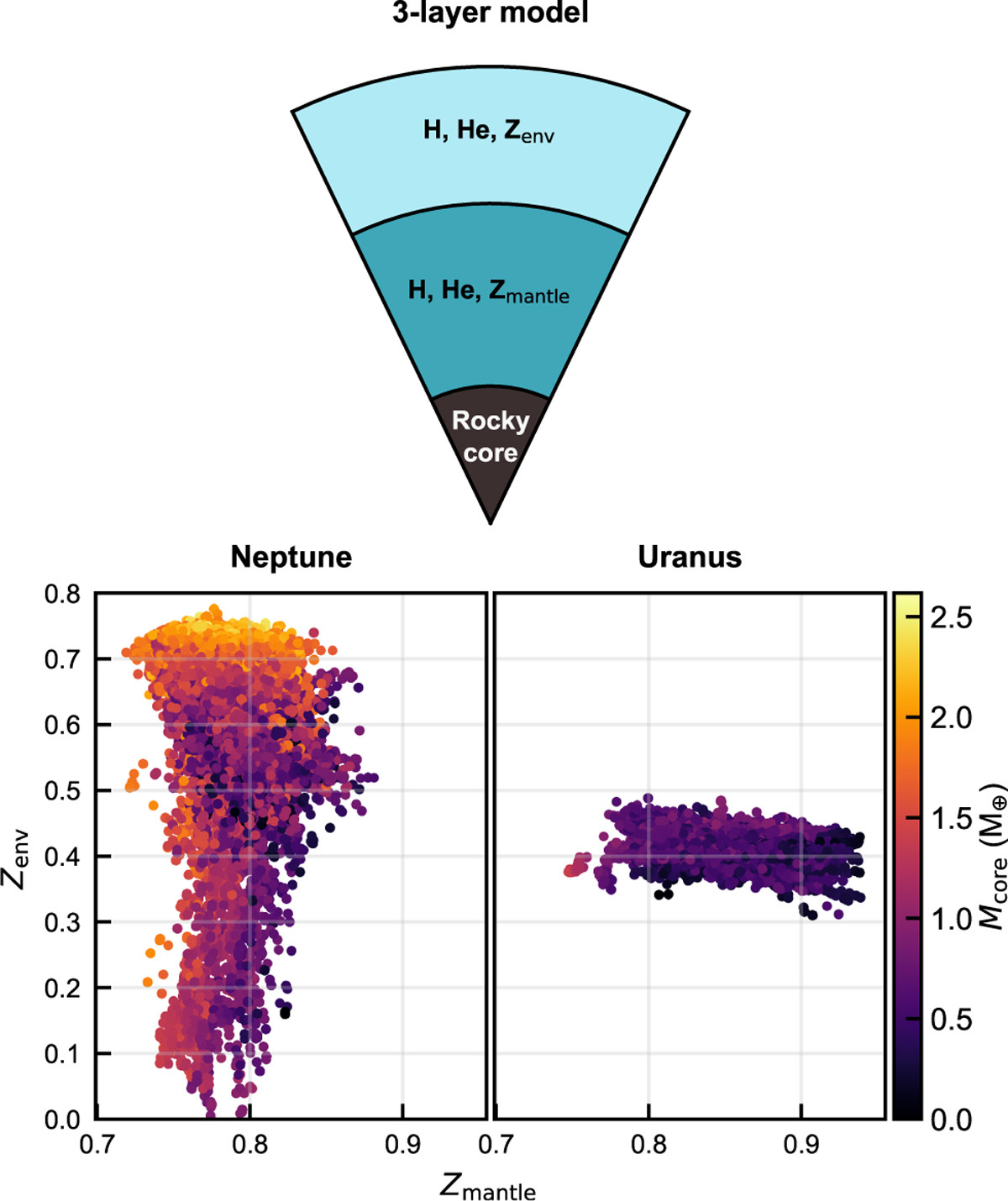
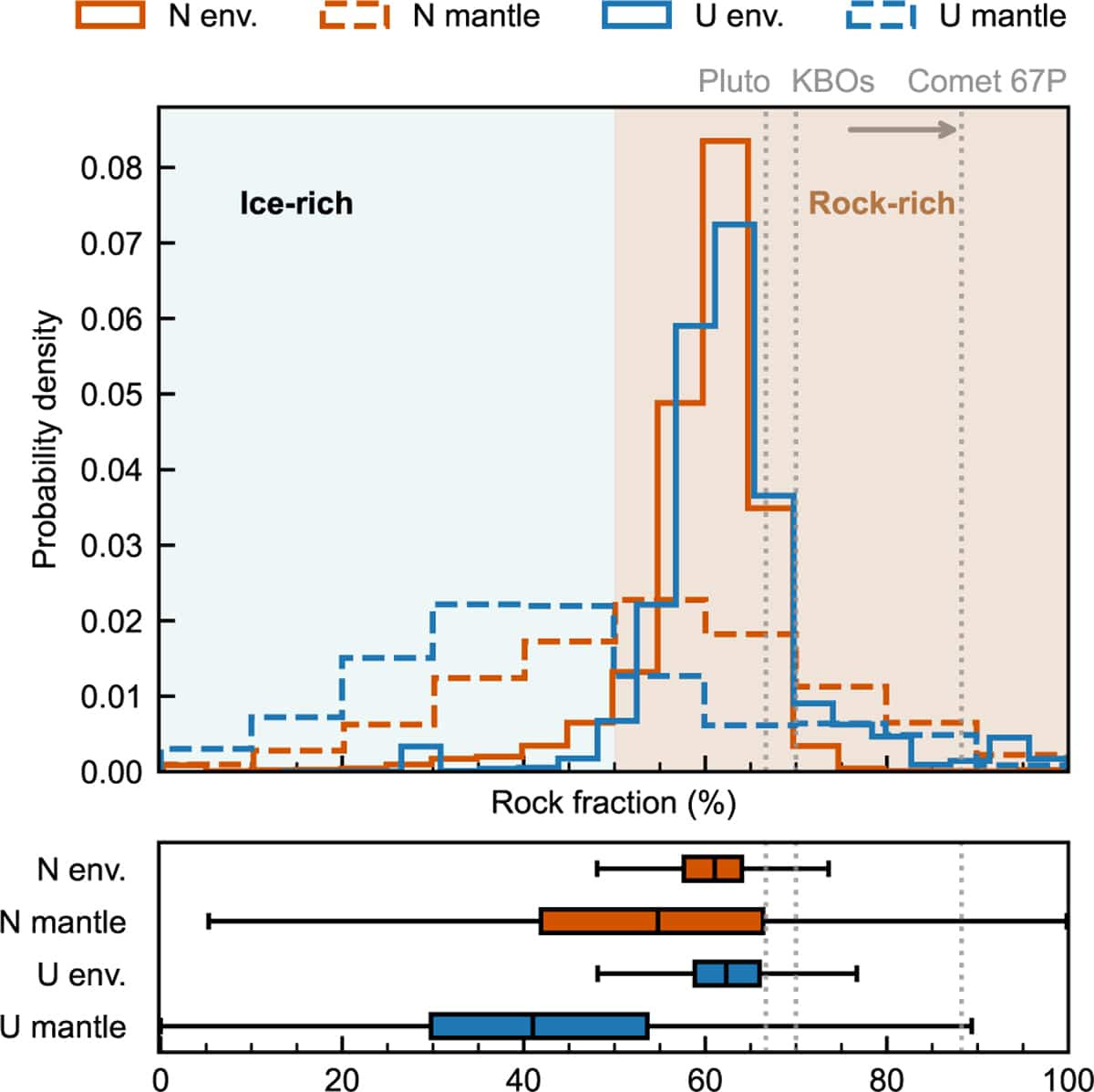
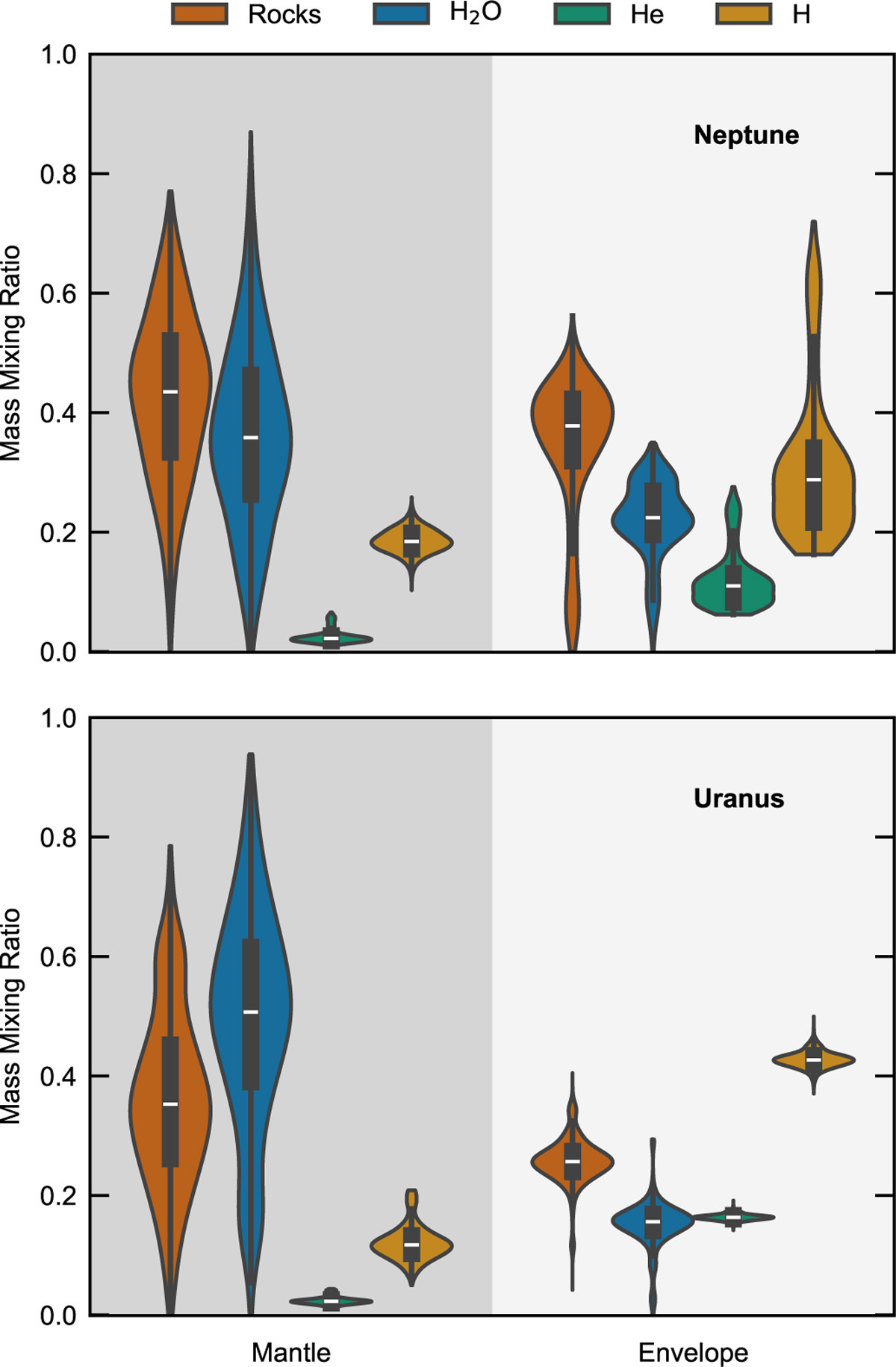
However, this new research reveals a more nuanced internal composition. By simulating the internal layers and atmospheric conditions of both planets, scientists found that rocky substances could make up much of their outer layers. The study suggests that silicates might even condense within the planetary atmospheres as rocky particles, challenging the long-held ice-rich planet paradigm.

“Our findings indicate both Uranus and Neptune possess outer shells composed mainly of rocks alongside hydrogen and helium gases,” explained study co-author Yamila Miguel from the Netherlands Institute for Space Research in an interview with Space.com. This contrasts sharply with the conventional view of these planets solely as ice giants.
The results also prompt reconsideration of the terminology used in planetary science. If ice does not dominate their makeup, categorizing these worlds as “ice giants” might no longer be accurate, and new classifications could emerge in the future.
Insights Drawn From the Outer Solar System
This hypothesis is rooted in clues gathered from objects beyond Neptune. The trans-Neptunian territory, filled with icy dwarf planets, comets, and Kuiper Belt objects, has shown surprising evidence of rockier compositions than initially believed.
Studies of bodies such as Pluto indicate that these distant objects are not purely icy; many contain dense rocky interiors or significant rock fractions within their structures. This observation led scientists to question whether a similar composition pattern extends to the larger giant planets closer to the Sun.
To test this, researchers used advanced modeling to simulate the planets’ internal envelopes, mantles, and cores, factoring in the temperature and pressure conditions deep in their atmospheres.
The simulations showed that silicate clouds could condense into rocks under extreme planetary conditions, creating atmospheric layers abundant in solid rock particles instead of just vapor or fluids. This contrasts with the older, simpler model of ice-dominated planetary composition.
The study appeared on May 5 in Astronomy & Astrophysics, contributing new perspectives to ongoing debates about the nature of these farthest planets.
How This Could Transform Planet Formation Theories
The implications extend well beyond redefining ice giants. Planetary composition is key to understanding formation mechanisms around stars. If Uranus and Neptune contain significantly more rock, prevailing models of the solar system’s birth may require revision.
Traditional views hold that these planets formed by accreting icy and gaseous materials in the cold outskirts of the young Sun’s influence. A rockier makeup suggests the raw materials there had different properties than long assumed. This could also reshape explanations of planet migration, atmospheric development, and magnetic field dynamics.
Moreover, this discovery might affect the study of distant exoplanets. Many Neptune-like exoplanets discovered orbit other stars, and assumptions about their composition have relied on our understanding of our own ice giants. A revised picture of Uranus and Neptune’s interiors could prompt re-evaluation of these alien worlds.
Miguel clarified that ice remains an important component. “They might indeed contain substantial ice deep inside,” she said, “but they are definitely not wholly icy as previously thought.”
This nuance is important—rather than overturning existing science, the research points to a more intricate internal structure where rocky layers coexist with icy interiors.
The Continuing Mystery of the Outer Giants
Despite extensive observations, Uranus and Neptune remain among the least understood large planets. Only Voyager 2 has visited them, passing Uranus in 1986 and Neptune in 1989. Since then, knowledge has primarily come from telescopes and models rather than direct exploration.
This gap leaves many questions unanswered. Scientists still puzzle over Uranus’s sideways spin, Neptune’s fierce winds, and the origins of their strange magnetic fields. The possibility of rocky layers adds complexity to these mysteries.
Future probes and orbiters could unlock answers. Planned missions focusing on gravity, atmospheric chemistry, and interior analysis could verify if rocky atmospheres are present.
For now, this work reminds us that even well-established planetary categories can shift with new discoveries. The outer solar system continues to present surprises, housing enigmatic worlds that keep fueling scientific curiosity.
- Categories:
- Astronomy







0 comments
Sign in to Comment