
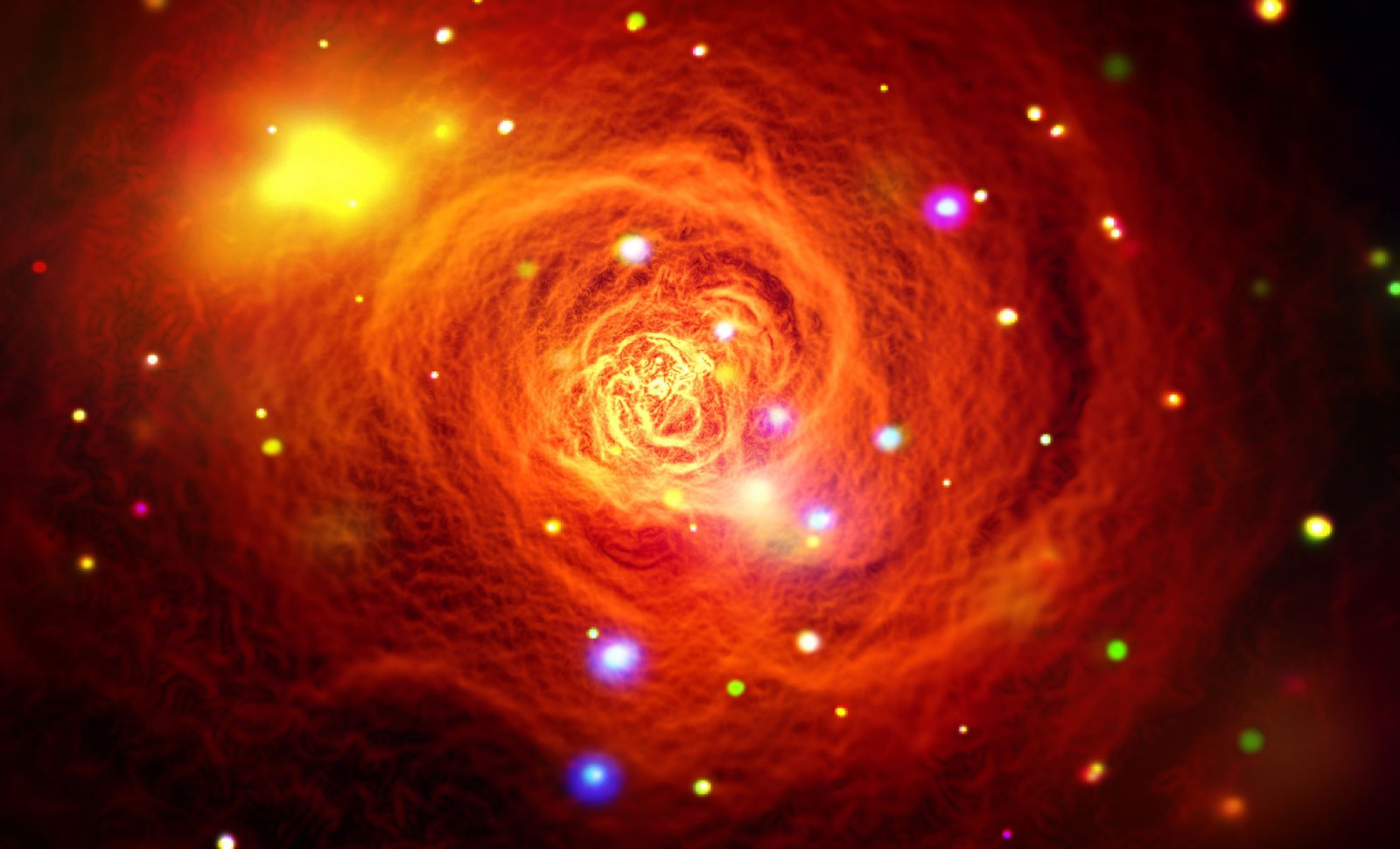
A colossal galaxy laden with dust has been detected a mere 400 million years following the Big Bang, challenging existing astronomical theories. This galaxy, named EGS-z11-R0, exhibits characteristics suggesting it is far more developed than anticipated for that early cosmic period, as if it had significantly more time to evolve than the universe's actual timeline permits.
Discovered using NASA’s James Webb Space Telescope (JWST), this galaxy is sparking considerable discussion. Its impressive size and dusty nature don’t align with the standard cosmic growth models, especially given the infancy of the universe when early structures were just beginning to form.
The finding emerged from an analysis of publicly available JWST data, where scientists sought out obscured, dust-heavy galaxies hidden within already known populations. Led by Giulia Rodighiero, the team identified only one definitive candidate—this markedly red and hefty galaxy. Its rarity suggests that such dust-rich systems are either exceedingly uncommon or notoriously elusive with traditional observation techniques.

An Unexpectedly Dust-Rich Galaxy in the Early Universe
The intense red hue of EGS-z11-R0 results from thick dust clouds absorbing the blue light emitted by young stars, causing its ultraviolet spectrum to appear unusually flat.
Forming such substantial dust typically requires extended stellar generations. Yale University astrophysicist Pieter van Dokkum describes the rapid appearance as “astonishing,” comparing the timeframe to the longevity observed in species like sharks and turtles.
Evidence of a Surprisingly Advanced Cosmic System
The research team, as detailed in a preprint paper, also identified carbon signatures in the galaxy’s spectrum, an indicator of complex stellar evolution. Carbon is produced inside stars and released through cosmic events like supernovae, implying multiple cycles of star birth and death have already occurred.
This complicates the galaxy’s history because accumulating dust and carbon cannot happen instantly. Their presence suggests EGS-z11-R0 experienced intense episodes of star formation and supernovae surprisingly early in the universe’s timeline.
Connecting Dusty and Bright Galaxies as Evolutionary Phases
This galaxy belongs to an emerging class of extraordinary objects spotted by JWST, often dubbed “monster galaxies.” These galaxies are remarkable due to their colossal mass, brightness, or early developmental state. Some are “blue,” characterized by youthful, bright stars with little dust, while others, like EGS-z11-R0, appear densely reddened, their light dimmed by thick dust layers.
“We think that they are connected by the same evolutionary story.” she added that: “It’s just that we catch galaxies in different periods,” said Giulia Rodighiero. She also notes that blue galaxies are simply easier to detect, which could skew what we see.
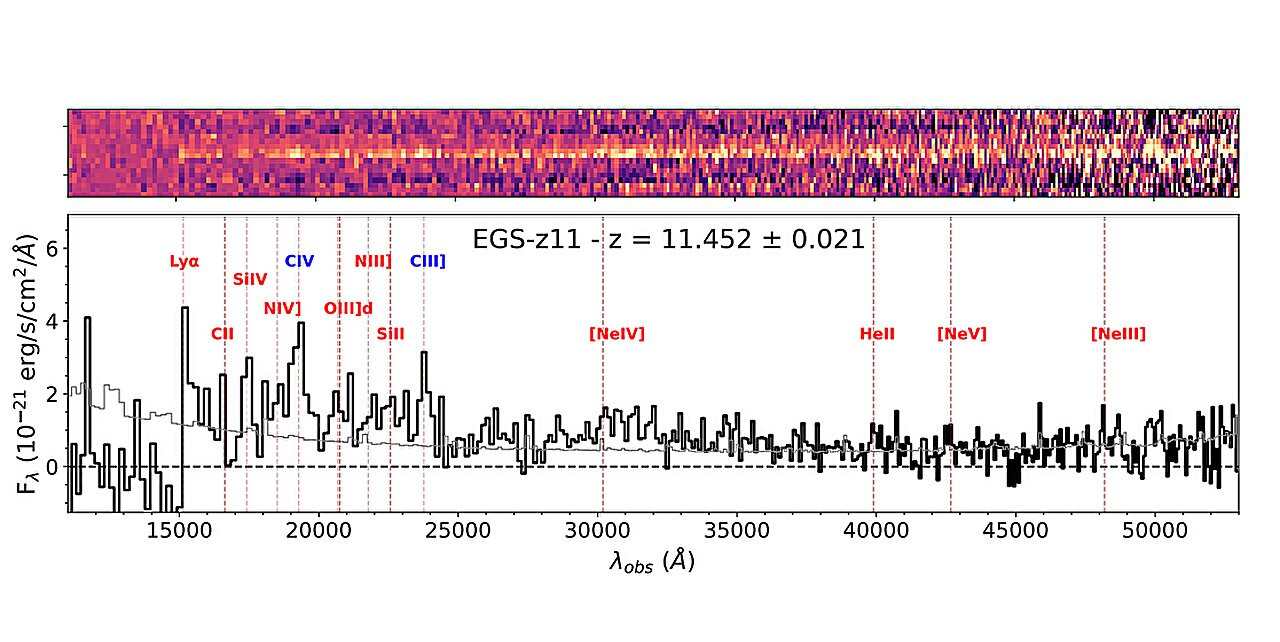
Currently, EGS-z11-R0 stands as an anomaly, distinct even among other peculiar galaxies discovered by JWST. The galaxy’s substantial mass, remarkable dust levels, and presence so early in cosmic history make it difficult to categorize, ensuring ongoing scientific interest.
“Future JWST spectroscopy and deeper mid-infrared, submillimeter and radio observations will be crucial to establish the prevalence of these early dust-rich galaxies and to clarify their role in the earliest phases of galaxy and black-hole growth,” said the researchers.
- Categories:
- Astronomy



0 comments
Sign in to Comment