
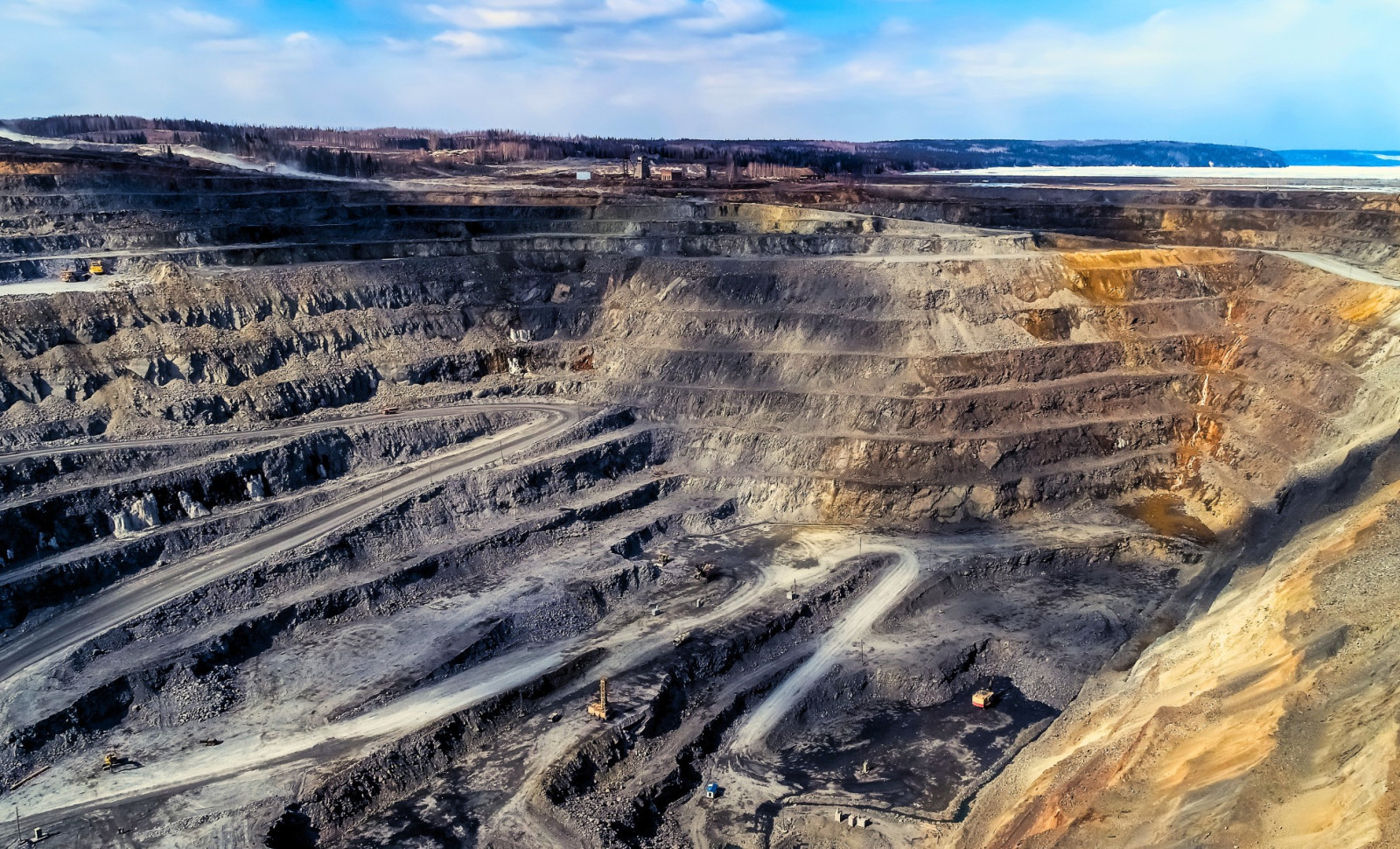
A major Canadian mining company alongside a global resource powerhouse is gearing up to pour close to $18 billion into developing a copper-rich site in the Andes. If completed, this mine could rank as the world’s fifth largest producer. Lundin Mining Corporation and BHP revealed in February 2026 that their joint venture Vicuña project, located at altitudes above 4,500 meters on the Argentina-Chile border, boasts 14 million tons of proven copper, 36 million ounces of gold, and 729 million ounces of silver.
With full-scale operations, the mine is set to yield 400,000 tonnes of copper annually through its initial 25 years, supplying about 2 percent of the global market. The sulfide deposit at Filo del Sol contains copper at a grade of 0.46 percent—equivalent to roughly nine pounds per ton of ore—offering economic resilience even in fluctuating markets.
Back in July 2024, BHP invested $2.1 billion for a half stake in the venture, giving the undeveloped site a valuation exceeding $4 billion before producing its first ounce. This robust valuation reflects concerns over copper supply shortages. Demand for copper is projected to rise sharply due to electric vehicle production, renewable energy infrastructure, and grid enhancements outpacing the discovery of new mines. The International Energy Agency cautioned in its 2025 outlook that failure to advance projects like Vicuña could lead to supply deficits by the mid-2030s.

The Geological Origins of Vicuña
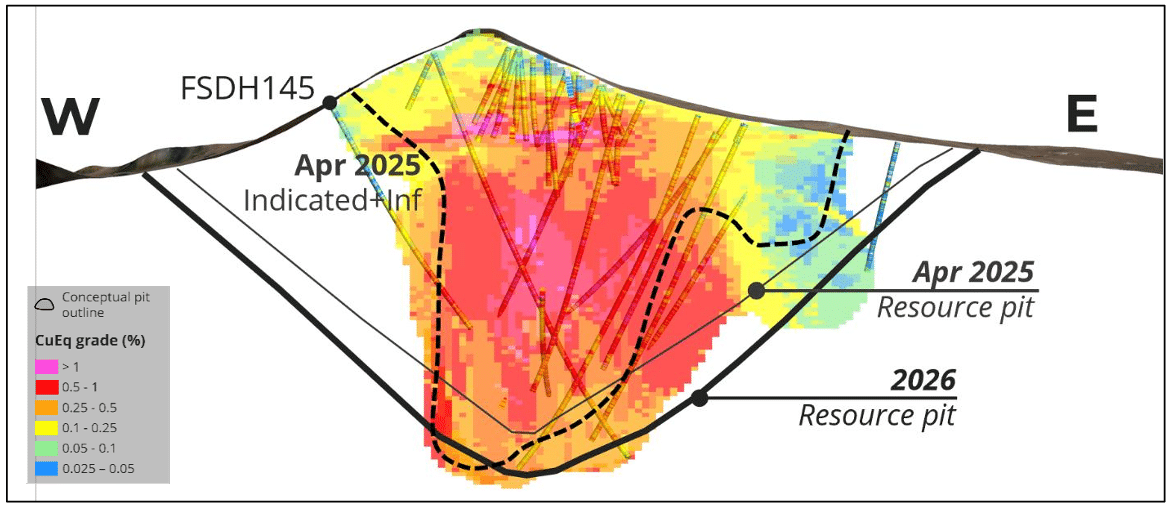
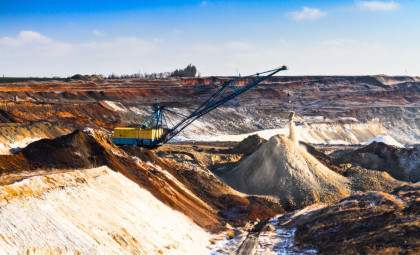
This mining district encompasses two notable porphyry deposits found over the last decade and a half. The larger, Filo del Sol, contains 1.7 billion tons of copper-enriched rock formed by hydrothermal fluids ascending from deep magma chambers and solidifying along near-surface fractures. Exploration drilling has identified mineralized zones across 6.5 kilometers, frequently ending in ore-grade material, indicating the deposit likely extends deeper than current estimates.
The Josemaria deposit, situated 10 kilometers to the south, comprises an additional 1.6 billion tons with a copper grade of 0.28 percent. Although of lower grade, it remains economically attractive at copper prices surpassing $3.50 per pound, well beneath the prevailing $6.00 level. Shared infrastructure plans for both sites are expected to trim capital expenditures by about $2 billion compared to separate developments.
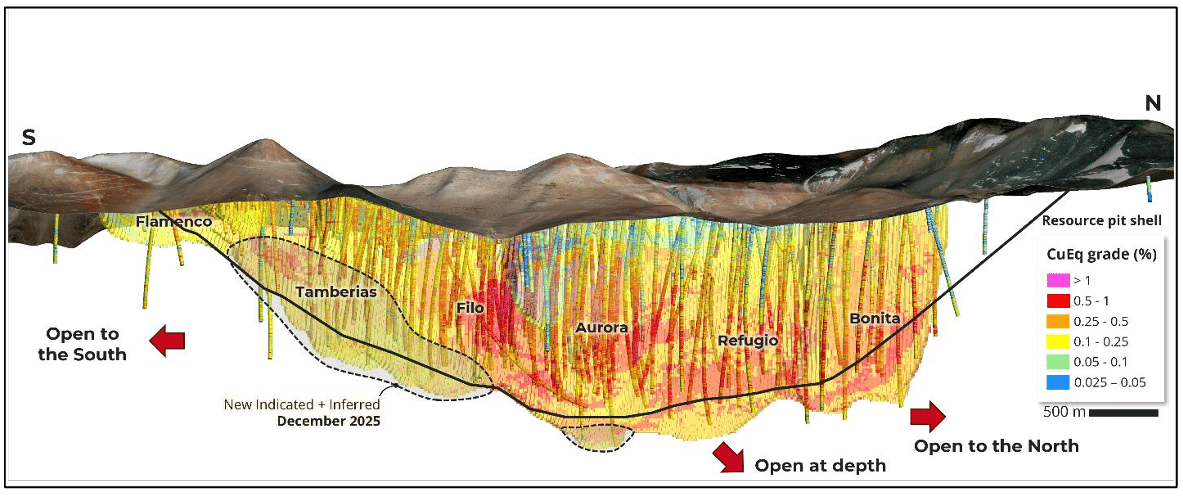
Besides copper, Filo del Sol holds significant gold value. The sulfide zone carries an average of 0.34 grams of gold per ton, translating to nearly 19 million ounces in measured and indicated resources. At a gold price of $5,000 per ounce, its in-ground value approaches $95 billion, though only a portion is recoverable. While copper revenue underpins the project’s financial viability, these gold byproducts help cushion the business against copper price declines.
Phased Development, $18 Billion Investment
Lundin and BHP are designing a three-phase construction approach, gradually ramping up output to manage costs efficiently. Phase 1, estimated at $7.1 billion, involves the establishment of a 175,000-ton-per-day concentrator and development of the Josemaria pit, with first ore targeted by 2030 contingent on permits and construction starting by early 2027.
Phase 2 aims to introduce heap leaching operations at Filo del Sol to extract copper cathode and gold-silver doré from surface oxide layers. This expansion, budgeted at $3.9 billion, is expected around 2032. Phase 3 plans to enlarge the concentrator to 293,000 tons daily and transition mining to Filo del Sol’s premium sulfide core, boosting copper output beyond half a million tonnes annually by the late 2030s at an additional $7.1 billion investment.
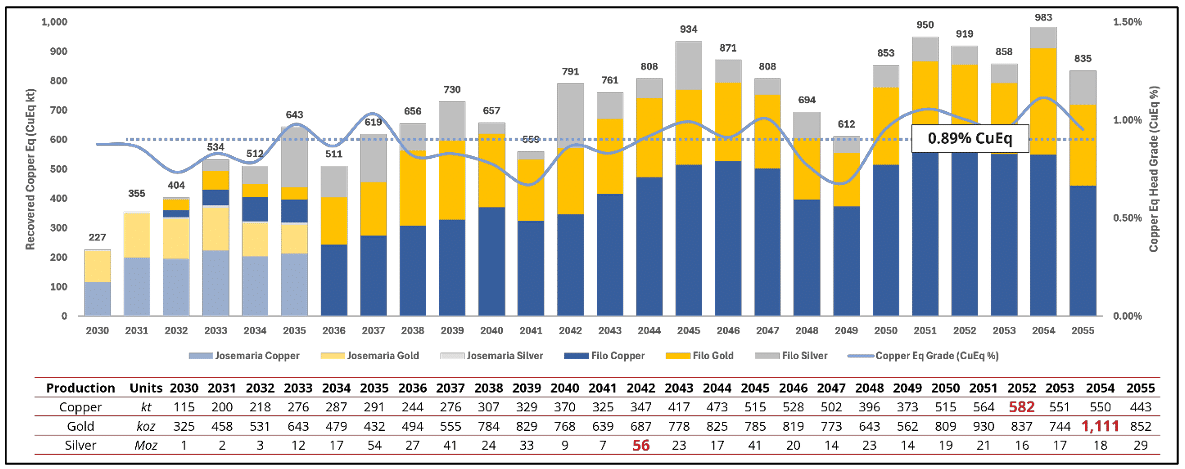
This incremental plan limits upfront financial exposure but hinges on timely progression of all stages. Assuming current metals prices of $6.00 for copper, $5,000 for gold, and $80 for silver, the project boasts a net present value of $28.8 billion and an internal rate of return of 25.5 percent. Any delays, metal price drops, or regulatory hurdles could rapidly diminish profitability. Lundin’s preliminary findings have yet to explore adverse scenarios.
The partners aim to reach a go-ahead decision by late 2026, dependent on updated environmental licenses, electricity agreements with Argentine regulators, and acceptance under the nation’s investment incentives for projects exceeding $200 million.
Dry Conditions, Toxic Elements, and Environmental Challenges
Situated in one of Earth's driest zones, the Vicuña site receives less than 100 mm of annual precipitation. Glaciers provide the sole stable freshwater source. Argentina’s National Glacier Law of 2010 bans mining that threatens glacier-fed water systems. Some environmental advocates express concern that the Filo del Sol excavations risk disturbing sensitive periglacial permafrost. Lundin counters that their studies place the deposit outside protected zones.
Water availability poses a real challenge. Early construction phases will tap three local groundwater sources, but Phase 3 requires an additional 2,000 liters per second beyond local capacity. Plans call for a desalination facility on Chile’s Pacific coast linked by a 200 km pipeline ascending 4,000 meters. This infrastructure is projected to cost roughly $3 billion and involves energy-intensive reverse osmosis consuming approximately 50 megawatts.
Arsenic presents a further complication. Filo del Sol’s sulfide copper concentrate contains about 2 percent arsenic, surpassing the 0.5 percent threshold accepted by many smelters. To address this, a $1.2 billion roasting facility will remove arsenic and convert the concentrate into smelter-compatible material. However, roasting releases sulfur dioxide, necessitating systems to capture emissions and transform them into sulfuric acid to comply with environmental standards.
Argentina’s Largest Foreign Investment in Over Ten Years
Lundin projects the mine could yield $69 billion in taxes and royalties throughout its lifespan, based on internal modeling. The San Juan province supports the venture for its potential to improve infrastructure, employment, and economic development.
The construction phase is estimated to engage 5,500 direct staff and 19,000 contractor workers. Operations would maintain around 3,000 permanent roles, many requiring technical expertise that is scarce locally. Community groups have advocated for hiring quotas and training programs, yielding mixed outcomes so far.
While opposition to the mine remains subdued compared with some regional projects, concerns exist. Environmental organizations have contested the environmental impact report, claiming it underrepresents threats to wetlands dependent on glacial meltwater. Local farmers fear long-term aquifer depletion due to the region’s arid conditions.
Risks if Development Falters
The Vicuña project often is treated by copper market watchers as a sure bet, but it remains uncertified, unfunded, and awaiting permits. A stall would exacerbate the expected copper supply gap in the mid-2030s. The IEA notes that similar mines typically take 10 to 15 years from discovery to production. Vicuña is on an accelerated timeline, yet substantial output above 500,000 tonnes annually is unlikely before 2035.
Lundin views Vicuña as its path to joining the world’s top ten copper producers. BHP contributes significant operational expertise, but execution remains a key hurdle. The equal partnership requires unanimous consent for capital expenditures exceeding $50 million, a threshold relevant for nearly all large contracts.
The preliminary economic assessment released in early 2026 spans over 600 pages, with a comprehensive feasibility study expected later this year. Until then, the $18 billion investment, 70-year mine life, and tax revenue projections remain subject to verification and altering conditions.
- Categories:
- News


0 comments
Sign in to Comment