
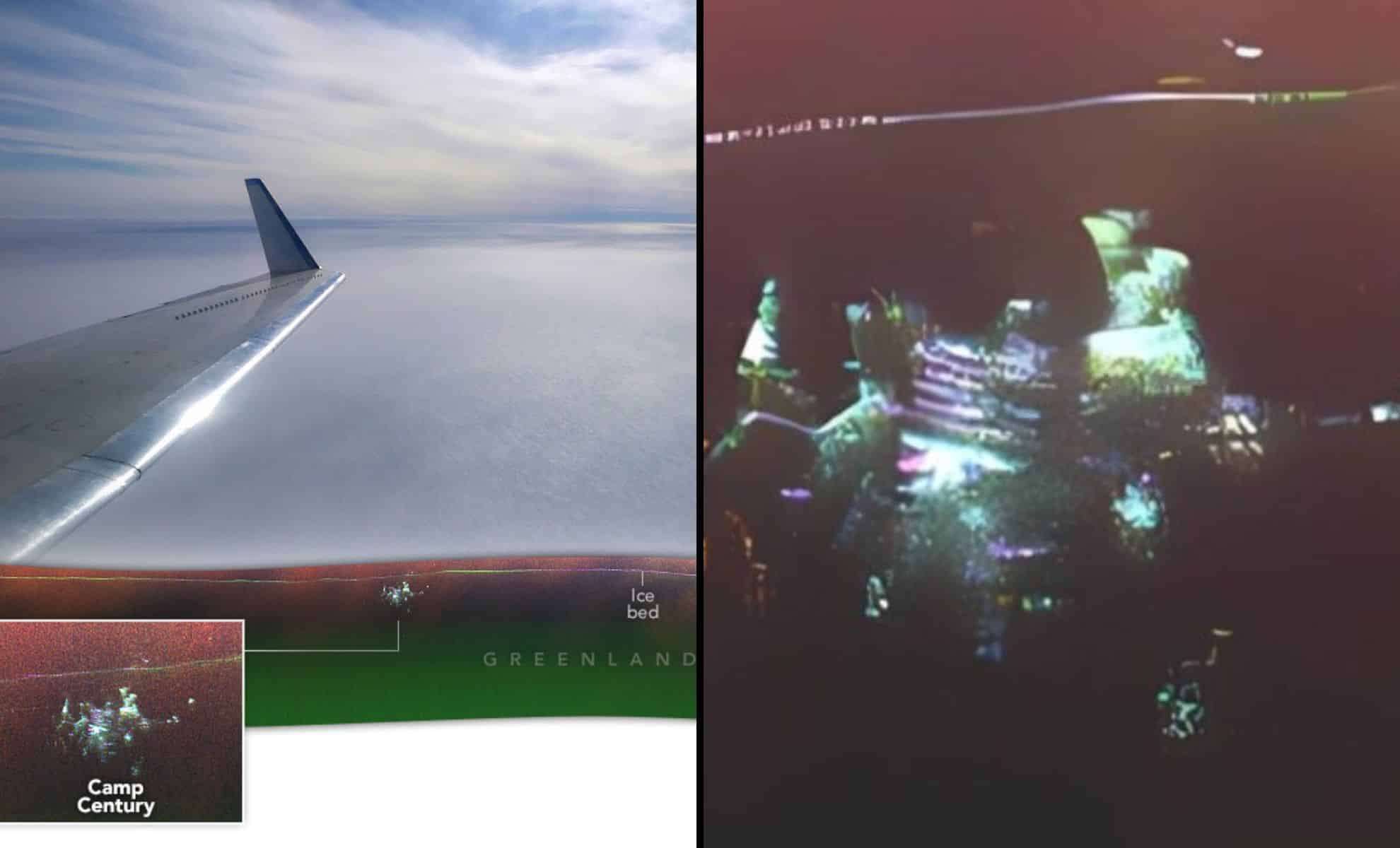
In April 2024, NASA scientist Chad Greene led an expedition over Greenland utilizing state-of-the-art radar equipment aimed at investigating the ice sheet's thickness and dynamics amid a changing climate. During their flight across the expansive icy terrain, the team made a startling detection: a buried Cold War-era installation revealed by innovative UAVSAR radar. This finding offers valuable data on Greenland's ice structure and its implications for future sea-level changes.
Details of this discovery were shared in an article from NASA's Earth Observatory. Researchers combined ground-penetrating radar with advanced synthetic aperture radar (SAR) to precisely map the hidden installations beneath Greenland’s frozen surface. The observations not only pinpointed the forgotten military site but also enhanced understanding of ice sheet behavior under warming conditions.
A Surprising Find Beneath the Ice
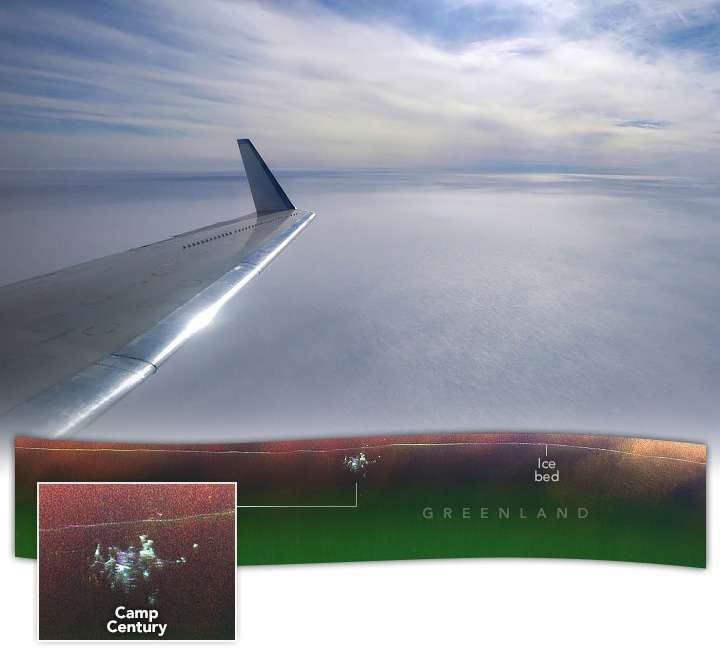
The mission initially focused on assessing ice depth and the geology beneath it. Led by Alex Gardner from NASA’s Jet Propulsion Laboratory (JPL), the team unexpectedly detected an unfamiliar structure beneath the ice. “We were tracing the bedrock when suddenly Camp Century emerged on the radar,” recalled Gardner. “We didn’t immediately recognize it.”

Camp Century was a U.S. military outpost established in 1959 and concealed beneath ice after its abandonment in 1967. Originally intended for nuclear testing in secrecy, the site remained hidden until this breakthrough. The radar imagery offers the first clear perspective of the preserved facility entombed beneath the Greenland Ice Sheet.
Advancing Radar Imaging
The UAVSAR radar system onboard the aircraft during the 2024 mission delivered high-resolution, three-dimensional imagery of the ice sheet. Unlike conventional radars that only emit flat, two-dimensional profiles, UAVSAR captures lateral views, enabling detailed mapping of subsurface anomalies.
“These new images reveal distinct structures of the hidden base like never before,” said Greene, a key figure in the research. Enhanced visualization of subterranean features provides fresh opportunities to study ice layering and the arctic’s response to climate warming. Such insights are critical for understanding, and ultimately forecasting, how ice sheets evolve with the ongoing climate shift.
Importance for Climate Science
Analyzing ice sheet movement and change remains vital for grasping the risks posed by global warming and potential sea-level rise. The new Greenland data equips scientists with deeper knowledge of how ice reacts to environmental pressures, critical to predicting future trends.
“Accurate measurements of ice thickness are essential to forecast the ice sheets’ response to warming oceans and atmosphere,” Gardner emphasized. Beyond rediscovering a historic site beneath the ice, this work enriches our understanding of processes shaping the entire ice sheet, which plays a significant role in projecting sea-level scenarios worldwide.
- Categories:
- News








0 comments
Sign in to Comment