
A newly unearthed fossil along China's Yangtze River is prompting researchers to revise their understanding of sponge evolution and refine their methods for detecting early animal life. For years, scientists faced a puzzling inconsistency: molecular clock data suggested sponges emerged approximately 700 million years ago, yet definitive sponge fossils only date back to about 540 million years ago, leaving a 160-million-year void without fossil evidence.
This latest finding bridges part of that gap. Led by geobiologist Shuhai Xiao, in partnership with teams from the University of Cambridge and the Nanjing Institute of Geology and Paleontology, the group has identified a 550-million-year-old sponge fossil that perfectly fits within this previously missing timeframe.
How a Photograph Sparked a Major Find
The journey to this fossil began in an unusual way. Shuhai Xiao first recognized the fossil from a photograph his colleague sent five years ago.

“I had never seen anything like it before,” he said. “Almost immediately, I realized that it was something new.”
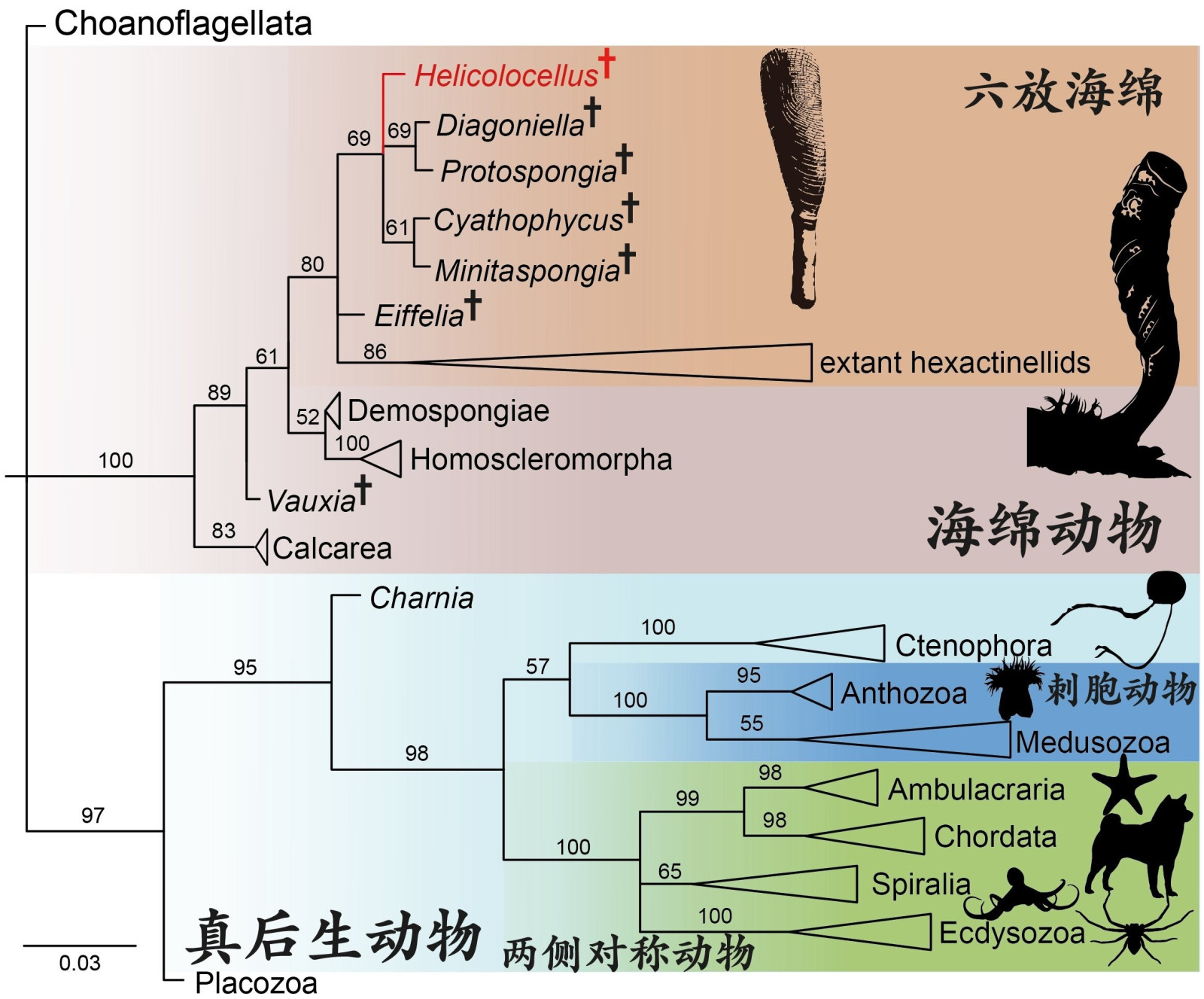
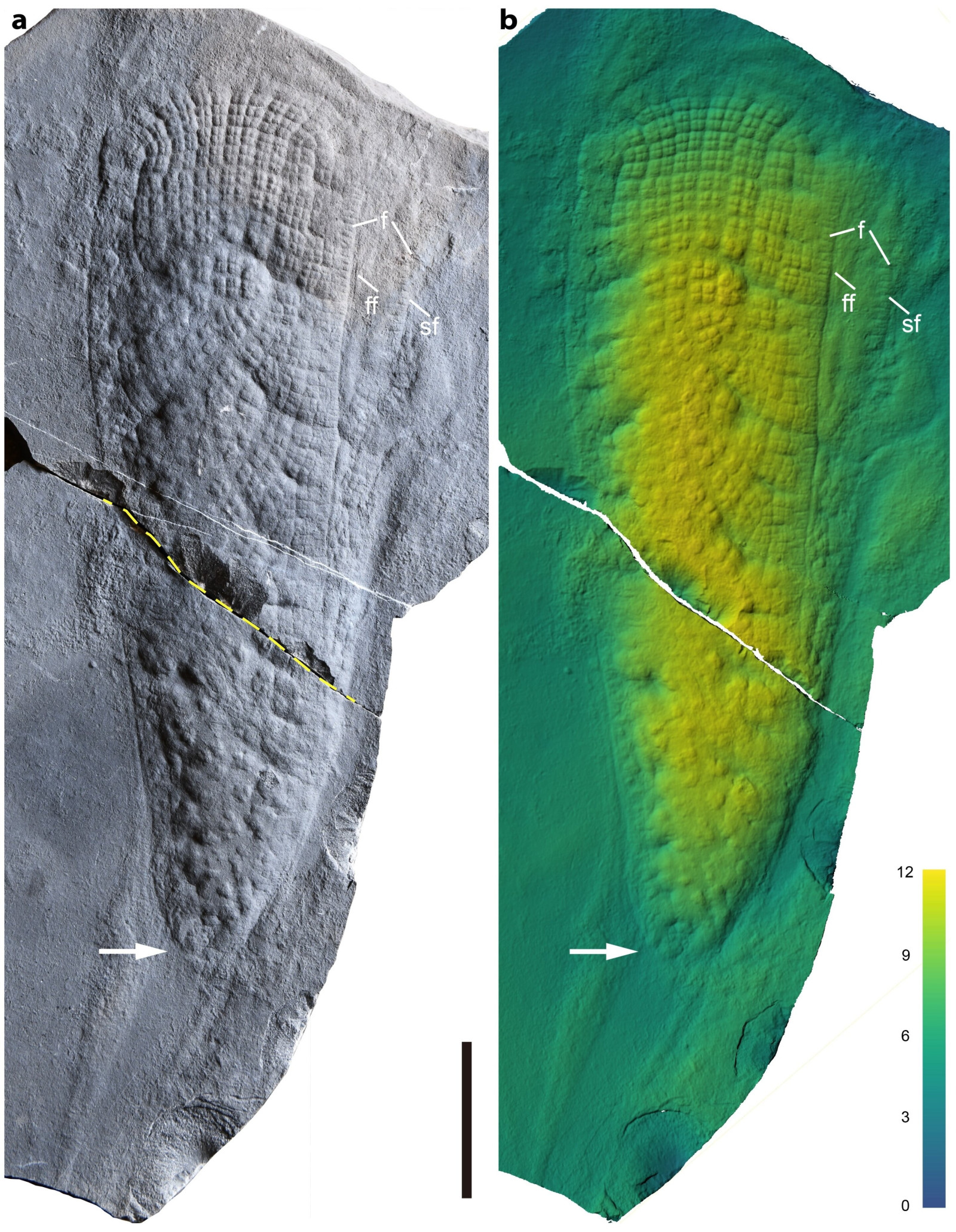
After careful analysis, the team ruled out similarities with sea squirts, sea anemones, and corals, leading them to a compelling conclusion: the specimen was an ancient sea sponge. Published in Nature, the study highlights the fossil’s unique surface texture, which exhibits a network of rectangular patterns, each divided into smaller repeating units.
“This specific pattern suggests our fossilized sea sponge is most closely related to a certain species of glass sponge,” said Xiaopeng Wang, a postdoctoral scientist affiliated with the Nanjing Institute of Geology and Paleontology and the University of Cambridge.
Size also surprised the researchers. As explained by Alex Liu, a partner from the University of Cambridge:
“When searching for fossils of early sponges I had expected them to be very small,” he added that: “The new fossil is about 15 inches long with a relatively complex, conical body plan, which challenged many of our expectations for the appearance of early sponges.”
Why Early Sponges Are Rare in the Fossil Record
Previous investigations, including research from 2019 led by Xiao, have shown that sponge spicules gradually acquired more mineral composition through geological time. Older specimens tend to have skeletons composed mostly of organic materials rather than minerals.
“If you extrapolate back, then perhaps the first ones were soft-bodied creatures with entirely organic skeletons and no minerals at all,” Xiao said. “If this was true, they wouldn’t survive fossilization except under very special circumstances where rapid fossilization outcompeted degradation.”
That 2019 study also identified a rare sponge fossil embedded in a marine carbonate layer known for preserving soft-bodied organisms before decay could erase them, including some of the earliest mobile animals. The newly found fossil from the Yangtze River is another exceptional example of this preservation process.
“Most often, this type of fossil would be lost to the fossil record,” Xiao noted. “The new finding offers a window into early animals before they developed hard parts.”
Reevaluating the Search for Early Animal Life
The study suggests that if ancient sponges were predominantly soft-bodied without mineralized skeletons, then much of early animal history may be missing from conventional fossil records. This insight challenges scientists to focus on rare geological environments capable of preserving delicate organisms.
“The discovery indicates that perhaps the first sponges were spongy but not glassy,” Xiao said. “We now know that we need to broaden our view when looking for early sponges.
The 160-million-year absence in the sponge fossil record wasn't truly empty; it was filled with fragile soft-bodied life forms that failed to fossilize under typical conditions.
- Categories:
- News











0 comments
Sign in to Comment