
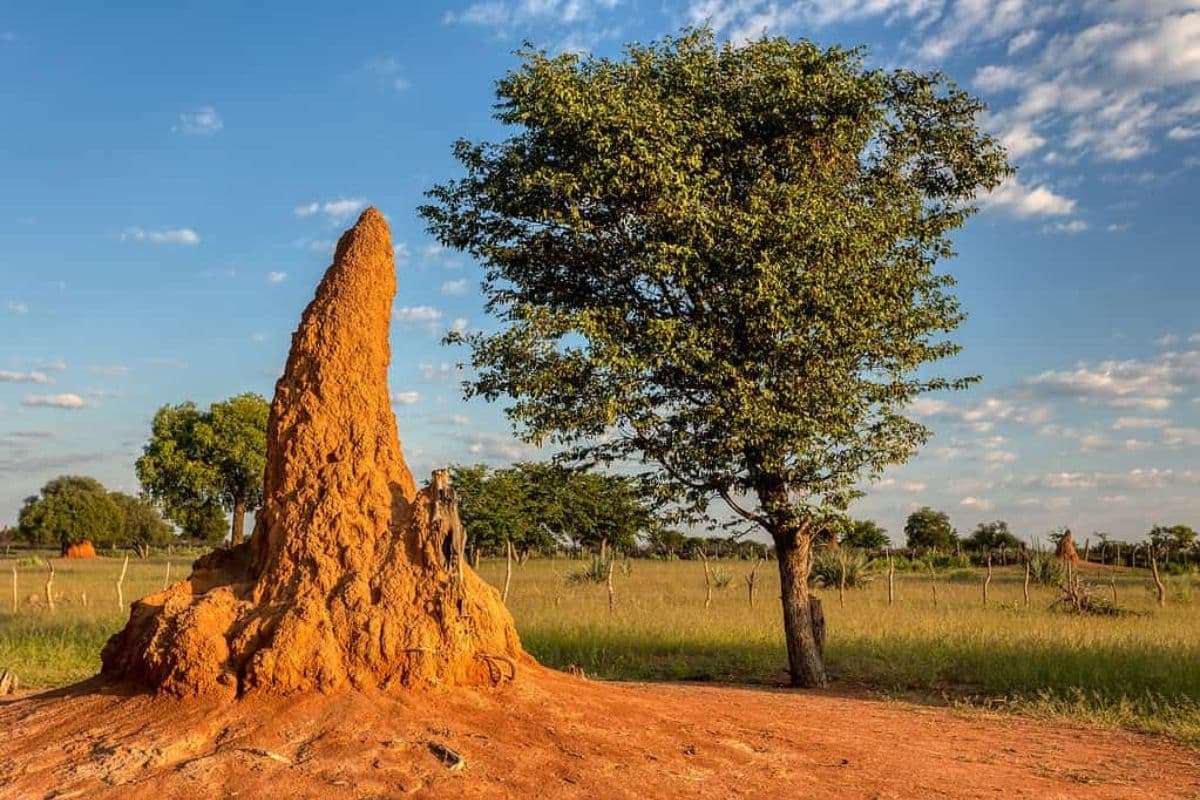
Deep within Brazil lies a sprawling system of termite mounds so extensive that it can be spotted from space. These impressive structures, believed to date back around 4,000 years, are the outcome of countless termite generations collaborating to create one of nature's grandest and longest-lasting constructions.
An Enormous Hidden Terrain
The Brazilian termite mound complex extends over an estimated 230,000 square kilometers, covering an area nearly equivalent to the size of Great Britain. Crafted by Syntermes dirus termites, some mounds tower higher than 10 feet and stretch as wide as 50 feet.
At ground level, the landscape is dotted with regularly spaced, cone-shaped formations. Yet satellite images reveal an immense, elaborate network shaped over millennia.

Unlike typical termite nests, these mounds do not function as direct living quarters. Instead, they act primarily as refuse deposits, enabling worker termites to dig underground tunnels while maintaining a balanced environment for their colony.
Researchers regard this vast array of structures as the largest instance of bioengineering by a single insect species discovered so far.
What Enables Termites to Construct These Colossal Mounds?
Although tiny and blind, termites are expert architects. Combining mud, saliva, and feces, they build resilient, thermally insulated mounds that regulate internal climate conditions. This gradual process can span decades, involving millions of colony members expanding and preserving their habitat.
Termite mounds incorporate natural ventilation systems designed to circulate airflow and prevent overheating in hot, tropical climates. This Brazilian network in particular exemplifies centuries of meticulous construction tailored to environmental dynamics.
Scientists estimate termites have displaced nearly 10 cubic kilometers of earth, a volume comparable to some of mankind’s largest monumental projects.
Termite Mounds’ Crucial Role in Ecosystems
More than simple dirt piles, termite mounds improve soil fertility and foster microhabitats supporting diverse life forms. As termites excavate and transport soil, they effectively aerate the ground, enhancing its water retention and nutrient availability. This process stimulates plant growth even in previously nutrient-poor areas.
In dry regions, termite mounds help combat desertification, stabilizing the soil and enabling vegetation to establish. Studies indicate their presence increases biodiversity, attracting insects, birds, and larger wildlife that depend on the nutrients and shelters these structures provide.
Inspiration for Future Eco-Friendly Designs
Despite their small size, termites’ architectural skills have motivated new approaches in human construction. The way termite mounds naturally regulate temperature offers a blueprint for energy-saving building designs that minimize reliance on artificial climate control.
A famous example is Zimbabwe’s Eastgate Centre, a commercial complex featuring a ventilation system inspired by termite mound airflow. This innovation drastically reduces energy use, providing a green alternative for temperature management in buildings.
The microbial ecosystems inside termite mound soil also show promise for boosting crop yields, suggesting potential applications in sustainable agriculture.
- Categories:
- Science







0 comments
Sign in to Comment