
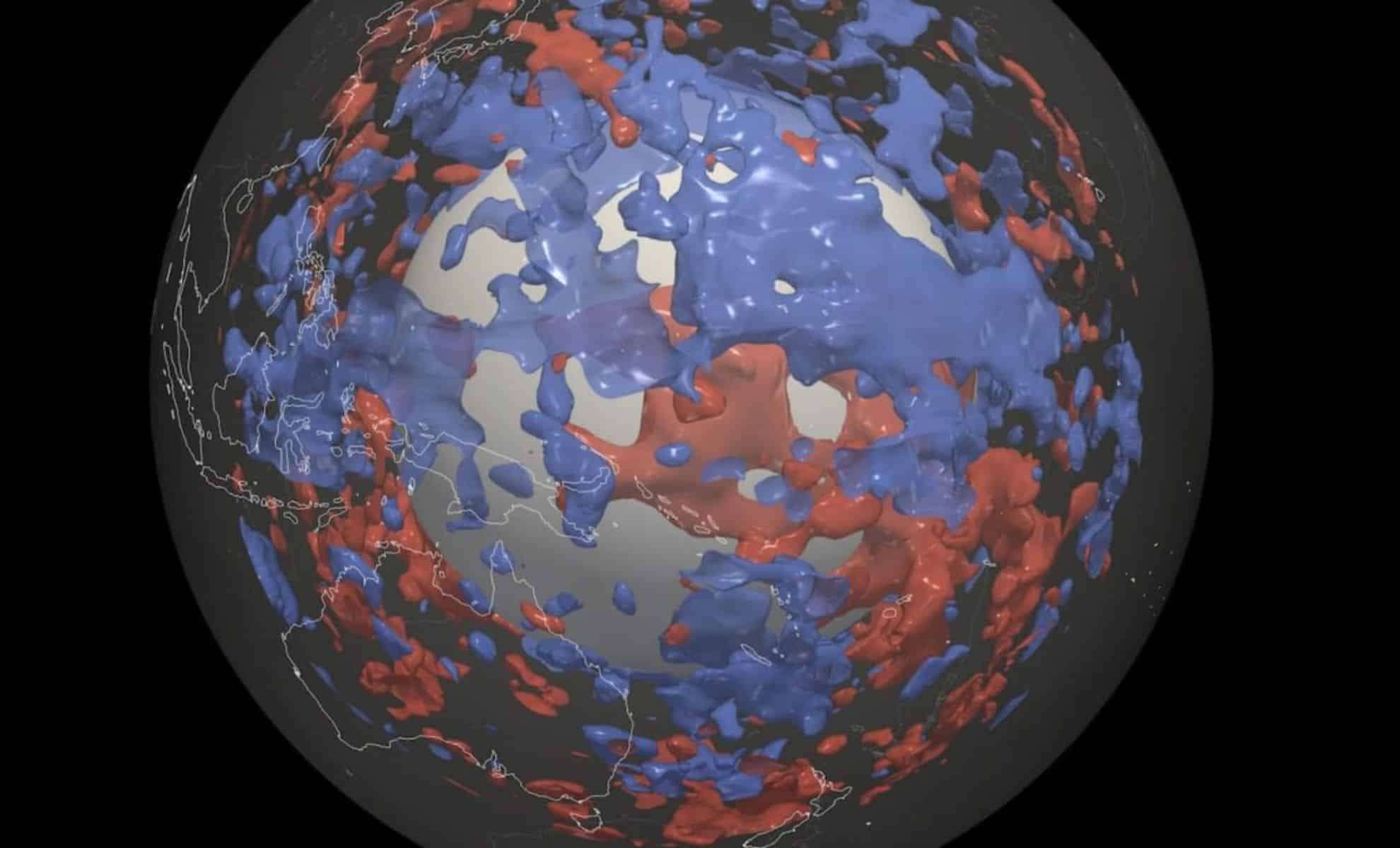
Beneath the vast Pacific Ocean, a team of geologists has revealed unusual features within the Earth’s mantle that challenge current geological models. Employing cutting-edge seismic imaging technology, researchers from ETH Zurich and the California Institute of Technology detected ancient tectonic plate-like formations located in regions far from conventional subduction zones. Their study, featured in Scientific Reports, opens new debates on the complexity of Earth's interior.
The Earth’s mantle—a massive layer separating the crust from the core—remains largely enigmatic. This discovery implies that fragments of ancient tectonic activity may persist scattered throughout the mantle, shedding light on our planet’s primitive geological history.
Unraveling the Mantle’s Hidden Features
By applying full-waveform inversion, the scientists developed an exceptionally detailed model of the Earth's mantle. This approach interprets seismic waves from earthquakes to map internal geological structures with unmatched resolution. Surprisingly, the data revealed plate-like zones in unexpected locations devoid of active subduction.

“Apparently, such zones in the Earth’s mantle are much more widespread than previously thought,” says Thomas Schouten, the study’s lead author and a doctoral student at ETH Zurich.
These newly uncovered anomalies, invisible using earlier seismic models, hint at a complex mosaic of mantle materials with diverse origins. The exact composition of these zones remains unknown.
“That’s our dilemma. With the new high-resolution model, we can see such anomalies everywhere in the Earth’s mantle. But we don’t know exactly what they are or what material is creating the patterns we have uncovered,” explains Schouten.
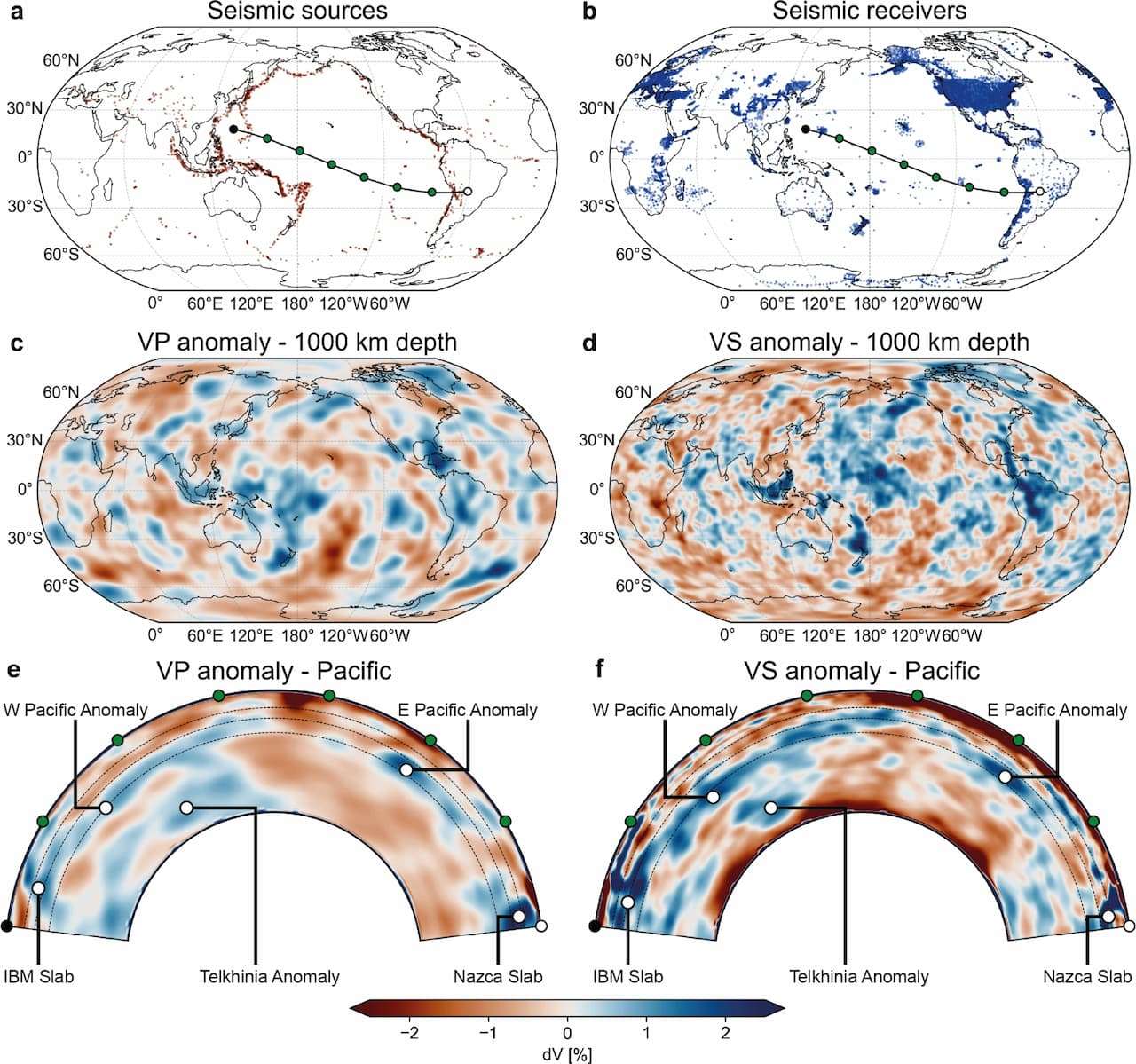
Decoding the Origins of Mantle Anomalies
The origins of these enigmatic mantle regions remain speculative. Typically, such formations have been associated with cold fragments of tectonic plates that sank into the mantle during recent geological epochs. The current findings, however, prompt a reconsideration of this narrative.
“It could be either ancient, silica-rich material that has been there since the formation of the mantle about 4 billion years ago and has survived despite the convective movements in the mantle, or zones where iron-rich rocks accumulate as a consequence of these mantle movements over billions of years,” Schouten notes.
If confirmed, these ancient substances might represent some of the oldest mantle relics ever detected, offering a glimpse into Earth’s formative eras. Alternatively, the anomalies might originate from iron-rich rock deposits formed through long-term mantle convection processes, highlighting Earth's ongoing interior evolution.
Revolutionizing Insights into Earth's Interior
This discovery highlights the vital role of advanced seismic imaging in transforming our perception of Earth’s inner mechanisms. The full-waveform inversion technique enabled comprehensive analysis of various seismic waves, generating a rich mantle portrait—though it still faces challenges.
“The waves we use for the model essentially only represent one property, namely the speed at which they travel through the Earth’s interior,” Schouten explains. “This does not do justice to the Earth’s complex interior.”
A deeper understanding of these anomalies requires determining the material characteristics influencing seismic velocity, such as elasticity and chemical makeup. Achieving this goal demands the development of even more sophisticated computational approaches to interpret the signals precisely.
“We have to calculate the different material parameters that could generate the observed speeds of the different wave types. Essentially, we have to dive deeper into the material properties behind the wave speed,” says Schouten.
Unexpected Discoveries Change Perspectives
The surprise findings are prompting geologists to question established views about mantle structure. ETH Zurich wave physicist and co-author Andreas Fichtner compared the experience to a breakthrough in medical imaging.
“It’s like a doctor who has been examining blood circulation with ultrasound for decades and finds arteries exactly where he expects them,” Fichtner explains. “Then if you give him a new, better examination tool, he suddenly sees an artery in the buttock that doesn’t really belong there. That’s exactly how we feel about the new findings.”
This analogy reflects how improved seismic technology is revealing unexpected features, challenging decades of geological assumptions and sparking fresh research directions.
Broader Implications for Earth's Geological Evolution
These anomalies beneath the Pacific region may unlock secrets about Earth's ancient past and mantle development over billions of years. If these zones stem from primordial mantle material, they could illuminate early Earth composition and dynamics.
“We think that the anomalies in the lower mantle have a variety of origins,” Schouten explains.
The study further suggests that such mantle heterogeneities might be more common than once believed, potentially reshaping foundational concepts in plate tectonics and mantle convection science.
- Categories:
- News







0 comments
Sign in to Comment