
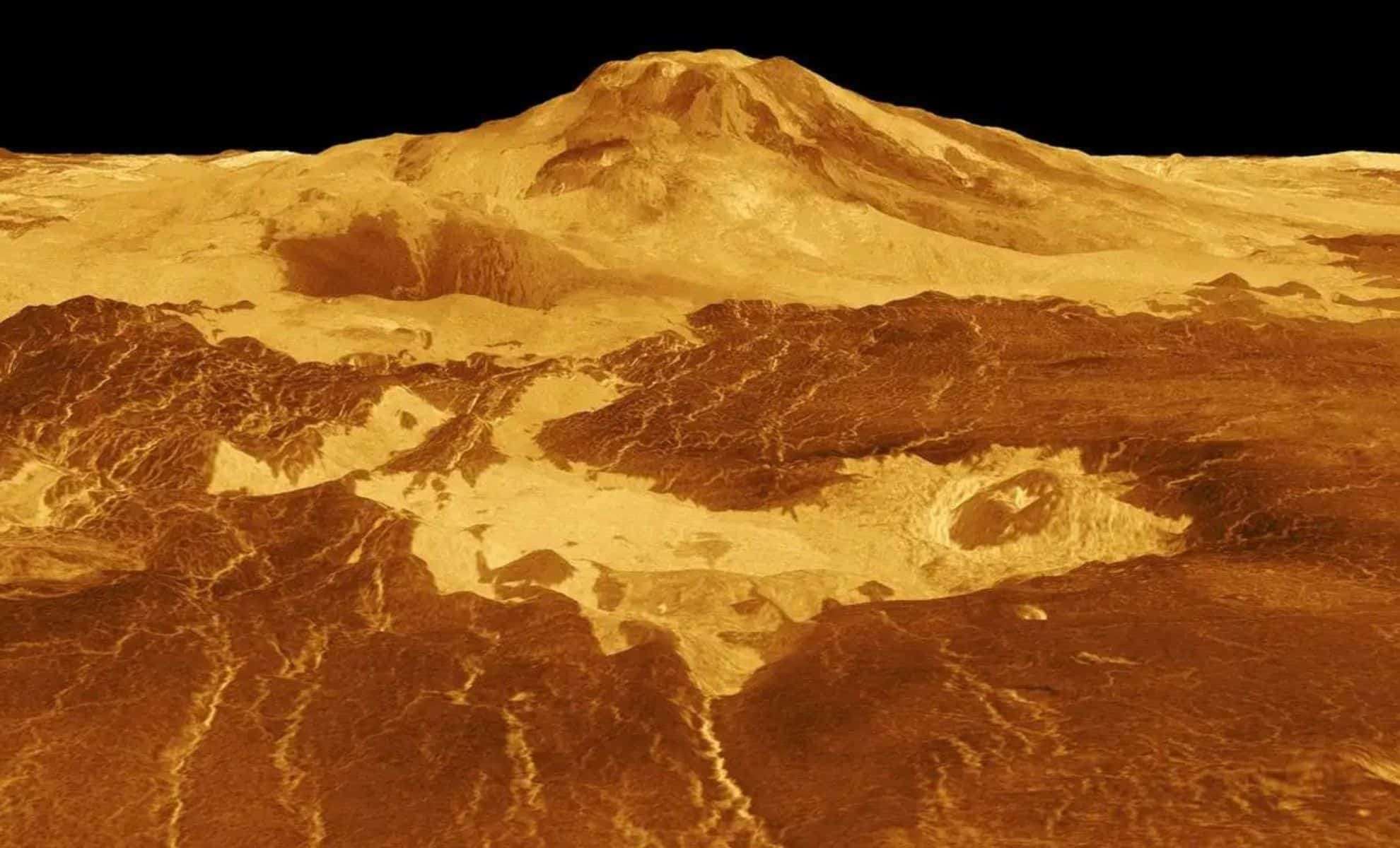
Venus, long considered Earth's closest counterpart, continues to fascinate researchers due to its hostile climate and volcanic landscapes.
The planet’s terrain is dotted with numerous volcanoes, extensive lava plains, and channels formed by flowing molten rock. Yet, until new analyses emerged, it remained uncertain if these features were remnants of ancient eruptions or signs of ongoing volcanic processes.
Recent examination of historical radar imagery from NASA’s Magellan spacecraft has uncovered compelling proof of volcanic eruptions occurring in the relatively recent past, shedding fresh light on Venusian geology.

This groundbreaking evidence advances our understanding of Venus and carries broader importance for planetary science, including comparative insights into Earth's own geological past.
Insights from the Magellan Radar Data Highlight Active Volcanism
Through a detailed review of radar measurements taken by the Magellan orbiter during its 1990–1992 mission, researchers detected notable alterations in a volcanic crater on Maat Mons, one of the planet’s largest volcanic structures.
The crater underwent dramatic changes in both its dimensions and form over just eight months, suggesting that volcanic activity took place during that timeframe.
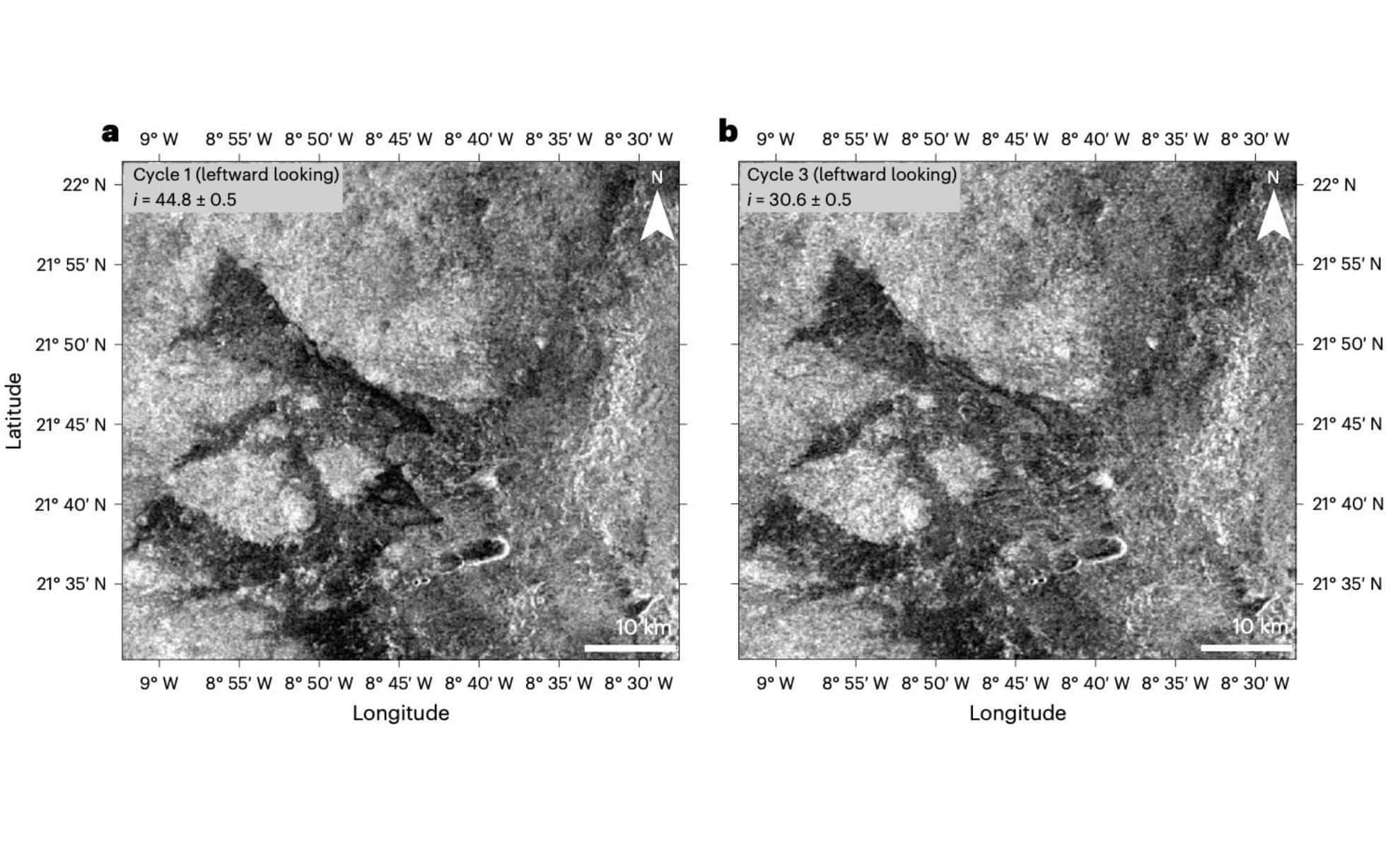
Originally nearly circular with an area of about 2.2 square kilometers, the vent had more than doubled in size and changed shape by the later observation, consistent with new lava deposits. This finding represents the first definitive evidence of active volcanism on Venus, supporting earlier indirect theories proposing ongoing geological activity.
Overcoming Difficulties in Data Interpretation
Given the age and limited resolution of the Magellan radar datasets, combined with varying imaging angles, analysts faced a complex challenge. Sophisticated computer modeling was indispensable for testing multiple geological explanations, including landslides, to ascertain the cause of observed changes.
The simulations were crucial for ruling out non-volcanic processes. By recreating diverse vent shapes and comparing them with radar signatures, the research team identified volcanic eruptions as the most credible cause behind the vent’s transformation, giving strong backing to the concept of recent lava flows.
Broader Geological Significance for Venus
The confirmation of active volcanism elevates Venus to a select group within the solar system that includes Earth and Jupiter’s moon Io, known for currently erupting volcanoes. This discovery offers important clues regarding the planet’s internal dynamics and geological history.
Ongoing volcanic activity implies a convecting interior, which influences planetary surface conditions and atmospheric composition. Eruptions could emit gases contributing to Venus’s thick, sulfur-rich clouds, thereby affecting its climate. Studying these processes enhances our broader understanding of planetary geology and atmospheric evolution.
Upcoming Explorations: NASA’s VERITAS and ESA’s EnVision
This revelation sets the stage for new missions designed to investigate Venus’s geological activity with unprecedented clarity. NASA’s VERITAS, planned for launch by the decade’s end, will employ advanced radar and infrared instruments to generate detailed 3D maps of the surface, improving resolution from previous missions to about 30 meters.
Additionally, VERITAS will analyze gravitational variations to probe the planet’s interior structure. Meanwhile, the European Space Agency’s EnVision mission will gather complementary data, mapping extensive swaths of Venus’s surface using radar and spectrometry. Together, these missions promise to revolutionize our understanding of Venus’s geology.
Studying volcanic activity on Venus not only deepens insights about this veiled world but also enhances comparative planetary science. Despite Venus’s proximity and similarity to Earth in size and composition, its extreme conditions present a striking contrast. Insights gained here may illuminate the geological and atmospheric evolution of terrestrial planets, including our own.
- Categories:
- Astronomy ,
- News ,
- Space ,
- Nasa






0 comments
Sign in to Comment