
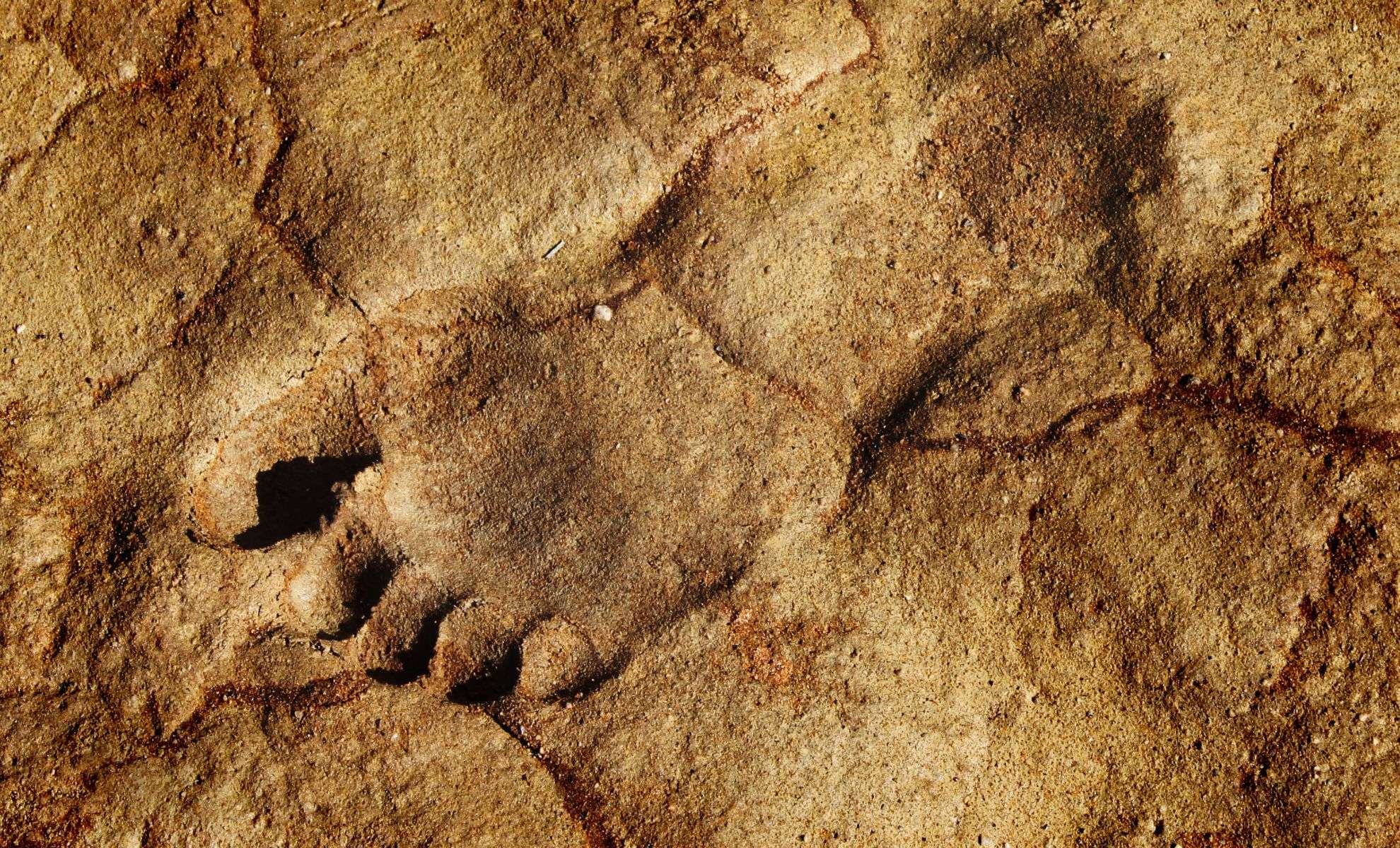
In Lower Saxony, archaeologists have uncovered ancient human footprints dating back approximately 300,000 years. Published in the journal Quaternary Science Reviews, these impressions are the oldest of their kind found in Germany. Attributed to the extinct species homo heidelbergensis, the footprints appear alongside those of elephants, rhinoceroses, and other prehistoric animals, offering a vivid snapshot of the Middle Pleistocene ecosystem.
A Family Moment Frozen in Time
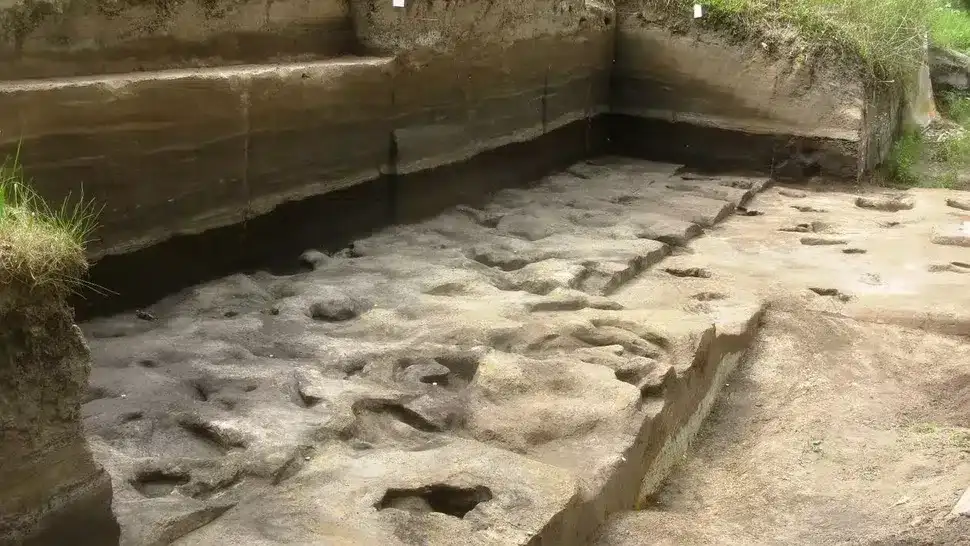
Located near an ancient lake in Schöningen, the site features three distinct human footprints. Two of the prints appear to be from children or adolescents, while the third corresponds to an adult individual.
Researchers suggest these footprints likely reflect a family group exploring the area, rather than a hunting party. The team commented, “Based on the tracks, including those of children and juveniles, this was probably a family outing rather than a group of adult hunters.”

Unlike artifacts or skeletal remains, footprints capture movement—a fleeting trace encased in mud. This makes the find especially valuable for reconstructing not just presence, but the social lives of these early humans.
Coexisting with Prehistoric Giants
Nearby the human tracks, footprints of extinct megafauna were discovered. These include those of the giant straight-tusked elephant, palaeoloxodon antiquus, known to weigh up to 13 tons. The site also revealed footprints from rhinoceros species, likely stephanorhinus kirchbergensis or stephanorhinus hemitoechus. This research reports the first ever documented rhinoceros footprints in Europe.
The ancient lakeshore functioned as a shared pathway for many large animals. Elephants, rhinos, and various ungulates left their marks alongside early human tracks. For homo heidelbergensis, this environment presented both rich resources and challenges, requiring constant vigilance amid these massive neighbors.
The Landscape of 300,000 Years Ago
During this period, the Schöningen area was dominated by birch and pine forests. Seasonal offerings such as fruits, shoots, leaves, and mushrooms provided crucial sustenance for early humans.
Flavio Altamura from the Senckenberg Centre for Human Evolution and Palaeoenvironment at the University of Tübingen explained, “Depending on the season, plants, fruits, leaves, shoots, and mushrooms were available around the lake.” He noted, “Our findings confirm that the extinct human species dwelled on lake or river shores with shallow water.”
This ancient habitat was both inviting and perilous. Access to fresh water, edible plants, and hunting prey was plentiful, but these resources were shared with large animals like elephants and rhinoceroses.
Altamura added, “We may suggest that a small hominin group that included children was walking among elephants and other species on the muddy shore of an ancient lake, perhaps looking for and collecting food, or bathing, or just playing there.”
A Moment Immortalized in Mud
The Schöningen discovery goes beyond identifying ancient footmarks; it establishes a direct link to the lives of people from hundreds of thousands of years ago. Alongside those of large mammals, the tracks left by a small prehistoric family offer an extraordinary window into early human existence.
For the first time, researchers can witness the exact paths walked by early humans—a transient instant locked in mud, yet enduring as a permanent testament to ancient lifeways.
- Categories:
- News









0 comments
Sign in to Comment