
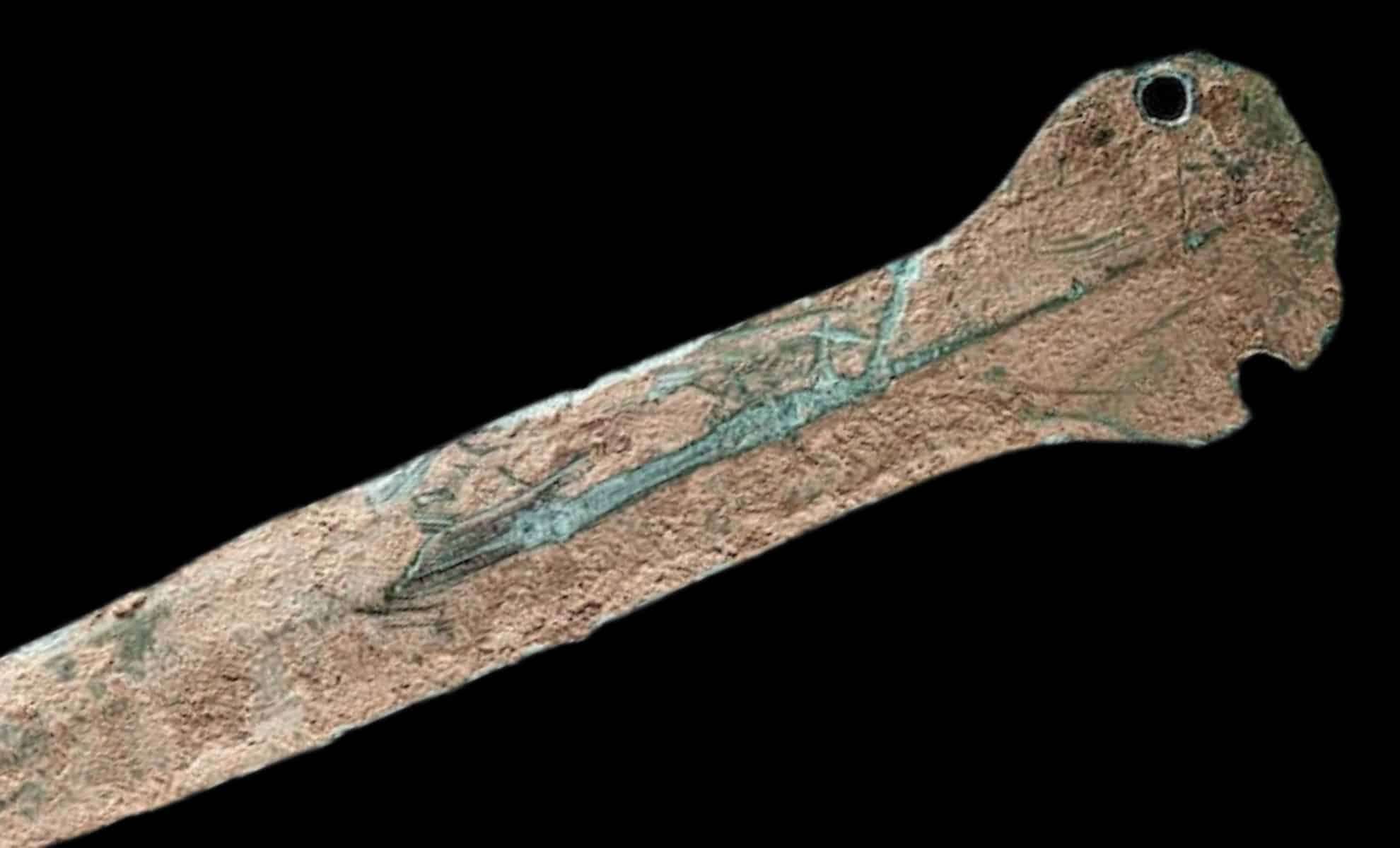
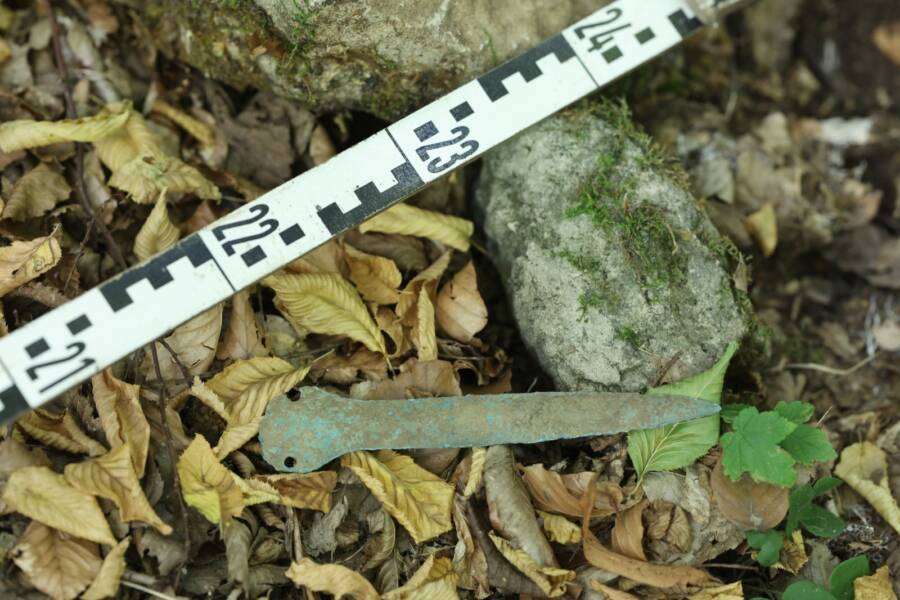
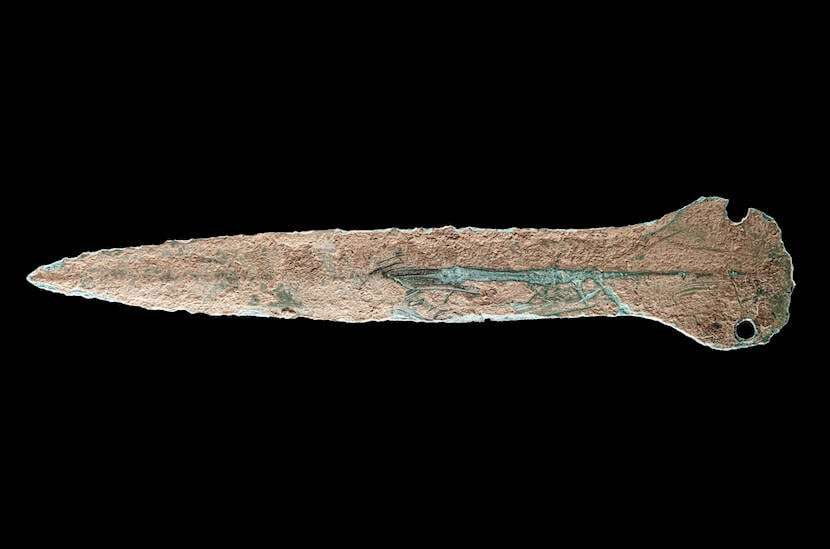
While exploring the woods near the village of Gudersleben in Thuringia, Germany, a father and his two sons stumbled upon an incredible relic from the distant past. On the forest floor lay a 3,500-year-old Bronze Age dagger, astonishingly intact and never previously excavated. As reported by MDR (Mitteldeutscher Rundfunk), the region's public broadcaster, the ornate blade likely belonged to a person of high rank and may have held ceremonial importance.
Initially Mistaken for a Stone
Maik Böhner never imagined his family walk would lead to a discovery of archaeological significance. An unusual greenish shimmer caught his eye beneath the foliage, revealing a plate-tanged dagger—a rare artifact originating from the Bronze Age.
Measuring close to eight inches in length and crafted from bronze, this weapon had likely rested underground until recent rainstorms washed away the soil, exposing it. Thanks to Thuringia’s dynamic geology—featuring sinkholes, underground waterways, and active soil shifts—the area is known for naturally uncovering ancient objects, especially following heavy precipitation.

Weapon or Ceremonial Artifact?
This dagger’s distinctive broad, flat blade with a riveted handle style was typical of Bronze Age designs and was likely fitted with a grip made from organic materials such as wood, bone, or antler. Experts believe it might have functioned more as a symbol of status or a ritual object rather than a purely practical weapon.
The exquisite bronze alloy and fine workmanship suggest that the dagger belonged to an individual of importance—possibly a chieftain, warrior, or spiritual leader. Daniel Scherg, an archaeologist with the Thuringian State Office for Monument Preservation and Archaeology, commented, “Finding a Bronze Age dagger in such pristine condition is an exceptional event.” The artifact’s well-preserved state offers valuable insights into the technological expertise and social structures of the era.
Shedding Light on Gudersleben’s Ancient Past
The discovery enriches the historical narrative of Gudersleben, as the village prepares to mark its 1,100th anniversary. This find pushes back the timeline of human activity in the area well before any written documentation. Böhner remarked, “This discovery confirms that people inhabited this land much earlier than previously known,” demonstrating how even a single artifact can alter a community’s connection to its heritage.
The family responsibly reported the dagger immediately. In Germany, excavating or keeping archaeological treasures without official permission is prohibited. Archaeologists lauded the Böhners’ prompt and lawful response, ensuring the dagger’s scientific integrity and safe preservation by trained specialists.
From Forest Floor to Public Exhibition
Currently, the dagger is undergoing careful conservation and analysis at the State Office in Weimar. Following the study, it will be displayed at the local history museum in Ellrich, joining exhibits that tell the story of early European civilizations. Scholars intend to further explore its provenance, practical use, and cultural meaning, allowing visitors an up-close encounter with this remarkable Bronze Age artifact.
- Categories:
- News






0 comments
Sign in to Comment