
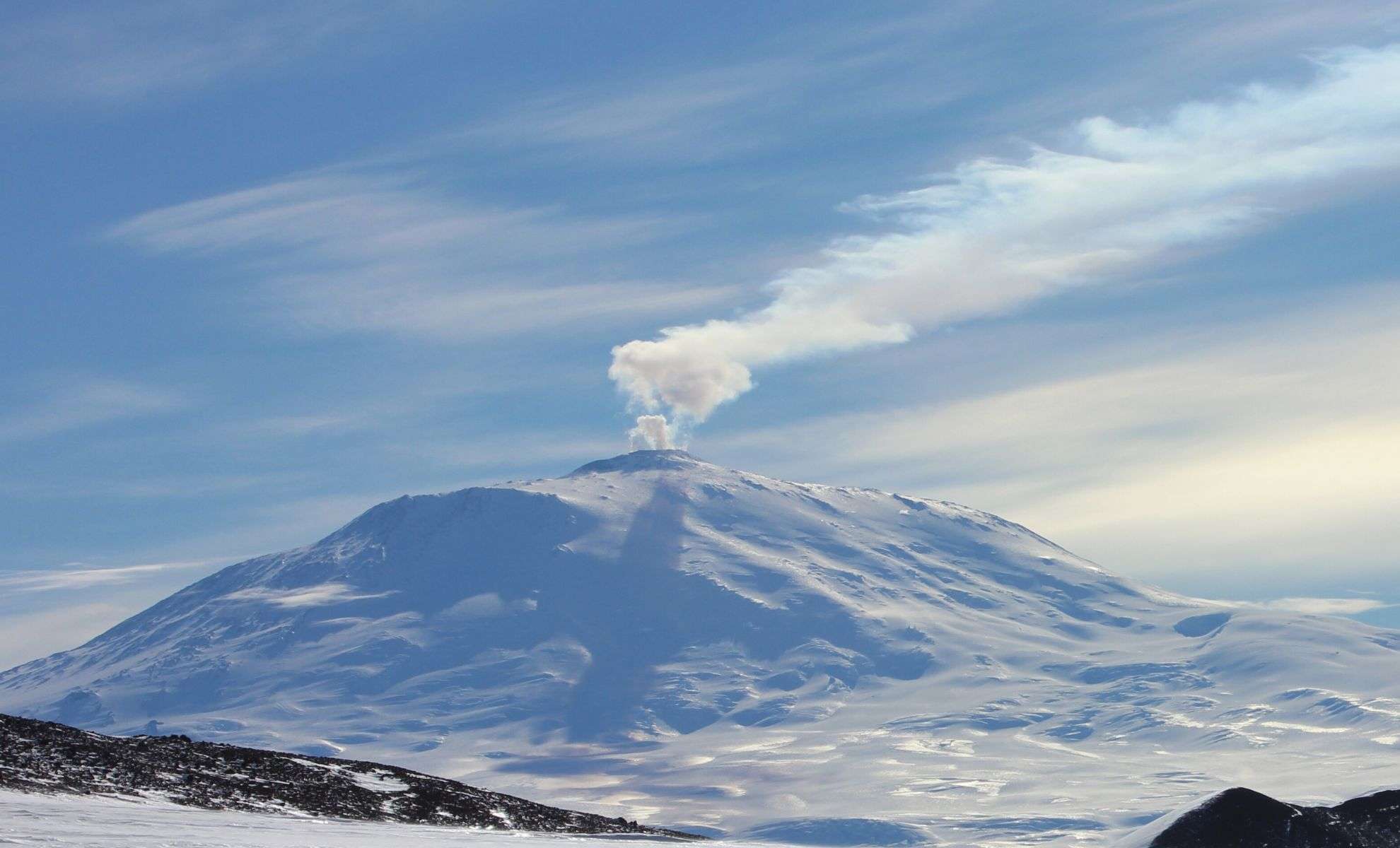
Mount Erebus, the southernmost active volcano in Antarctica, is yielding an astonishing natural wealth. Each day, it releases minuscule gold particles into the atmosphere, attracting significant scientific attention. According to New York Post, this rare process results from the volcano’s slow and steady emissions.
While volcanoes producing precious metals is a recognized concept, Erebus is notably distinct. Unlike explosive eruptions that vent gases too swiftly for gold to crystallize, Erebus’ gradual gas release allows the precious metal to solidify and form dust particles.
Mount Erebus: Antarctic Volcano with Unique Activity
First identified in 1841 by Captain Sir James Clark Ross, Mount Erebus rises to 3,794 meters (12,448 feet) and stands as one of just two active Antarctic volcanoes. Since 1972, Erebus has been releasing gases and steam continuously rather than erupting with flowing lava. This sustained activity creates a molten lava lake, an uncommon geological feature vital to its unique behavior.

Scientists suggest that the slow ascent of volcanic gases enables gold to form microscopic crystals. As these gases cool during their rise, gold particles around 20 micrometers in diameter crystallize and are dispersed by the wind across vast distances.
Experts emphasize that the volcano’s slow degassing plays an essential role in generating these gold dust particles. They are carried hundreds of miles from the eruption site, highlighting Mount Erebus’ rare volcanic dynamics.
The Geological Process Behind Gold Formation
The phenomenon of gold dust at Mount Erebus sheds light on volcanic mechanisms under specific environmental conditions. Unlike most volcanoes that erupt explosively, Erebus’ moderate gas flow allows gold to solidify into crystals prior to release into the air.
Conor Bacon, a postdoctoral scientist at Columbia University’s Lamont-Doherty Earth Observatory, highlights that the active lava lake beneath Erebus is critical to this process. He points out that lava lakes are uncommon as they rely on unique circumstances that keep the molten surface from cooling and freezing, permitting ongoing interaction with the atmosphere.
A Surprising Discovery With Broader Implications
The gold dust emitted daily from Mount Erebus has an estimated market value of about £5,040 ($6,140), according to current prices. Although this accumulates over time, the volume is not sufficient to attract commercial mining ventures at present. Nevertheless, this unique finding opens tantalizing prospects for volcanic sources of precious metals.
Given Mount Erebus’ isolated environment, mining is not currently practical, but the phenomenon enhances understanding of gold formation linked to volcanic activity. Future research might reveal similar mineral deposits produced by other volcanoes under comparable conditions, potentially unlocking new natural resources beneath the Earth’s surface.
Ultimately, the tiny gold particles from Mount Erebus offer a rare window into the interplay between volcanic dynamics and mineral creation.
- Categories:
- News











0 comments
Sign in to Comment