

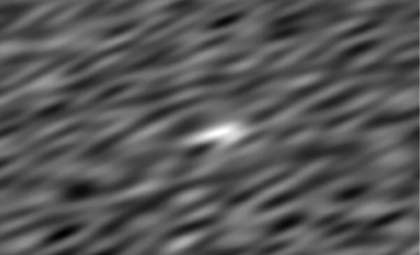
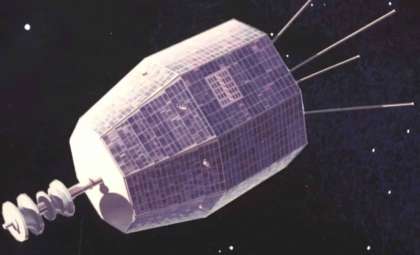
In 2025, researchers encountered a remarkable and puzzling event in space science. NASA’s Relay 2 satellite, which was launched in 1964 and ceased functioning in 1967, suddenly emitted an incredibly strong radio burst. This signal, captured by the Australian Square Kilometre Array Pathfinder (ASKAP), lasted fewer than 30 nanoseconds and briefly outshone every other known cosmic radio source observed above Earth. The findings, explored in a study published in The Astrophysical Journal Letters, offer new insights into space debris and unusual electrostatic phenomena.
An Unexpected Transmission from a Space Relic
Relay 2’s sudden activity is extraordinary considering its long dormancy. Initially launched as an experimental communications satellite in 1964, it remained inactive for decades after its original mission ended in 1967. The discovery came as astronomers, including Clancy James from Curtin University in Perth, were conducting a routine survey for fast radio bursts (FRBs). The intensity of the detected pulse overwhelmed ASKAP’s sensitive instruments, which are typically tuned to observe distant celestial sources.
Excitement grew as the researchers initially speculated the source might be a newly discovered pulsar or similar celestial object. “Because it was so close, we thought we could easily observe it with optical telescopes,” James said. Pulsars, highly magnetized, spinning neutron stars, often produce radio pulses, but the team quickly dismissed this because the pulse’s dispersion measure indicated the origin was near Earth rather than from deep space.

Characterizing the Brief Yet Potent Signal
The detected radio burst was astonishing not only for its power but for its fleeting nature. Lasting less than 30 nanoseconds, it "vastly outshone everything else in the sky for a very short amount of time," James explained. The intensity reached at least 300 kilojanskys, surpassing Jupiter’s radio brightness by millions of times. Such a short and intense burst is rare and difficult to capture with typical astronomical instruments.
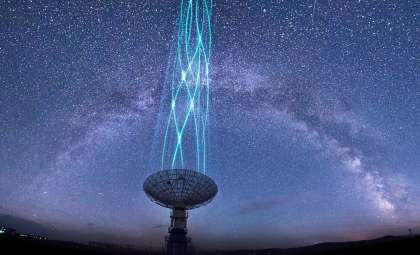
Thanks to ASKAP’s rapid sky survey capabilities, the team was able to triangulate the pulse’s source. By analyzing precisely timed signal delays across its array of 36 twelve-meter dishes, they confirmed the signal originated from Relay 2's predicted orbit. No other satellites nearby matched the timing or location, strongly indicating the old satellite was responsible.
Electrostatic Discharge: The Most Plausible Explanation
Since Relay 2 has no active transmitters, the pulse likely arose from an external phenomenon. The favored explanation is an electrostatic discharge, where electrical arcs occur between charged surfaces on the satellite. In low Earth orbit, interactions with plasma can cause satellites to accumulate significant electrical charge, occasionally leading to discharges that emit radio waves.
Another possible cause is a micrometeoroid impact. At speeds reaching around 22,000 miles per hour, tiny space particles can collide with satellites, vaporizing metal and generating expanding plasma clouds that produce brief, intense radio emissions. Given Relay 2’s vintage construction, it would have limited shielding against such impacts.
Implications for Space Debris Management and Satellite Operations
This event highlights growing challenges posed by space debris — thousands of defunct satellites and millions of smaller fragments orbit our planet. Karen Aplin from the University of Bristol noted, “With an increasing number of satellites and space debris, many lacking adequate protection against electrostatic discharges, this radio detection may lead to innovative approaches for monitoring electrostatic events in orbit.” Understanding these signals is critical for maintaining the health and longevity of both active and inactive spacecraft.
With over 29,000 tracked objects and countless smaller fragments floating in low Earth orbit, this surprising radio pulse offers a potential new tool for tracking space debris. It also underscores the need for evolving space technology that can safely navigate an increasingly crowded orbital environment—where even long-forgotten satellites like Relay 2 can unexpectedly impact observations and satellite safety.
- Categories:
- News







0 comments
Sign in to Comment