
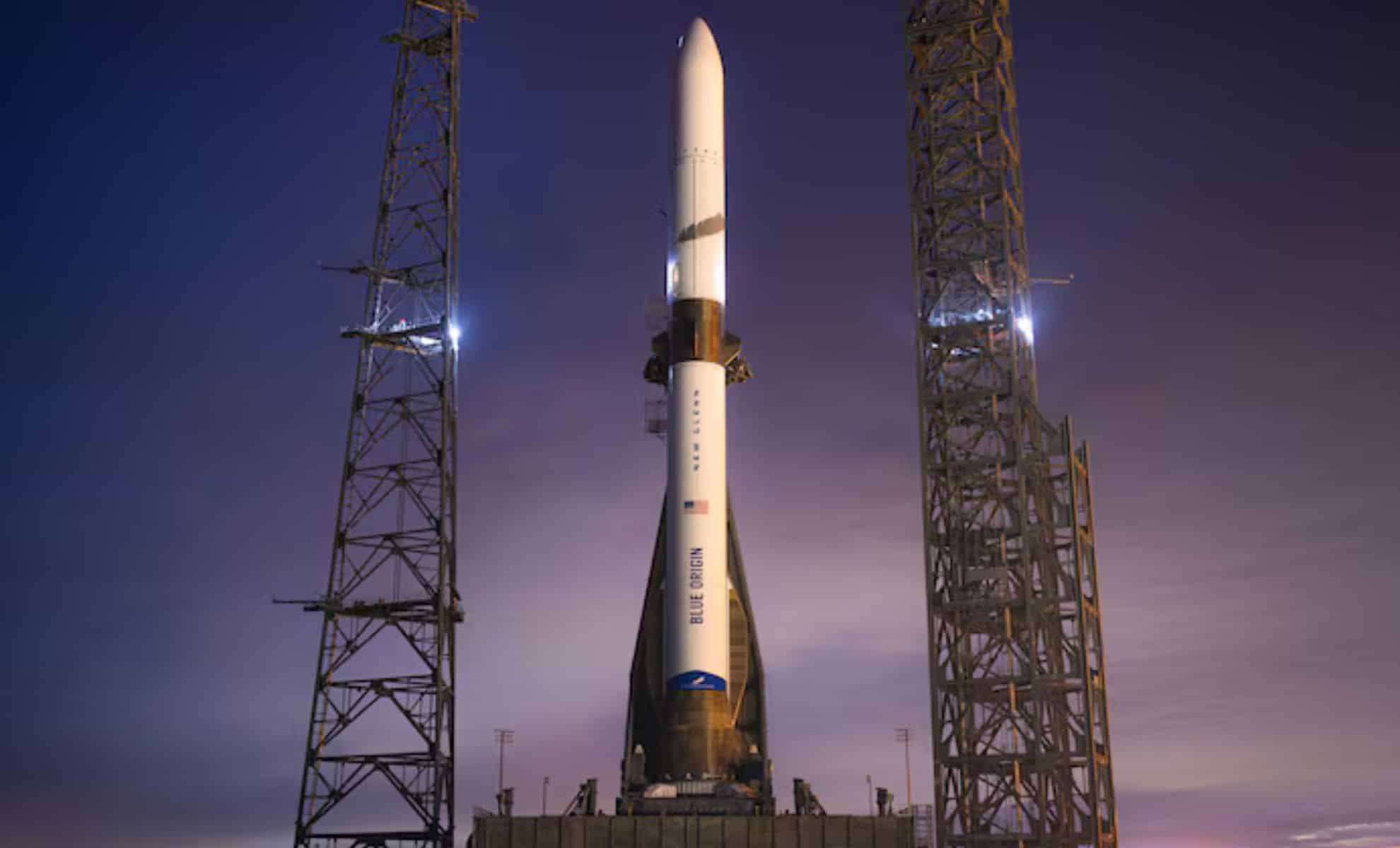
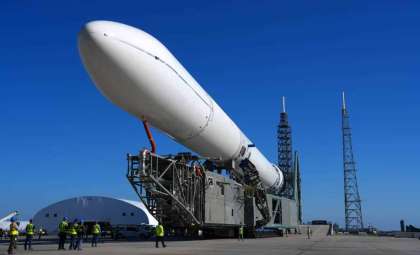
Blue Origin, the aerospace firm established by Amazon's Jeff Bezos, is preparing for a defining moment with the first-ever launch of its New Glenn rocket. Targeted for Sunday, January 12 at NASA’s Kennedy Space Center in Cape Canaveral, Florida, the launch window spans from 1 a.m. to 4 a.m. ET. This event symbolizes a crucial step in Blue Origin’s quest to become a dominant force in the commercial space arena. The New Glenn, a colossal reusable launch vehicle, will undergo a comprehensive examination of its flight performance and its capacity to support future space transport operations.
The New Glenn Rocket: Advancing Blue Origin's Spacecapabilities
The New Glenn rocket, named in honor of iconic astronaut John Glenn, marks a significant advancement for Blue Origin. Engineered for multiple reuses, it is crafted to launch substantial payloads into orbit for both commercial and governmental clients. Reaching a towering height of 95 meters (313 feet), it ranks among the tallest rockets currently under development, with a first stage designed for reusability up to 25 flights.
The debut mission will concentrate on validating the rocket’s primary flight systems, ground operations, and booster recovery methods. Jarrett Jones, Blue Origin’s Senior Vice President of New Glenn, notes, “We have rigorously prepared for this initial launch. However, actual flight is irreplaceable experience. Regardless of the outcome, we are committed to learning, improving, and applying those lessons to future launches.”

Years of innovation underpin the company’s optimistic outlook, yet the flight remains a pivotal opportunity to confirm Blue Origin’s emerging leadership in a fiercely competitive commercial space sector.
Mission Goals: Payload and Testing Objectives
The payload on this premiere flight is the Blue Ring Pathfinder, part of the Defense Innovation Unit’s (DIU) Orbital Logistics prototype. This project explores cutting-edge orbital logistics, including in-space refueling and operational capabilities. Blue Origin emphasizes that the flight will rigorously assess the rocket’s flight hardware, ground support systems, and operational efficiency.
This comprehensive mission underlines Blue Origin’s ambition to serve both governmental projects and commercial ventures, demonstrating how New Glenn’s payload versatility—from defense applications to commercial satellites—positions the rocket as a durable asset within the evolving space economy.
Championing Reusability and Eco-Friendly Spaceflight
A key highlight of the New Glenn is its first-stage booster designed for ocean platform landings in the Atlantic Ocean. Blue Origin’s dedication to reusable technology aligns with the industry standards set by competitor SpaceX, which has transformed the economics of space travel with its Falcon series.
The upcoming test will be critical in proving New Glenn’s booster recovery system, a vital component of Blue Origin’s objective to conduct frequent, cost-effective, and sustainable launches. Achieving reusability not only reduces expenses but also supports a more environmentally responsible approach to space exploration, reflecting growing industry-wide calls for sustainability in traditionally resource-heavy operations.

Positioning in the Competitive Commercial Space Sector
Launching the New Glenn comes as the commercial space sector experiences rapid innovation and escalating rivalry. While companies like SpaceX focus on orbital missions and satellite deployments, and Virgin Galactic targets suborbital tourism, Blue Origin aims to cover a wide range of space services with versatile platforms such as New Glenn and its New Shepard suborbital vehicle.
This launch follows the success of Blue Origin’s NS-27 spacecraft test in October 2024, which demonstrated the company’s strength in uncrewed missions. Introducing New Glenn marks a new chapter in Blue Origin’s push into orbital flights and government collaborations, intensifying the competition among billionaire-backed aerospace companies.









0 comments
Sign in to Comment