
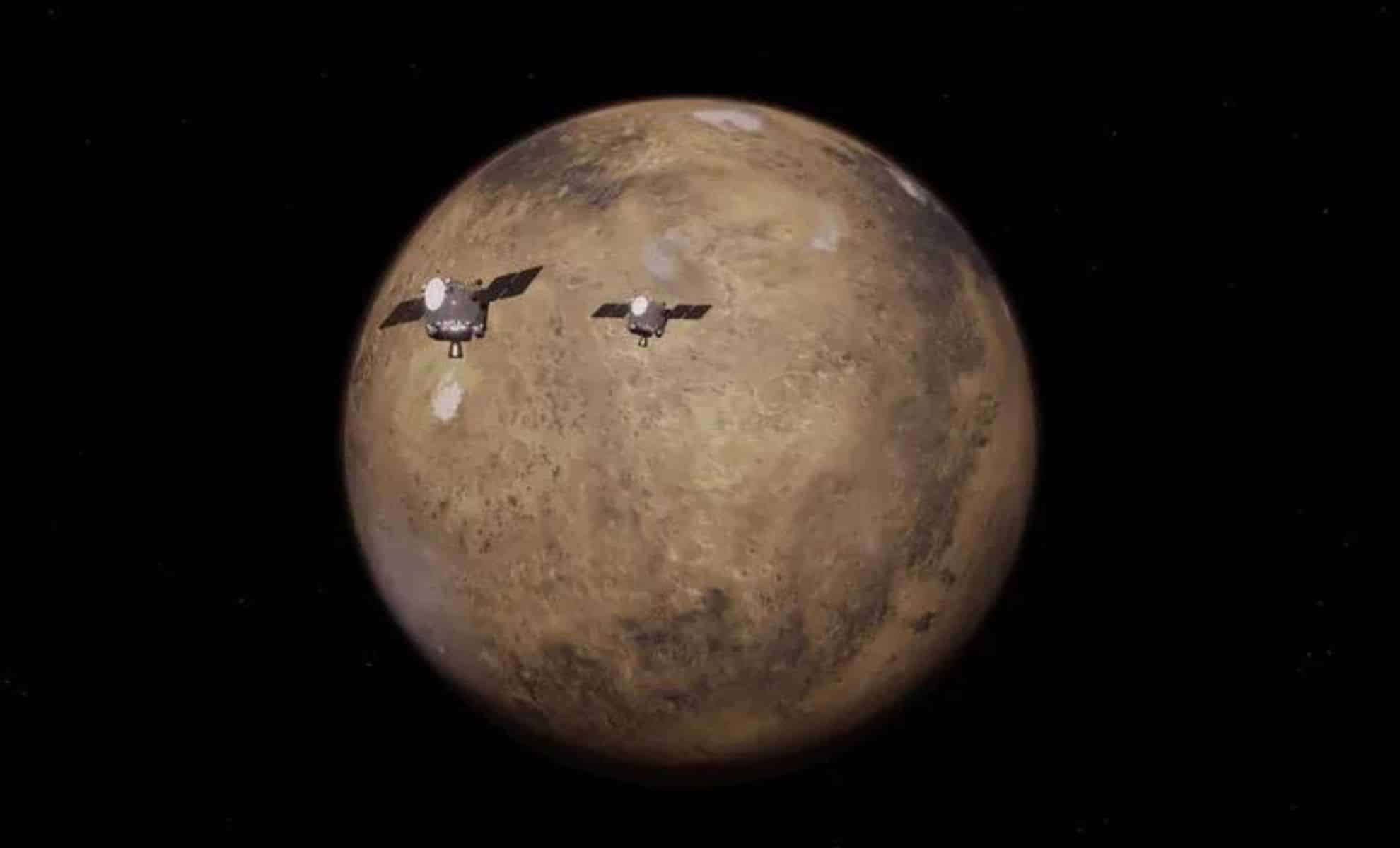
NASA has rescheduled the ESCAPADE mission to Mars, now aiming for a spring 2025 departure instead of the initially planned October 2024 launch on Blue Origin’s New Glenn rocket.
This postponement is intended to mitigate risks linked to fueling and readiness concerns, ensuring a smooth and safe launch process.
Updated Timeline and Rationale for ESCAPADE’s Launch Delay
The space agency has confirmed that the ESCAPADE Mars mission launch, previously set for October 2024, will be deferred to spring 2025. Announced through NASA’s official X (formerly Twitter) channel, the change follows detailed coordination among NASA, Blue Origin, and the Federal Aviation Administration (FAA). The rescheduling prioritizes technical preparedness and mission success amid the challenges of debuting the New Glenn rocket as a carrier for Mars exploration.

NASA highlighted that the delay helps avoid potential complications stemming from accelerated fueling or launch vehicle issues.
NASA’s ESCAPADE (Escape and Plasma Acceleration and Dynamics Explorers) mission is now targeting a launch in 2025. ESCAPADE’s two satellites will investigate how solar wind interacts with the magnetic environment of Mars. Learn more: https://t.co/eIoFQ0BbPO pic.twitter.com/kHtbIaxOKz
— NASA (@NASA) September 6, 2024
Significance of the ESCAPADE Mission for Mars Science
The ESCAPADE project aims to analyze the interaction between solar wind and Mars’ magnetosphere, focusing on the processes that contribute to atmospheric loss. Two identical satellites, named Blue and Gold, will orbit Mars to record how space weather erodes its atmosphere and influences its climate evolution. These investigations are crucial to understanding why Mars transitioned from a wetter world to the arid planet we see today.
“ESCAPADE provides invaluable data on Mars’ atmospheric dynamics and its space environment interactions, shedding light on the red planet’s habitability history,” explained Nicky Fox, NASA’s associate administrator for science. Insights from this mission will be vital for future human exploration by informing strategies to protect astronauts from harsh space radiation and solar phenomena. Flying two spacecraft in formation will allow NASA to collect simultaneous multi-point measurements for a thorough analysis of atmospheric escape.
Blue Origin’s New Glenn: Pioneering Deep-Space Launches
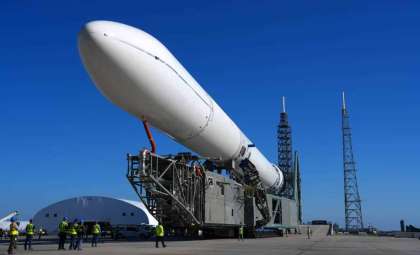
The delay also affects the highly anticipated inaugural deep-space mission of Blue Origin’s New Glenn rocket. Intended to launch the twin ESCAPADE satellites to Mars, New Glenn is a heavy-lift rocket capable of supporting both crewed and uncrewed missions. Postponing the launch helps prevent complications related to propellant handling and financial overruns. A NASA official stated, “Postponing the launch helps us avoid unforeseen risks tied to the readiness of the launch system.”
Meanwhile, Blue Origin is advancing other missions. The Blue Ring technology flight, initially scheduled for December 2024, now targets November as part of efforts to secure National Security Space Launch (NSSL) certification. Blue Origin remains confident in New Glenn’s potential, and NASA continues to back the rocket’s suitability for this and future Mars missions.
Preparing for a Successful ESCAPADE Launch
This extension grants NASA and Blue Origin vital additional time to finalize preparations for both the ESCAPADE spacecraft and the New Glenn launch system. The twin probes will explore how plasma and the solar wind shape Mars’ atmospheric loss, furnishing insights about the planet’s shift from a once potentially habitable environment to its current hostile state.
“Our priority is to safely deploy ESCAPADE,” noted Nicky Fox. “I eagerly anticipate seeing these spacecraft begin their journey toward Mars.” The mission’s results will not only expand our knowledge of Martian atmospheric changes but also enhance efforts to protect future astronauts by improving models of space weather and atmospheric interactions.
- Categories:
- Astronomy ,
- News ,
- Space ,
- Nasa








0 comments
Sign in to Comment