
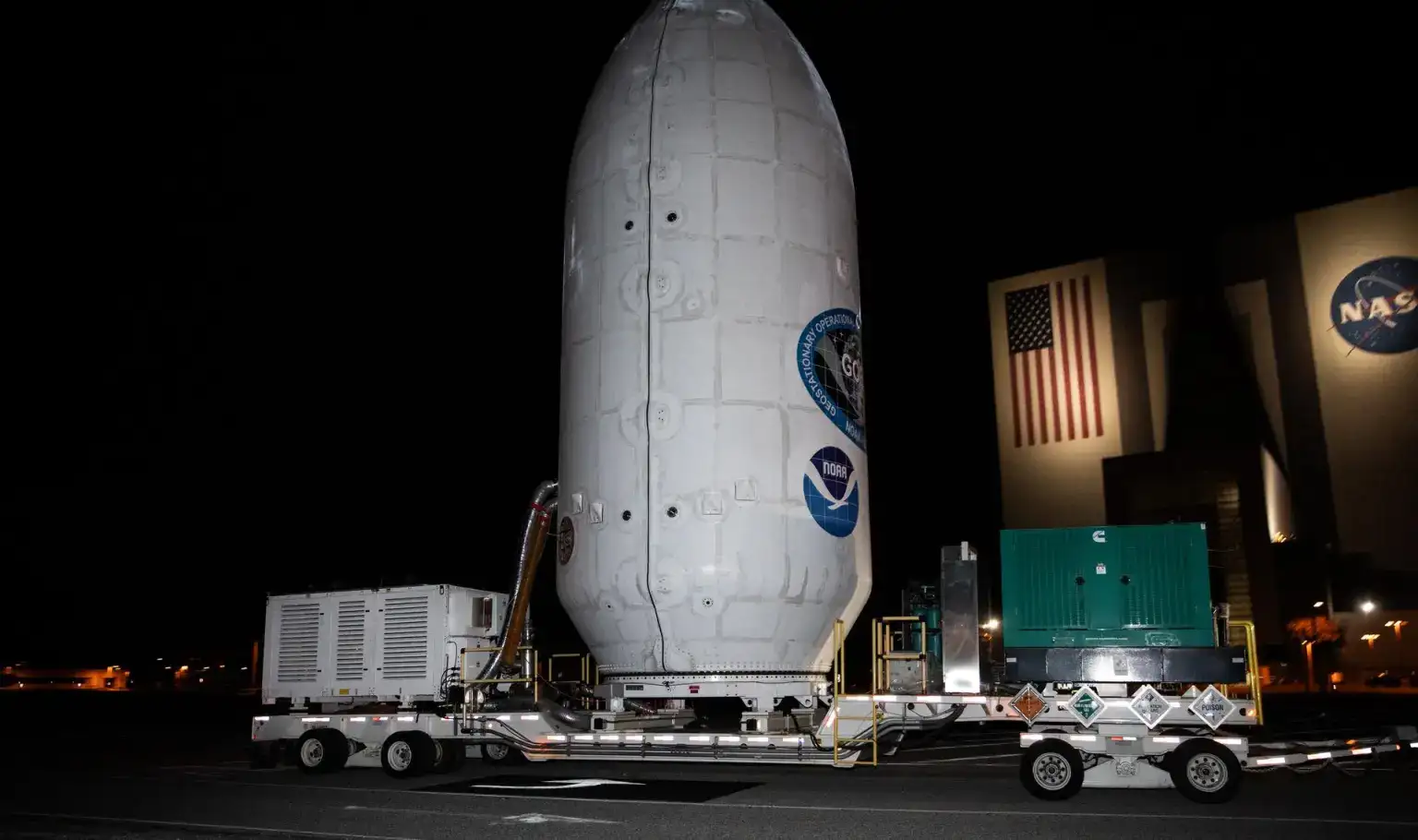
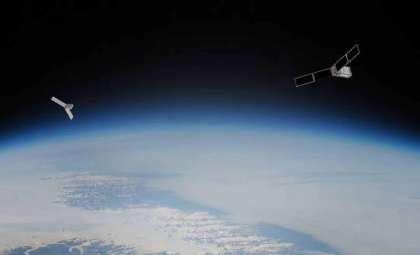
NASA is preparing to deploy the GOES-U satellite, the newest member of the Geostationary Operational Environmental Satellite lineup, aimed at boosting Earth and space weather monitoring capabilities.
Set for liftoff on June 25, 2024, this mission will deliver vital data to enhance weather forecasting and track solar activity.
Why GOES-U’s Launch Matters
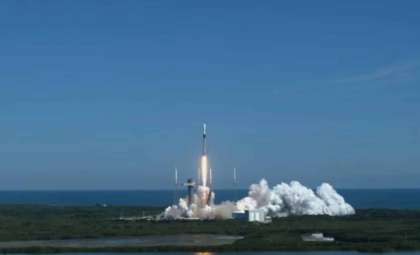
GOES-U is scheduled to launch atop a SpaceX Falcon Heavy rocket from the Kennedy Space Center in Florida. As the final satellite in the GOES-R series, it will ensure continuous weather surveillance across the Western Hemisphere, monitoring tropical storms over the Pacific and Atlantic oceans. The GOES program plays a crucial role in delivering timely weather warnings and forecasts to protect over one billion individuals living and working throughout the Americas.

Cutting-Edge Solar Observation with Compact Coronagraph-1
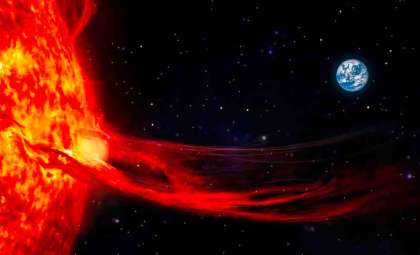
A standout feature of GOES-U is the integration of the Naval Research Laboratory’s Compact Coronagraph-1 (CCOR-1). This sophisticated device will capture detailed images of the Sun’s outer atmosphere—the corona—enabling early detection and analysis of coronal mass ejections (CMEs). These solar eruptions can significantly influence space weather, disrupting satellites, communication networks, and power grids on Earth.
Bill Murtagh, coordinator at the National Oceanic and Atmospheric Administration’s (NOAA) Space Weather Prediction Center, highlighted the instrument’s importance: “Coronagraph images are vital for us to detect the CME, measure it, put the information into a model, and from the model predict the arrival if it’s going to impact Earth.” He added: “The coronagraph we’ve been relying on (LASCO) is not available a lot of times because it’s a research instrument. It’s a single point of failure so, if it’s gone tomorrow, we would be in a bad situation.”
Elsayed Talaat, NOAA’s Director of the Office of Space Weather Observations, elaborated on the instrument’s role: “As we see these storms come off the sun, [coronagraphs] tell us that something large is coming towards us and we input the characteristics of that coronal mass ejection into our models and project them out to see if there’s going to be an impact here.”
Faster Data and Enhanced Reliability
The new coronagraph aboard GOES-U promises quicker and more comprehensive solar activity data. Unlike the aging LASCO instrument on the SOHO spacecraft—which suffers from communication delays—CCOR-1 is engineered to transmit images within 30 minutes of capture, enabling more prompt space weather forecasting.
“We will have for the first time the ability to get an artificial eclipse, a total eclipse of the sun, every 30 minutes. That will provide us with a really good capability right now,” Talaat noted, emphasizing the design’s goal to minimize disruptions from intense solar storms and deliver cleaner, dependable data.
Launch Preparations and Public Engagement
NASA will broadcast the GOES-U launch and related events live, including a science briefing, a NASA Social panel, and a prelaunch press conference. The takeoff is slated for a two-hour window beginning at 5:16 p.m. EDT on June 25.
The GOES-U project highlights continuous improvements in both meteorological and space weather observation technology. By refining how solar and atmospheric phenomena are tracked and predicted, this satellite will be key in safeguarding infrastructure on Earth and in orbit.
Talaat reflected on the mission’s significance: “These observations are critical to the Space Weather Prediction Center’s (SWPC) capability to warn and forecast. Without these spaceborne observations, we would be blind to where activity is on the sunspots … we need to make those measurements in space.”
This initiative exemplifies a commitment to deploying advanced technology for deeper insights into environmental and solar weather systems, ultimately helping build more prepared and resilient societies.






0 comments
Sign in to Comment