
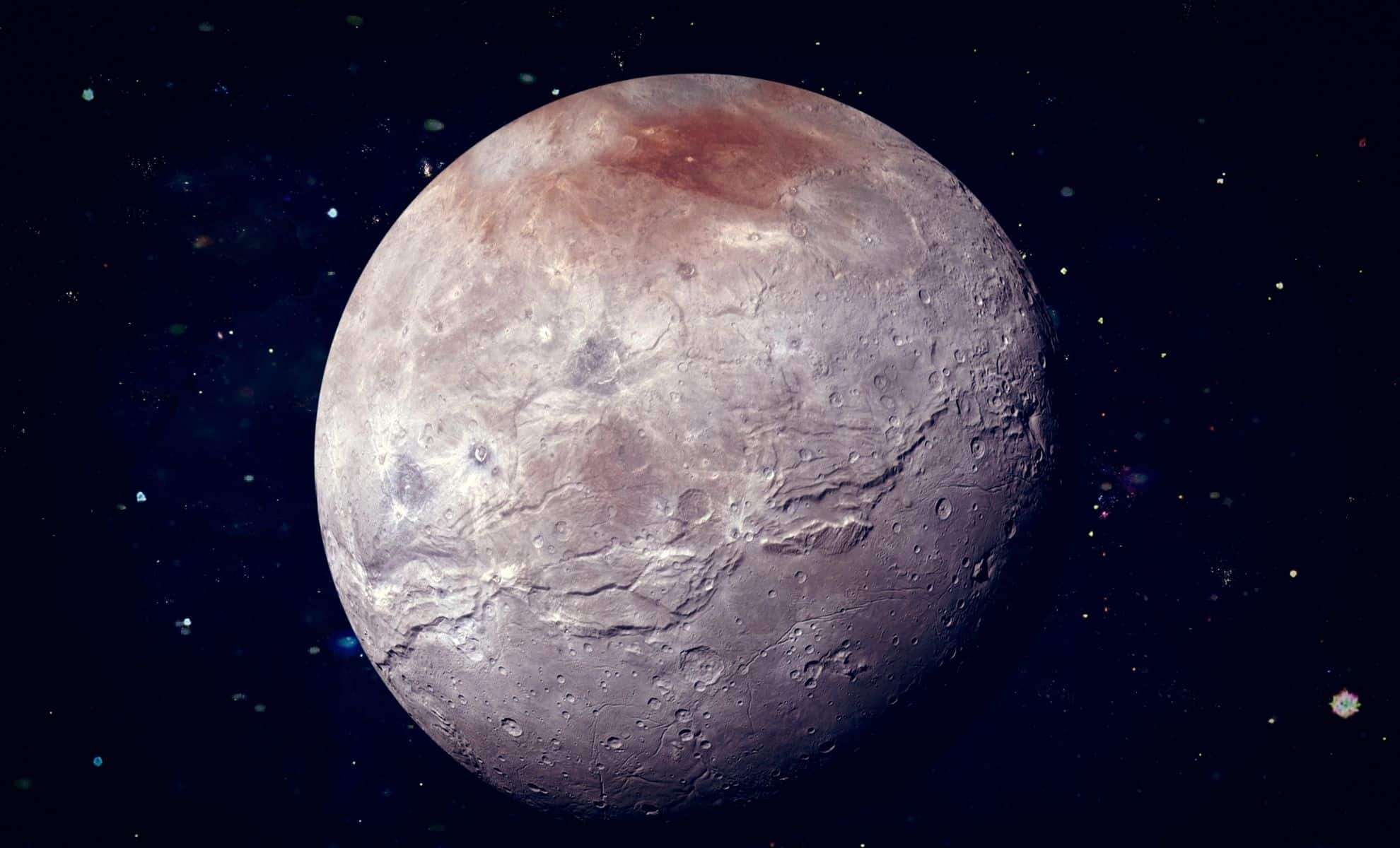
Once considered a cold, desolate world at the solar system's edge, Pluto is now believed to conceal a captivating secret beneath its icy exterior: a hidden subterranean ocean. A groundbreaking study featured in Nature Geoscience reignited curiosity about the dwarf planet by proposing that this concealed ocean formed early in Pluto’s formation and has remained liquid for billions of years, defying the harsh cold and great distance from the Sun.
Insights From the New Horizons Encounter
Pluto’s narrative changed dramatically in 2015 when NASA’s New Horizons spacecraft performed its historic close pass. Its detailed imaging revealed landscapes much more complex than anticipated. Geological features hinted at internal geological activity unusual for a small body. Scientists were particularly intrigued by the absence of compression-related structures on Pluto’s ancient surface, suggesting that Pluto initially formed hot, opposing the prior belief that it gradually warmed up over time.
Another significant clue is surface expansion. The presence of elongated impact craters and fractures resembling tectonic features indicate that as water beneath froze and expanded, it pushed the outer crust outward. S. Alan Stern, the lead scientist of New Horizons, likened it to: “If you take a glass of water and put it in the freezer, that glass is going to break overnight because when the water freezes, it expands.” On Pluto, this expansion has visibly reshaped the terrain.

Heat From Within and Possibility of Life
Far from the Sun’s warmth, Pluto’s interior warmth is sustained by radiogenic heat—energy released from radioactive decay within its rocky core. Studies since 2016 indicate this heat might be sufficient to keep a deep ocean, potentially over 100 kilometers thick, in liquid form beneath its frozen crust.
This hidden ocean, if present, may be chemically hospitable as well. Some models suggest it has remained chemically stable for billions of years, with minimal harmful substances such as hydrogen peroxide. While Pluto’s surface lacks an atmosphere and is hostile to life, its subsurface ocean could provide a safe haven, shielded from cosmic radiation and meteorite impacts.
Sparking New Questions From Pluto’s Icy Terrain
One of Pluto's signature landmarks, Sputnik Planitia, which forms a portion of the dwarf planet's distinctive heart-shaped area seen in many New Horizons images, was originally attributed to a colossal impact event. However, its exact placement directly opposite Pluto’s moon Charon invites debate. Stern and his team propose that this positioning might be explained by polar wandering, a process where the surface shifts due to internal mass redistributions—an effect solely possible if Pluto contains a subsurface ocean enabling the outer shell to move independently.
Additional crater studies bolster this argument. Instead of compressed shapes, Pluto’s craters—even ancient ones—appear stretched, indicating a surface expansion rather than shrinkage. To account for these observations, Bierson’s group conducted simulations revealing that Pluto’s formation could have occurred in as little as 30,000 years, building heat from a rapid sequence of enormous impacts.
Reconsidering Ocean Worlds Beyond Earth
Pluto’s findings are reshaping planetary science perspectives. As Stern emphasizes, “Oceans are common throughout our solar system, mainly in its outer regions, and they might serve as potential habitats for life.” This represents a major paradigm shift away from Earth-focused assumptions. If a distant, icy dwarf like Pluto can maintain liquid water beneath its surface, similar subsurface oceans may lurk on Eris, Makemake, Haumea, and other Kuiper Belt bodies.
Such underground oceans present unique advantages: they are protected from solar storms, asteroid collisions, and surface changes—conditions that have at times devastated life on Earth. Stern refers to these subterranean seas as “far safer refuges for life.”
Despite growing evidence, many aspects remain unresolved. New Horizons captured detailed imagery of only about 40 percent of Pluto’s surface, leaving the majority either poorly seen or cloaked in shadow. This limitation is why Stern and other scientists advocate for a Pluto orbiter mission equipped with radar and laser tools to extensively map the surface and explore beneath its extensive ice cover.
- Categories:
- News













0 comments
Sign in to Comment