

Researchers from Harvard Medical School, under the leadership of Vishal Patel, have uncovered intriguing evidence linking spatial navigation training with a decrease in Alzheimer’s-related fatalities. Their study points to careers that demand constant orientation skills—like taxi and ambulance drivers—as potential protectors against Alzheimer’s by stimulating the brain’s navigation center, the hippocampus.
The Hippocampus: A Key Player in Alzheimer’s Development
The hippocampus is essential for spatial awareness and memory, allowing people to navigate and find their way. Studies show that taxi drivers exhibit increased hippocampal activity compared to the general public. This brain region is also closely connected to the progression of Alzheimer’s dementia, which primarily causes confusion and loss of memory.
Scientists have long been curious whether frequent use of the hippocampus through navigation-intensive tasks might shield individuals from Alzheimer’s. Could the ongoing mental challenge endured by those who handle unpredictable routes be the key?

Lower Alzheimer’s Deaths Observed in Navigation-Centric Occupations
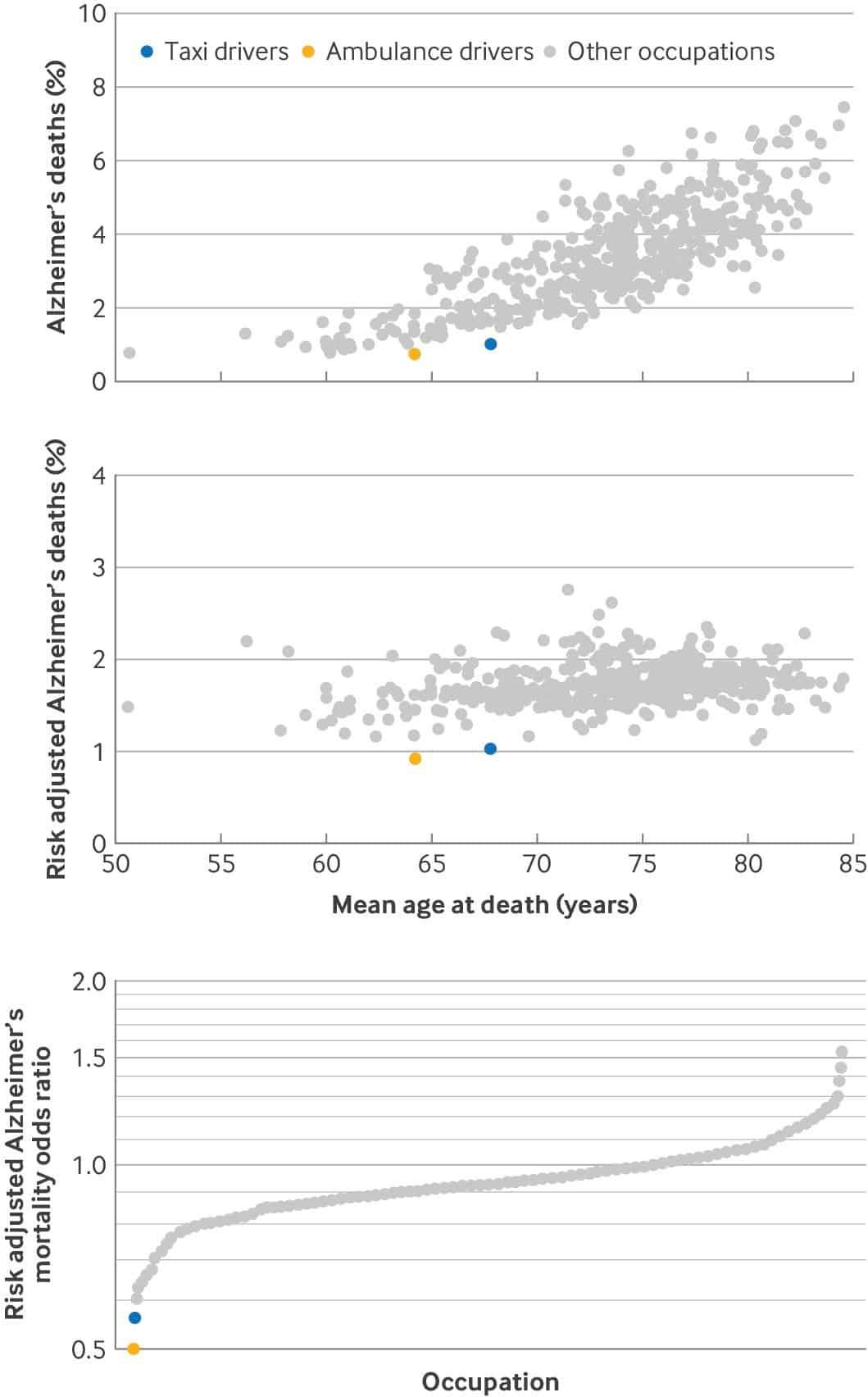
To examine this, the Harvard team reviewed nearly nine million death records from U.S. adults between 2020 and 2022, focusing on their main occupations and Alzheimer’s as a cause of death. The analysis exposed notable contrasts:
- Across all groups, 1.69% of deaths were due to Alzheimer’s disease.
- Among taxi drivers, this percentage fell to 1.03%.
- Ambulance drivers showed an even lower figure of 0.91%.
Both professions ranked among those with the lowest Alzheimer’s mortality rates, as compared to careers involving fixed routes such as bus drivers (1.65%), ship captains (2.12%), and pilots (2.34%).
Why Dynamic Navigation Jobs Might Cut Alzheimer’s Risk
Taxi and ambulance drivers constantly adapt to new routes and directions, which likely keeps their hippocampus highly active. This sustained cognitive workout could help preserve the brain region’s function, possibly lowering the risk of developing Alzheimer’s symptoms.
In contrast, roles like bus drivers, pilots, and ship captains operate along set paths, requiring less navigational problem-solving. Supporting these findings, a London-based study revealed that taxi drivers possess a more developed hippocampus than bus drivers, emphasizing the impact of their demanding navigation duties.
“Our findings highlight the importance of considering occupational influences on Alzheimer’s mortality risk, and whether certain cognitive activities could act as preventive measures,” explained Anupam Jena from Massachusetts General Hospital, who led the study. More research is essential to verify if mental activities inherent to jobs like taxi and ambulance driving can delay dementia onset.
Exploring the Relationship Further
Although this research presents promising correlations, it does not establish a cause-and-effect relationship between navigation-intensive work and Alzheimer’s protection. Nevertheless, it opens the possibility that careers demanding frequent spatial memory use might inform strategies to prevent or slow the disease.
Patel and his team emphasize, “Additional research is crucial to determine if the spatial cognitive load required by these professions directly impacts Alzheimer’s mortality risk and if cognitive challenges of this kind can help in prevention.”
Source: BMJ Group, Mass General Brigham
- Categories:
- Health













0 comments
Sign in to Comment