
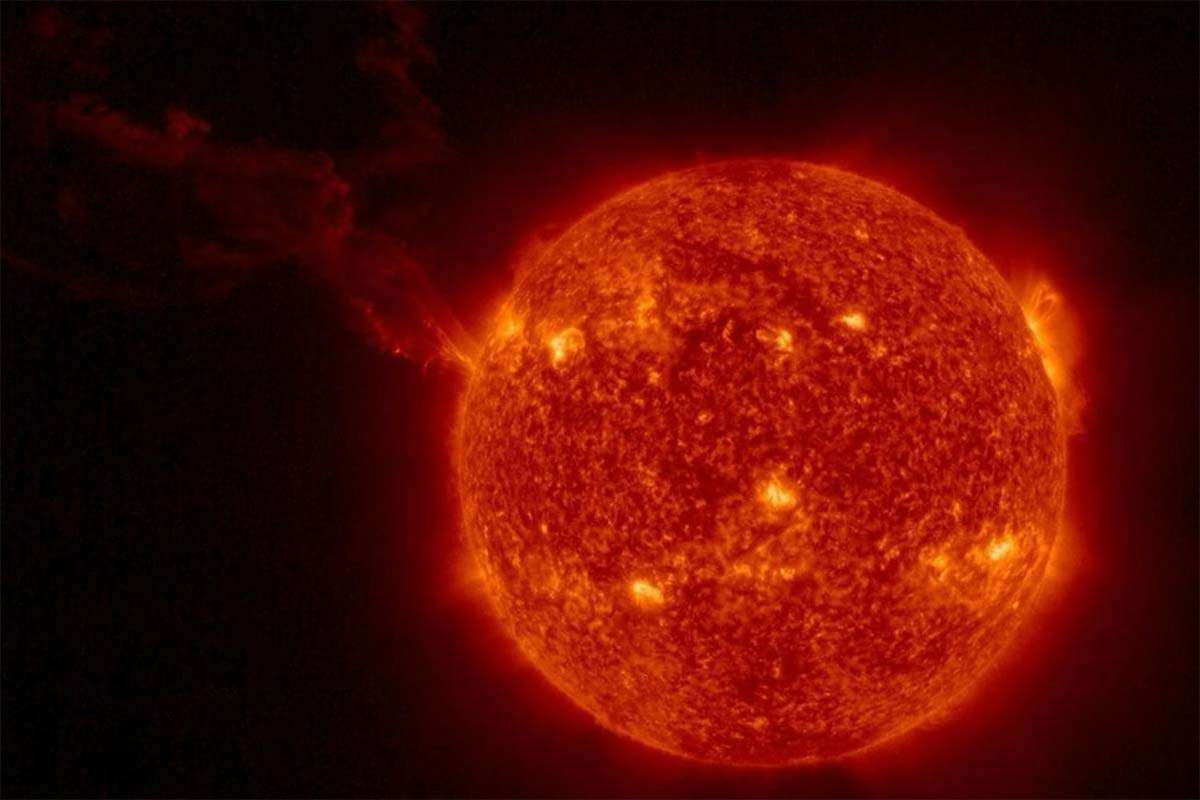
On April 25th and 26th, an extraordinary cluster of sunspots designated AR3638-50 appeared, igniting a surge of solar activity. This event unleashed several powerful coronal mass ejections directed toward our planet.
PARTING SHOT FROM A SUPER SUNSPOT: A colossal cluster of five sunspot groups is rotating over the western limb of the sun this weekend. German amateur astronomer Harald Paleske was watching its departure on April 26th when he caught this parting shot. pic.twitter.com/jWOOgHCiGf
— The Watchmen Earth and Space Connection (@TWESC2023) April 27, 2024
Add Cosmo Herald as a Preferred Source

Effects Observed on Earth
Since Saturday, Earth has encountered a series of geomagnetic disturbances triggered by these intense solar eruptions. While these storms range from mild to moderate in severity, their rapid succession over a brief period is attracting attention. The impact spans across the globe, demonstrating that no region is exempt from this widespread solar influence.
Auroras Appear Beyond Their Typical Zones
One of the most striking results from the ongoing solar activity has been the appearance of auroras at unusually low latitudes. This past Sunday, vivid displays of colorful lights illuminated skies in areas typically devoid of such phenomena, offering rare and breathtaking vistas.
Minor R1 radio blackout in progress (3M1 5M1 1current: M1.87)
Follow live on https://t.co/3Xxrvc3cpA pic.twitter.com/H72gSGcp5ISpaceWeatherLive (@_SpaceWeather_) April 27, 2024
Decoding Solar Phenomena
The energetic solar eruptions from AR3638-50 offer valuable insights into how the sun influences space weather conditions. Beyond mesmerizing auroral displays, these solar storms can disrupt satellite functionalities, impact radio signals, and pose hazards to astronauts aboard space stations.
This heightened activity has propelled astronomers and enthusiasts into a heightened state of vigilance, underscoring the fragile relationship between the sun’s volatility and Earth’s environment. While these events may inspire awe or cause disruptions, they highlight the necessity for continued scientific study regarding the sun’s effects on our planet.
Media Coverage Patterns of Solar Events
Just as solar cycles recur, so does the media’s focus on significant solar phenomena. News stories about these space weather occurrences often follow familiar patterns, eliciting some criticism from audiences weary of repetitive narratives.
Nonetheless, this recurring reporting underscores the consistent interest and importance of solar science communication. Each episode of solar activity enriches the public discourse, deepening collective knowledge and awareness about how these cosmic events influence life on Earth.
Future Outlook
With AR3638-50 still present on the solar surface, additional bursts of solar activity are anticipated. Researchers are closely watching the sunspot cluster for signs that could herald further geomagnetic storms. Early detection remains vital to mitigating risks to technology and infrastructure.
While the frequency of these solar outbursts may cause concern, they also spark growing enthusiasm for advancements in space weather forecasting. Enhanced predictive capabilities promise to improve preparedness and minimize disruptions to both man-made and natural systems.
The recent surge in solar activity serves as a potent reminder of the sun’s ever-changing dynamics. These phenomena test our technological resilience and fuel scientific curiosity alike. Through continued observation and research, humanity strives to better predict space weather impacts and deepen its cosmic understanding. As the sun continues to reveal its mysteries, maintaining a watchful and respectful eye on our nearest star remains essential.
- Categories:
- Astronomy ,
- Space


0 comments
Sign in to Comment