

On a chilly morning in New Zealand, Rocket Lab’s Electron rocket soared into the sky, heralding a significant advancement in space technology. This launch was more than a standard satellite deployment; it carried an innovative solar sail system embedded in a small satellite that could transform the future of spacecraft propulsion.
Cutting-Edge Solar Sail Innovation
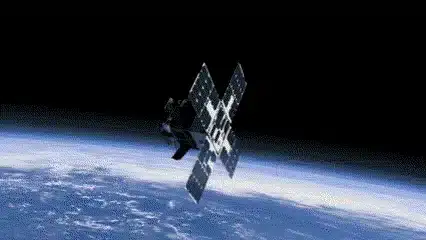
Among the payloads, the ACS3 satellite shone as a beacon of forward-thinking design. Developed through NASA’s expertise, this unit features a solar sail that propels itself by capturing sunlight. Differing from traditional propulsion that depends on chemical fuels or mechanical parts, this technology uses photons and solar wind, offering a sustainable and efficient alternative for extended space travel.

Prototype Deployment and Looking Forward
This mission primarily functions as a proof-of-concept, aiming to deploy the solar sail in orbit to validate its operational capabilities while capturing critical data via onboard cameras. Although this test represents only a partial version of NASA’s full vision, its success may pave the way for more advanced space propulsion technologies.
Expanding Horizons: Lunar and Beyond
NASA’s ambitions reach far beyond propulsion alone. Engineer Johnny Fernandez explains that the materials used for these sails will also be adapted for lunar applications, such as deploying solar panels and communication devices on the Moon. Because lunar dust poses unique challenges, the materials must withstand harsh extraterrestrial conditions, signaling significant innovation over Earth-based solutions.
Material Challenges Under Lunar Conditions
Addressing lunar environment challenges is critical. Traditional mesh reflectors used on the Moon have proven vulnerable to dust accumulation, pushing engineers to develop more durable materials that retain the features of terrestrial technologies but offer enhanced resistance in space environments.
Future Impact and Vision
This project represents a key milestone that could revolutionize long-distance space journeys by reducing dependence on conventional fuel and harnessing the abundant energy of sunlight. Moreover, deploying infrastructure remotely from Earth or orbit on planetary surfaces may usher in a new era of permanent off-world habitats.
In conclusion, Rocket Lab’s recent flight has opened pathways to significant progress in solar sail application and space infrastructure development. Testing solar sails in orbit not only demonstrates their practical utility but also advances the goal of sustainable exploration propelled by solar energy. With continued advancements and successful trials, expanding humanity’s presence across the solar system becomes an increasingly achievable reality.



0 comments
Sign in to Comment