
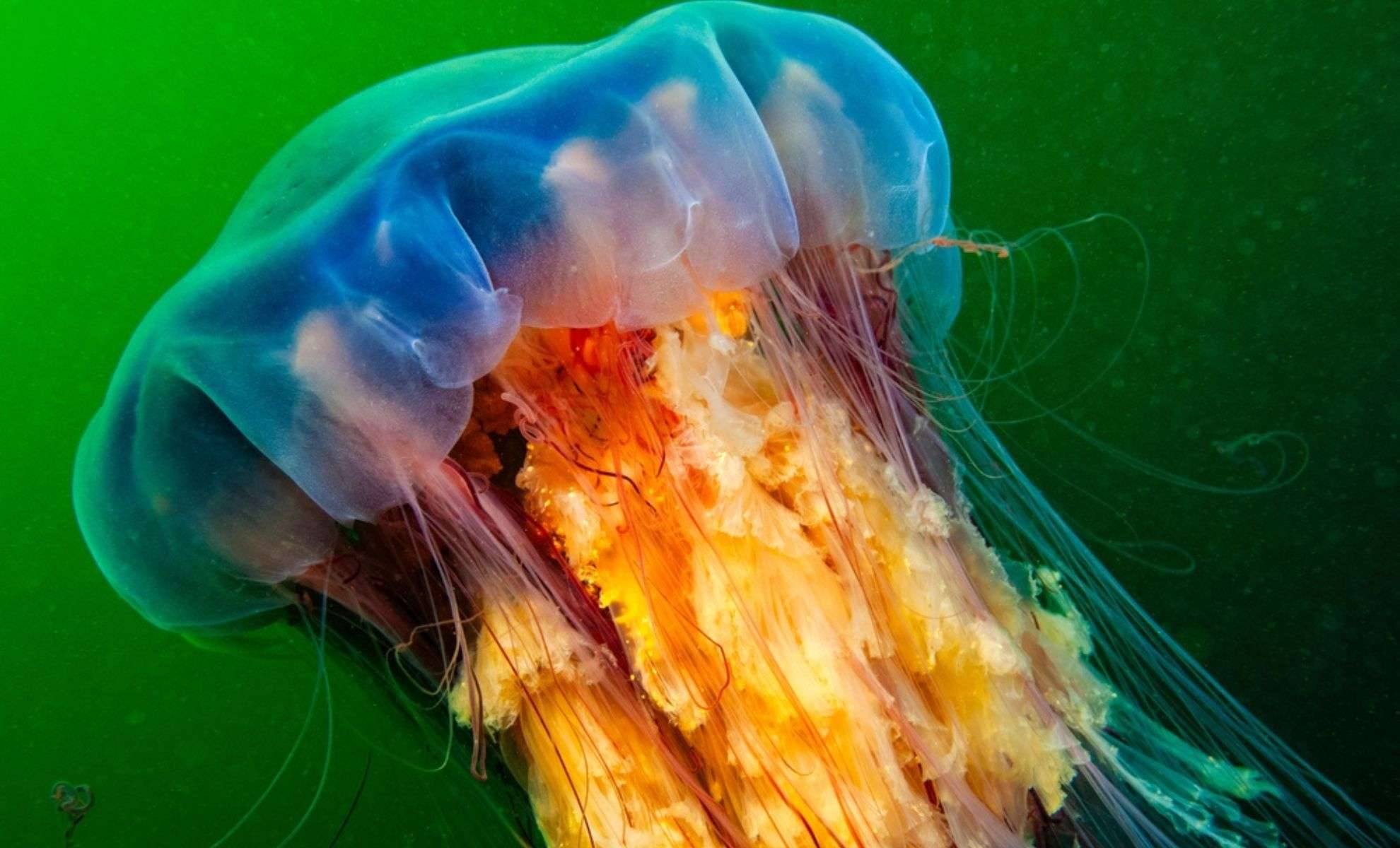
Deep in the chilly realms of the North Atlantic, an enormous gelatinous creature glides silently, its trailing tentacles extending lengths comparable to that of a school bus. The lion’s mane jellyfish (Cyanea capillata) captivates and intimidates marine researchers alike with its ornate, frilly bell and faint, glowing body. It is considered by many as the largest and heaviest jellyfish species on the planet, sometimes tipping the scales at over one metric ton—akin to the weight of a small car.
While typical jellyfish usually span no wider than a dinner plate, the lion’s mane defies common expectations. An 1870 account detailed an individual spotted near Massachusetts Bay with a bell diameter close to eight feet and tentacles extending a staggering 120 feet (36.58 m). This would surpass even the length of a blue whale, the largest creature recorded in history. Though such colossal specimens are rare, the Guinness World Records officially lists this species as the most massive jellyfish known.
Despite its formidable size, the lion’s mane jellyfish remains delicate. Its body is made up of roughly 95% water and it lacks bones, blood, and a centralized brain. Instead, it relies on a simple nerve net and an evolutionary design dating back about 500 million years, making it part of one of the Earth’s most ancient animal lineages.

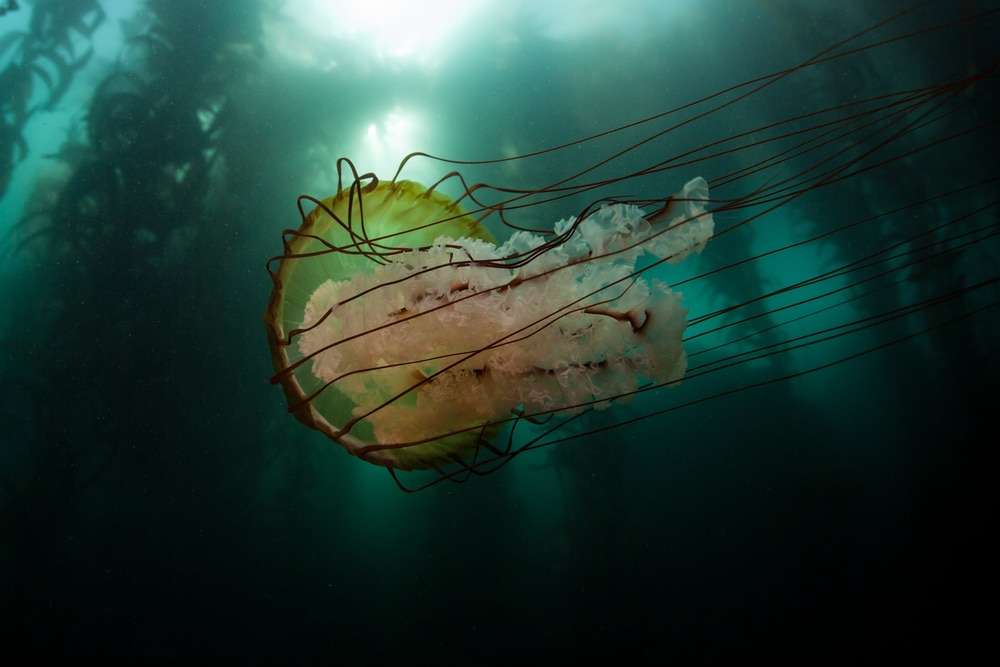
Far from a passive presence, this ethereal hunter wields thousands of venomous tentacles capable of delivering painful stings that, in exceptional instances, can cause significant harm to humans. Though deadly incidents are extremely rare, its occasional appearances in popular swimming zones have prompted temporary beach closures in regions like New England, Scotland, and Scandinavia.
A Colossal Marine Wonder Often Overlooked
The lion’s mane jellyfish inhabits mainly the North Atlantic and Arctic waters, surfacing mostly during summer months in areas rich with plankton, its primary food source. Despite their immense size, sightings by the public are relatively infrequent since these jellyfish prefer cooler, deeper ocean currents rather than shallow, warmer seas.
Its enormous bell is surrounded by eight expansive groups of tentacles. In the biggest specimens, each group can contain up to 150 individual tentacles, totaling over 1,000 venomous filaments. These tentacles are lined with tiny nematocysts, specialized cells that fire venom-laden barbs to capture prey on contact.
“This ancient adaptation is highly efficient,” explains Dr. Lisa-ann Gershwin, a marine biologist and author of Stung! On Jellyfish Blooms and the Future of the Ocean. “Rather than pursuing targets, they simply drift and entangle, functioning like a natural trap.”
Between Marine Science and Mythology
More than just a biological marvel, the lion’s mane jellyfish has inspired cultural tales and literature. It plays a notable role in The Adventure of the Lion’s Mane, one of the last stories featuring Sherlock Holmes by Arthur Conan Doyle. In this narrative, the jellyfish’s sting is used as a murder method, leaving few traces behind.
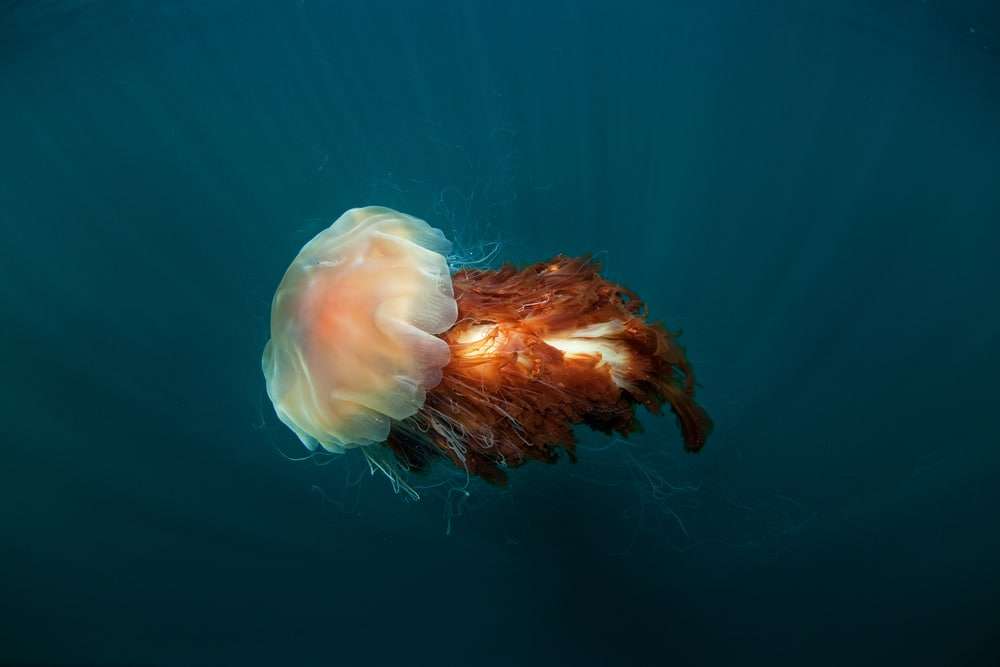
Although fictional, the story reflects genuine concerns. Occasional jellyfish swarms, or blooms, can disrupt local tourism and fishing. For example, in 2010, a massive surge of jellyfish along Ireland’s shoreline forced salmon farms to cull vast numbers of fish, incurring losses reaching into the millions. Comparable blooms have been recorded off the coasts of Japan, Norway, and Australia, trends some scientists associate with climate change, overfishing, and warming seas that diminish jellyfish predators.
An article in Nature from 2019 documents increasing jellyfish populations in certain disturbed ecosystems, where these resilient creatures occupy niches abandoned by more sensitive species.
Understanding the Real Risk Underwater
Despite its menacing size and venomous capabilities, the lion’s mane jellyfish rarely poses a grave danger to humans. Most stings occur through accidental contact with tentacles near beaches or in shallow water. These stings are commonly comparable to bee stings in pain, except in allergic individuals or when exposure is extensive.
Its sheer magnitude can be startling. In July 2020, a diver off Cornwall, England encountered a lion’s mane nearly matching his own size. The encounter was widely shared online, drawing reactions of awe and surprise as many were unaware this giant jellyfish inhabits nearby oceans.
Marine experts emphasize that jellyfish are native and vital components of marine ecosystems. They consume small fish and plankton, while serving as prey for creatures like sunfish, leatherback turtles, and some seabird species. “They play a crucial role in the ocean’s delicate balance,” Dr. Gershwin notes. “And they exhibit remarkable resilience to the environmental changes affecting our seas.”







0 comments
Sign in to Comment