
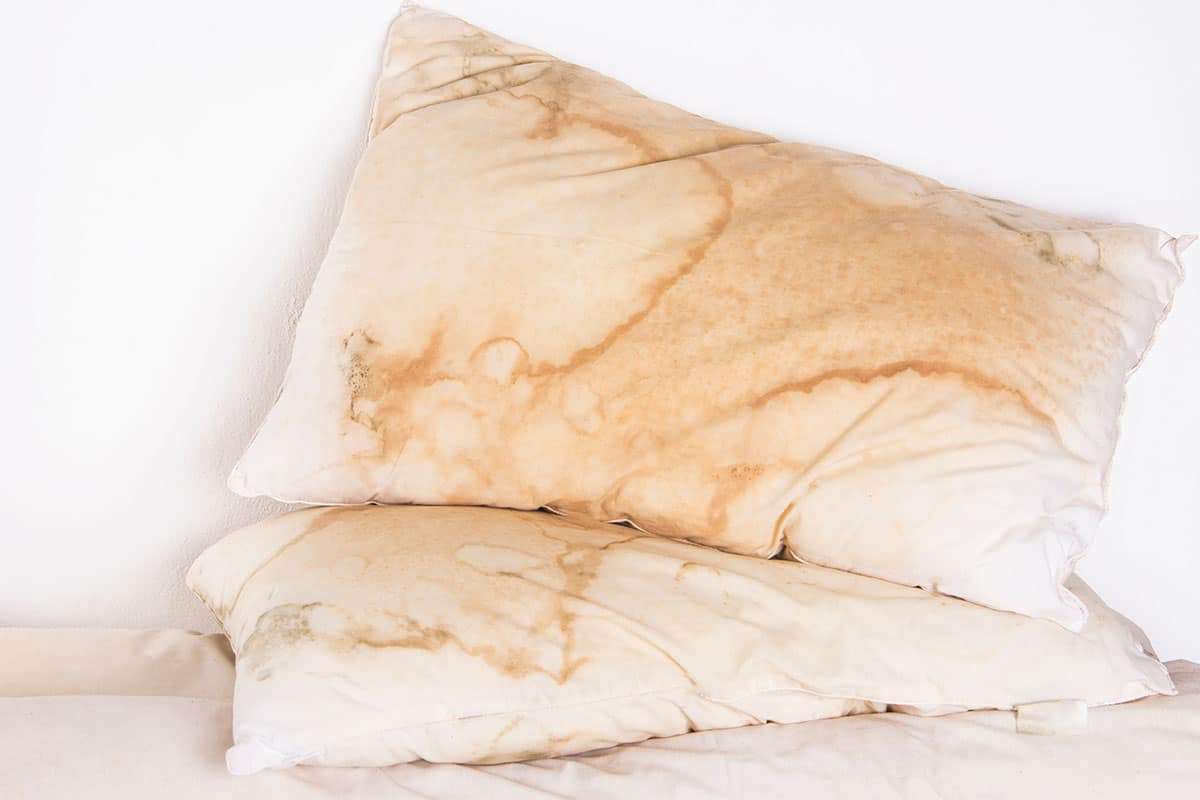
Many sleepers notice yellow discolorations on their pillows but might not know what causes them. These discolorations arise from a mix of factors that build up over time, including:
- Body sweat and natural oils
- Saliva
- Shedding of dead skin
- Residues from hair and skin care products
As we rest, our bodies emit sweat and oils that gradually seep into pillow materials. Given that we spend about one-third of our lives sleeping, it’s no surprise that these substances accumulate despite pillowcases. The coverings don’t completely block the infiltration of these moisture and oils.
This slow build-up results in distinct yellow patches, often labeled as sweat stains. These marks not only mar the pillow’s appearance but also create an environment conducive to dust mites and bacteria, which could lead to health issues if ignored.

Consequences of Using Discolored Pillows
Yellow pillow stains carry health implications beyond mere cosmetic concerns. Here are some common health-related problems linked to stained bedding:
- Allergy flare-ups
- Breathing difficulties
- Skin irritation
- Greater risk of bacterial exposure
The moist conditions fostered by sweat and oils serve as an ideal habitat for dust mites and bacteria. These tiny organisms can worsen allergies and respiratory diseases such as asthma. Accumulated oils and dead skin can also contribute to acne and other skin conditions.
Maintaining clean pillows by addressing stains and washing them regularly is important for personal health. Replacing pillows within recommended timeframes further helps lower these risks.
How to Limit and Remove Yellow Stains
Taking measures to prevent discoloration can help keep pillows fresh and hygienic. Consider implementing these tips:
If yellowing has appeared, try cleaning measures like:
- Washing the pillow as per care guidelines
- Treating stains beforehand using a diluted hydrogen peroxide mix (1 part peroxide to 5 parts water)
- Applying a vinegar-water solution (1 to 3 ratio) for tougher spots
- Drying pillows thoroughly under sunlight for natural disinfection
Note that old or heavily stained pillows should be replaced to keep your sleeping area sanitary and comfortable. Experts usually suggest replacing pillows every 1 to 2 years, depending on maintenance and pillow type.
Choosing Pillows for Comfort and Cleanliness
Selecting an appropriate pillow contributes to both restful sleep and good hygiene. Look out for these qualities when buying new pillows:
- Material: Select hypoallergenic options like latex or memory foam
- Support Level: Pick a firmness suited to your sleeping posture
- Ventilation: Choose pillows designed for good airflow to reduce moisture
- Ease of Care: Opt for pillows that can be cleaned and maintained easily
Investing in quality pillows along with protective covers can significantly reduce yellowing and improve your bedtime comfort. Remember, clean and supportive pillows play a key role in restful sleep and overall health.
By recognizing the causes behind your pillow’s yellow stains and acting to prevent and treat them, you can create a healthier sleep space. Don’t overlook these indicators—they’re important signals to enhance your sleep quality and well-being.
- Categories:
- Health











0 comments
Sign in to Comment