

NASA’s pursuit to revisit the Moon has taken a costly turn. A recent audit by NASA’s Office of Inspector General (OIG) reveals that the space agency spent $5.9 billion on hardware for the Artemis program before canceling the components as part of a strategic shift in lunar mission planning. This audit highlights the impact of altered priorities, technical hurdles, and persistent delays on one of the most ambitious space initiatives ever undertaken.
Artemis Overhaul Forces NASA to Abandon Expensive Hardware
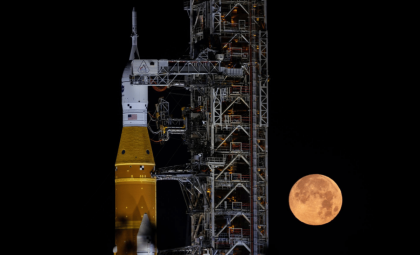
NASA’s updated lunar mission plan, detailed by the agency, reshapes the Artemis framework significantly. The timeline for the first crewed Moon landing has been pushed from Artemis III to Artemis IV. The plan also cancels more advanced versions of the Space Launch System (SLS) and does away with the Gateway lunar orbital station to concentrate efforts on establishing a sustained surface presence.
These policy revisions rendered several major projects obsolete despite heavy investments stretching over years. The OIG audit estimates that hardware contracts initially pegged at roughly $2.9 billion inflated to $5.9 billion by the time work was terminated. The affected systems include the Exploration Upper Stage (EUS), Universal Stage Adapter (USA), Mobile Launcher 2 (ML-2), and the HALO habitat module intended for the Gateway station. NASA defends this approach, arguing that persisting with the prior plan would have led to even greater cost overruns and further delays, making the new direction essential for a viable lunar program.

We are doing things differently now. NASA cannot take years longer than expected and spend billions more than planned when the world is waiting for the headlines only NASA can deliver. The programs covered in the report will free up more than $3 billion in the years ahead for… https://t.co/lx5fm1ZlEy
— NASA Administrator Jared Isaacman (@NASAAdmin) June 24, 2026
Audit Exposes Lengthy Delays and Escalating Expenses
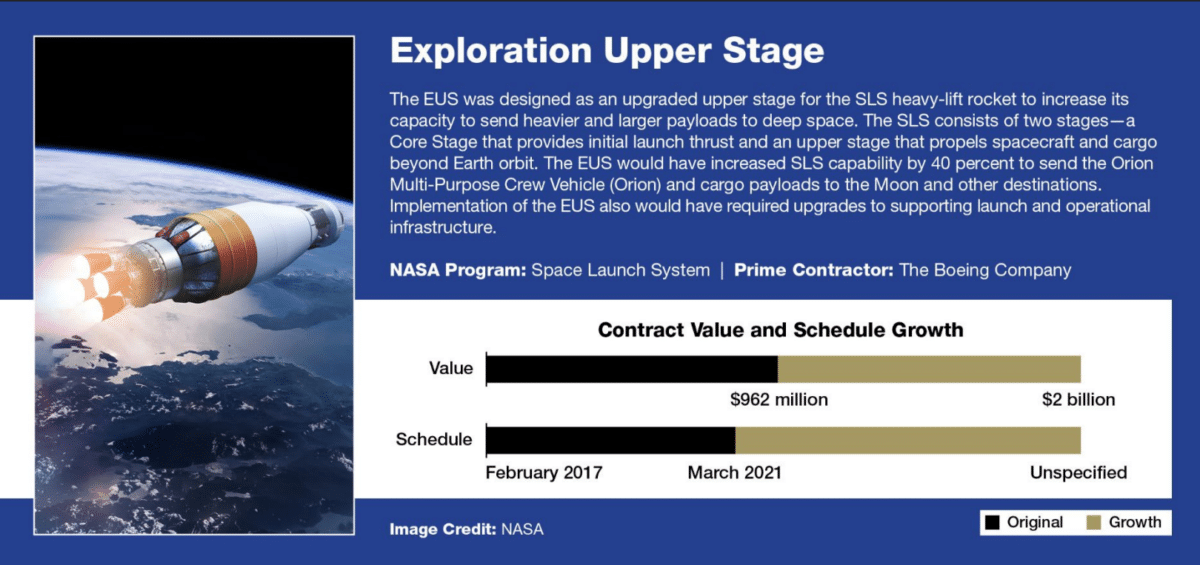
The report reveals how flagship Artemis components repeatedly missed deadlines and budget estimates. Boeing’s Exploration Upper Stage, a key upgrade intended to boost the SLS payload capacity, exemplifies this trend. Added to Boeing’s contract in 2017 with a budget of $962 million and a delivery target of March 2021, the EUS project was repeatedly postponed. By 2026, NASA had spent nearly $2 billion on work and Boeing anticipated total costs nearing $3.7 billion. The completion was delayed by more than seven years. Causes cited include changing NASA priorities, supply chain issues, updated mission demands, and contractor performance problems. The audit also notes,
“NASA noted significant weaknesses related to EUS production efficiency, including unrealistic production schedules and the lack of a clear plan for improvement,” the memo states.
These setbacks stemmed not only from technical obstacles but also from deficiencies in project management and production planning.
Smaller Artemis Elements Also Faced Cost Overruns
The audit details how even seemingly modest hardware projects encountered rising expenses. For instance, the Universal Stage Adapter, a cone-shaped connector designed to join the Exploration Upper Stage with the Orion spacecraft and carry secondary payloads, was first awarded to Dynetics in 2017 for $131 million. Nevertheless, scope changes and delays grew the contract cost substantially. By early 2026, NASA had disbursed $353 million, with forecasts suggesting the total may have hit $497 million if the program had concluded. The OIG remarked that “The USA contract’s cost and schedule estimates grew beyond original estimates due to both NASA directed modifications and Dynetics’ performance issues,” revealing how agency mandates and contractor challenges combined to inflate costs. Similar patterns emerged with Mobile Launcher 2, the enormous tower slated to support future SLS launches. Awarded to Bechtel for $383 million in 2019, its expected costs escalated toward $2 billion after redesign and scheduling changes. The report concludes,
“Bechtel’s reluctance to utilize NASA expertise, failure to track risks, challenges with managing the launcher’s weight, and lack of a certified earned value management system impacted the contractor’s cost, schedule, and performance,” the report states.
These cases demonstrate how even infrastructure elements became increasingly unwieldy under the previous Artemis setup.
HALO Module Development Ends With Gateway Cancellation
Halting the Gateway orbital base also stopped progress on the HALO (Habitation and Logistics Outpost) module. Developed by Northrop Grumman, with significant input from Thales Alenia Space, HALO was a key piece of NASA’s original Moon orbital strategy. Starting with a $187 million contract in 2019, expenditures ballooned to around $1.9 billion by the time work ceased. In addition to delays, structural corrosion was detected once the module arrived stateside, further complicating production. The OIG linked schedule pressures from Artemis deadlines to these issues, stating,
“Driven by the necessity to meet Artemis launch schedules, the Gateway Program worked toward unrealistic schedules throughout the life cycle of HALO,” OIG’s memo states, and cites a quote from Gateway’s own independent Standing Review Board that says, “lack of schedule realism may be driving suboptimal engineering decisions during development.”
The findings imply that aggressive timeline targets imposed risks that adversely affected design quality, testing, and project management.
NASA Asserts New Strategy Emphasizes Cost Control and Efficiency
Despite billions spent on hardware no longer in use, NASA asserts the updated Artemis plan aims to avoid repeating such costly pitfalls. Agency representatives claim that maintaining the previous architecture would have caused even greater expenditures and postponed lunar human missions beyond the next decade. In its formal reply to the audit, NASA points out that the OIG’s financial projections rely on outdated program assumptions and that the current approach is guided by new principles focusing on affordability, simplification, and speed. The agency states,
“These projections rely on past performance under outdated architectural assumptions that do not reflect the Ignition Day principles of discipline, affordability, simplification, and speed,” NASA’s response says.
The revamped framework aims to streamline mission design, reduce reliance on costly hardware, and accelerate astronaut returns to the lunar surface. The effectiveness of this transition will become apparent as Artemis IV, planned for 2028, approaches and tests NASA’s renewed direction for ongoing Moon exploration.
- Categories:
- News






0 comments
Sign in to Comment