
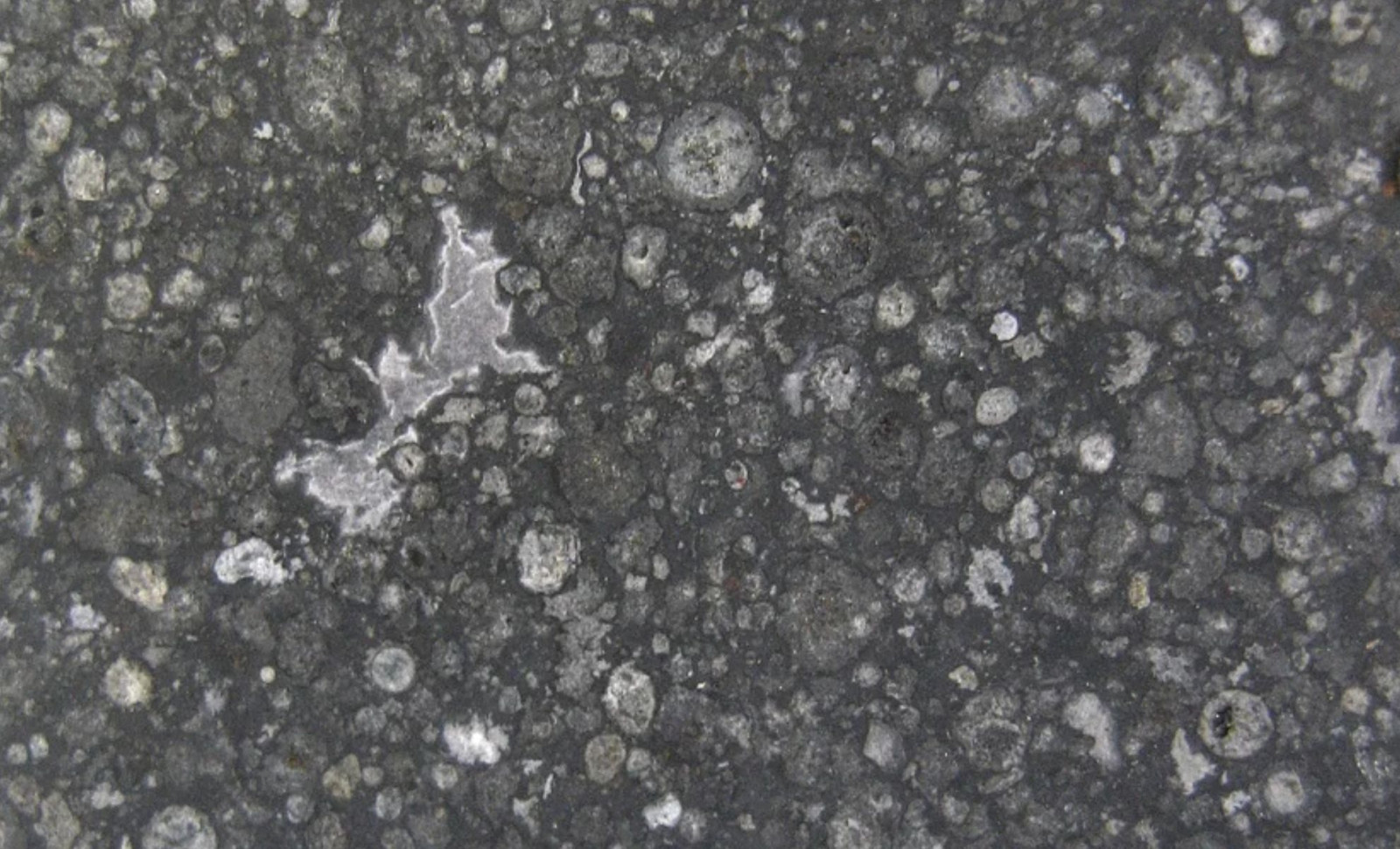
A recent study published in Science Advances proposes that much of the cosmic dust reaching Earth originates from a previously unidentified category of near-Earth asteroids. By examining minuscule particles gathered from Antarctica and urban rooftops, scientists discovered evidence of a parent asteroid unlike any known meteorite samples.
Micrometeorites continuously descend onto Earth, carrying vital clues about the Solar System’s constituents. Due to their relative abundance and ease of collection, they offer researchers a valuable window into extraterrestrial material without needing to await rare meteorite impacts or undertake expensive space missions.
Some of these particles transform into cosmic spherules—small spherical grains formed when fragments melt upon atmospheric entry and then solidify quickly. This intense heating erases much of their original mineral structure, complicating efforts to trace their origin. To overcome this, scientists analyze the oxygen isotope ratios within the particles, which serve as chemical identifiers linking them to specific parent bodies.

A Unique Class of Cosmic Spherules Emerges
The research detailed in Science Advances reveals that about 10% of known cosmic spherules belong to what is called Group 4. These are distinguished by an oxygen isotope signature notably low in oxygen-16, differing from any recognized meteorite type.
Particular attention was given to a subset known as CumPo cosmic spherules, identifiable by their characteristic crystal patterns. These particles consist of olivine crystal clusters that progressively enlarge from one side of the spherule to the other. This gradient offers insights into their space journey, such as orbital characteristics and atmospheric entry velocity.
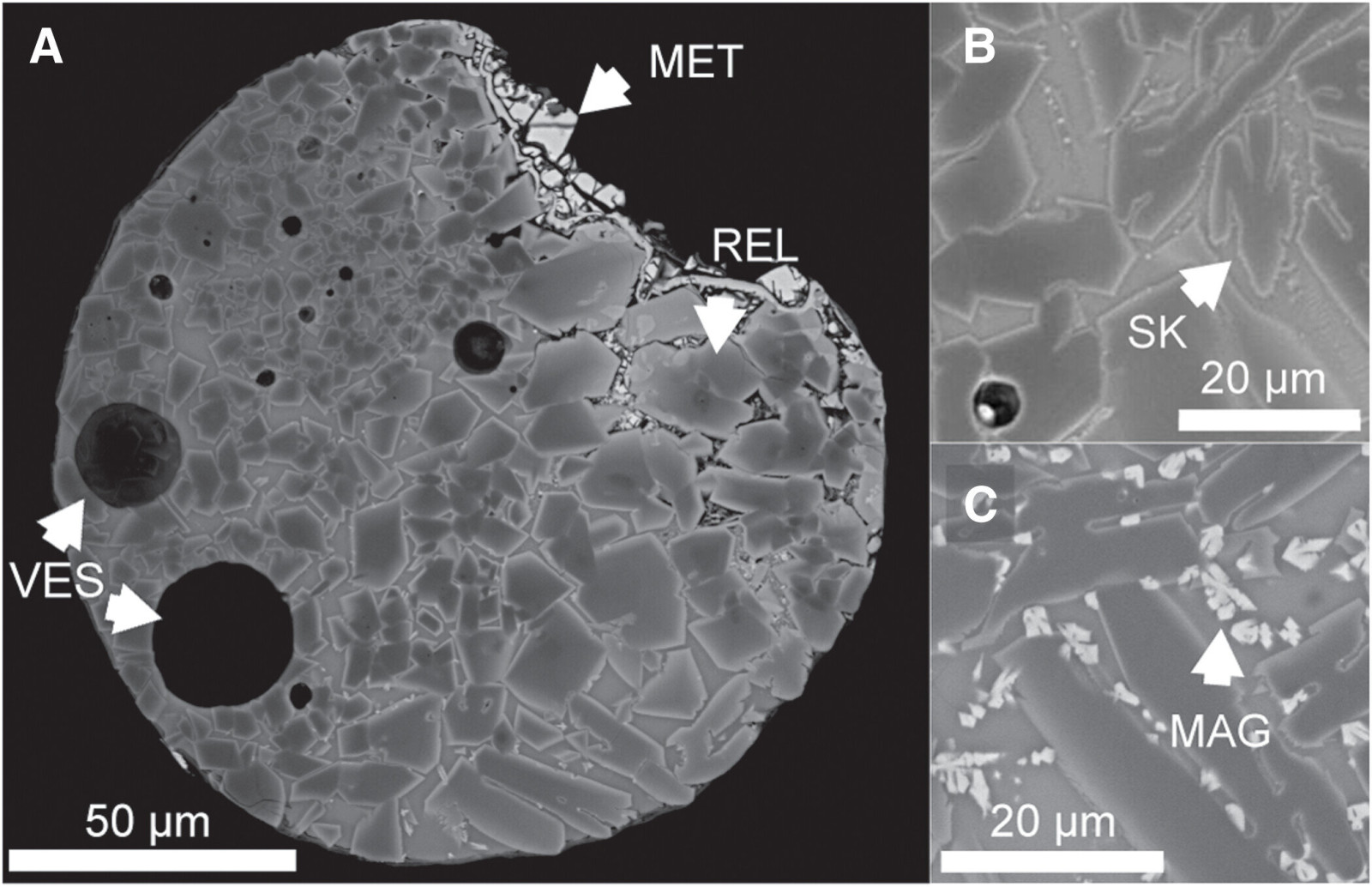
The team analyzed ten CumPo spherules sourced from Antarctica and comparable particles gathered from city rooftops. Through detailed imaging and isotope assays, the particles demonstrated consistent unique features. This led to identifying a new sulfur-rich subgroup, designated as SCumPo.
Revealing a Complex Chemical Makeup
The SCumPo particles exhibit several rare traits. As detailed in the study, they contain minimal magnetite, often preserve droplets of iron-nickel-sulfur alloy, consistently show low nickel concentrations in olivine crystals, and possess sulfur-enriched glass. Isotopic analysis uncovered an additional peculiarity: some individual spherules hold regions both enriched and depleted in oxygen-16.
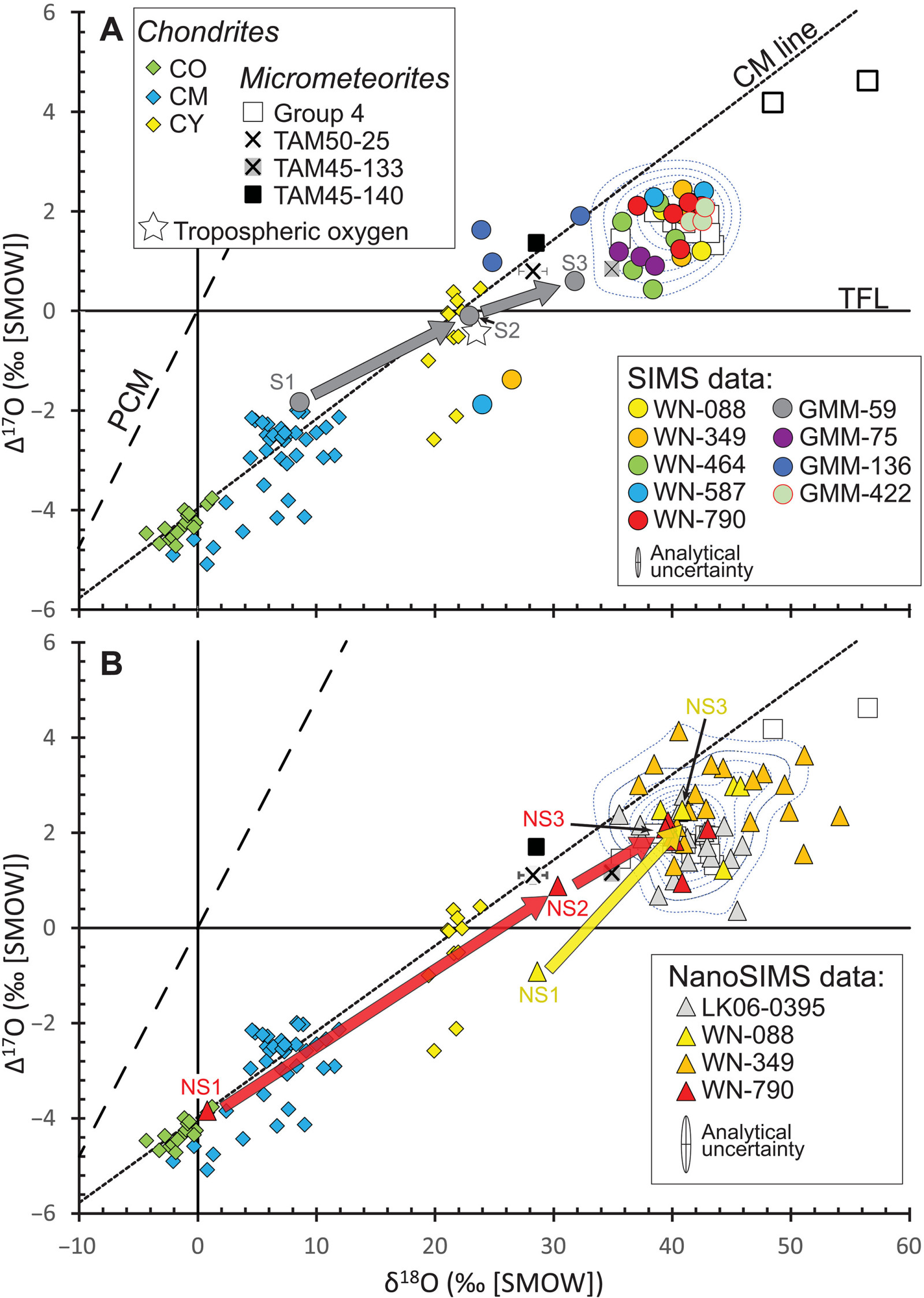
The authors explain that this indicates the original dust grains were mixtures of at least two different materials prior to atmospheric entry. One component exhibited oxygen-16-rich isotopes typical of anhydrous phases found in carbonaceous chondrites, while the other displayed oxygen-16-poor traits unmatched by known meteorite groups but akin to fine-grained material from Group 4 spherules.
“We interpret this as strong evidence that the SCumPo precursors were composite materials containing at least two different components,” said the authors.
Modeling Points to a Likely Asteroid Source
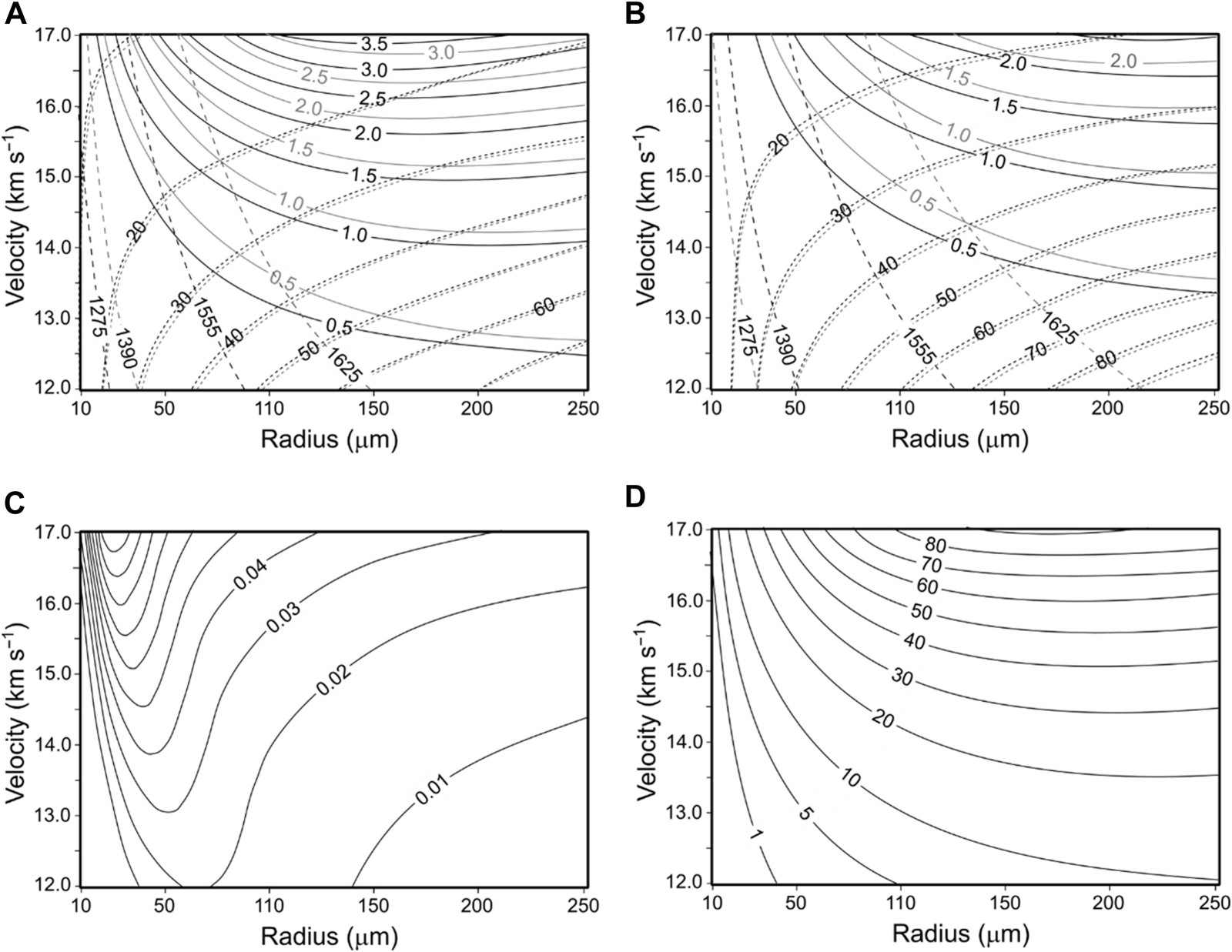
Additionally, computer simulations replicating the atmospheric entry phase showed the crystal textures align with speeds between 14 and 17 kilometers per second. Such velocities suggest these particles originated from near-Earth objects rather than the more distant main asteroid belt.
Merging these lab analyses with orbital modeling, the investigators propose the particles derive from a primitive, sulfur-rich carbonaceous asteroid affiliated with the CM-CO-CY chondrite groups. This asteroid likely evolved from a water-rich parent and later settled into an orbit intersecting Earth’s trajectory.
Researchers emphasize that this parent asteroid appears to represent a novel meteorite type. Although tiny micrometeorites with these distinctive features have now been identified, no large meteorite fragments sharing this composition have been found to date.
- Categories:
- Astronomy






0 comments
Sign in to Comment