
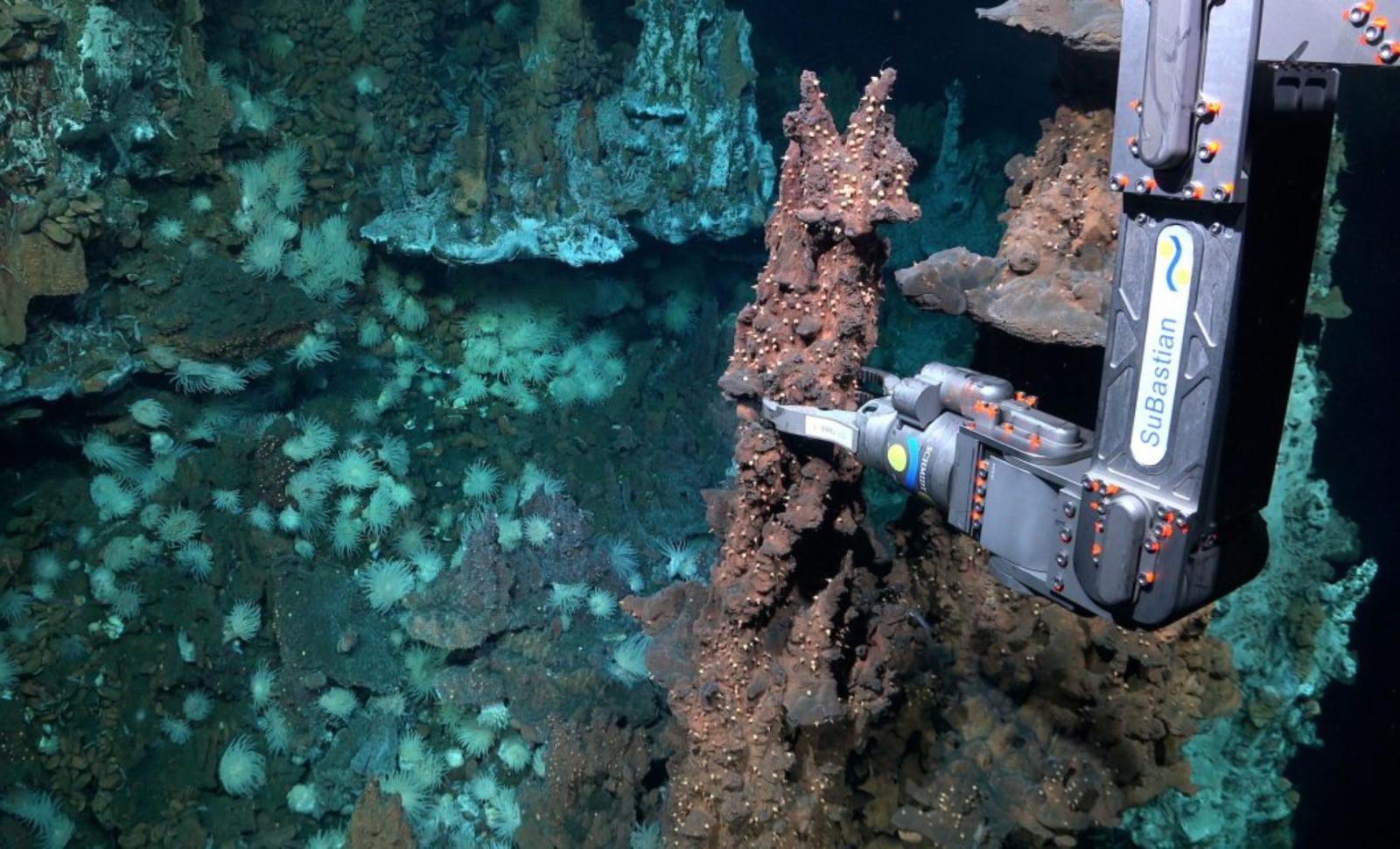
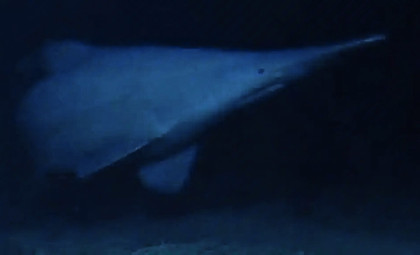
During a month-long Atlantic expedition, researchers recorded the elusive barreleye fish Winteria telescopa in its deep-sea environment for the first time. Positioned at 710 meters underwater, this unique species is known for its transparent head, an adaptation that makes it challenging to study without damage.
The discovery occurred within the expansive Doldrums Megatransform and Fracture Zone, a complicated network of tectonic cracks covering approximately 60,000 square kilometers (23,000 square miles) across the Atlantic seafloor. This area intersects the Mid-Atlantic Ridge, the planet’s longest underwater mountain range, extending deep into largely uncharted abyssal depths.
Marine scientist Aaron Micallef from the Monterey Bay Aquarium Research Institute led the research aboard the vessel Falkor (too). Employing the remotely operated vehicle SuBastian and the autonomous underwater explorer The Childlike Empress, the expedition team explored hydrothermal vents, geological faults, and seamounts. Their efforts also unveiled two previously unknown hydrothermal sites and multiple rarely witnessed deep-sea creatures.

Rare Transparent-Headed Fish Photographed in Its Habitat
The observation of Winteria telescopa took place in the dimly lit mesopelagic zone. According to the Schmidt Ocean Institute, this species had never been recorded in its natural setting prior to this. Barreleye fish have uniquely adapted eyes enclosed within a transparent, fluid-filled dome on their heads. This delicate structure is often lost or damaged when brought to the surface, as the pressure change causes the dome to collapse.
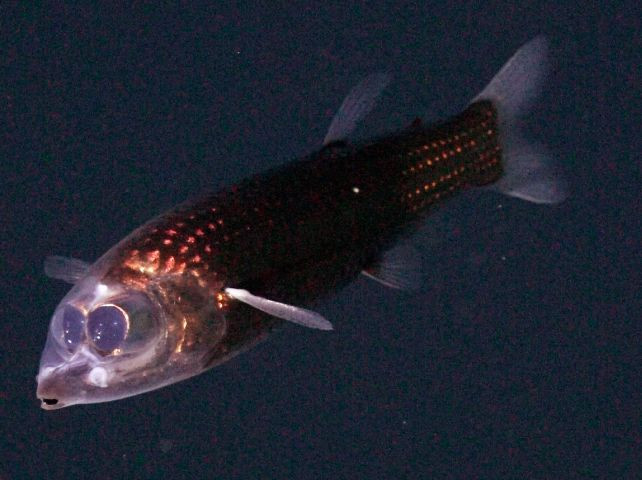
For years, the existence of this transparent dome was unknown to scientists. Observing the fish alive at depth offers invaluable insight into a feature that is typically destroyed during specimen retrieval.
“This discovery shows why exploration still matters,” Aaron Micallef said. “Even in the Atlantic Ocean, where plate boundaries have been studied for decades, there are still places where the first close look can reveal something entirely new.”
Identification of Two New Hydrothermal Sites Nearly 4,000 Meters Down
The expedition’s findings extended well beyond the unique fish. Scientists uncovered two undiscovered hydrothermal fields situated at close to 4,000 meters (approximately 13,123 feet) depth. These sites channel heat and organic compounds from the Earth's interior into the ocean.
In the abyss, where sunlight does not penetrate, these vents serve as hotspots for diverse life. The newly found hydrothermal fields are linked to serpentinization, a chemical interaction between seawater and the igneous rock peridotite. This reaction generates hydrogen and other reduced compounds, supporting unique microbial communities. Only a few serpentinization-related hydrothermal fields are known globally, including the renowned Lost City hydrothermal field. Jyotika Virmani, executive director of the Schmidt Ocean Institute, noted:
“Serpentinization is a process in which seawater reacts with minerals in rocks, producing heat and chemical energy that allow life to thrive in the deep ocean without sunlight, so a better understanding of these systems could provide clues for finding life on other planets.”
These hydrothermal sites were teeming with life as cameras recorded shrimps swarming, ghostly crabs, and soft anemones, with heat visibly radiating from the vent chimneys.
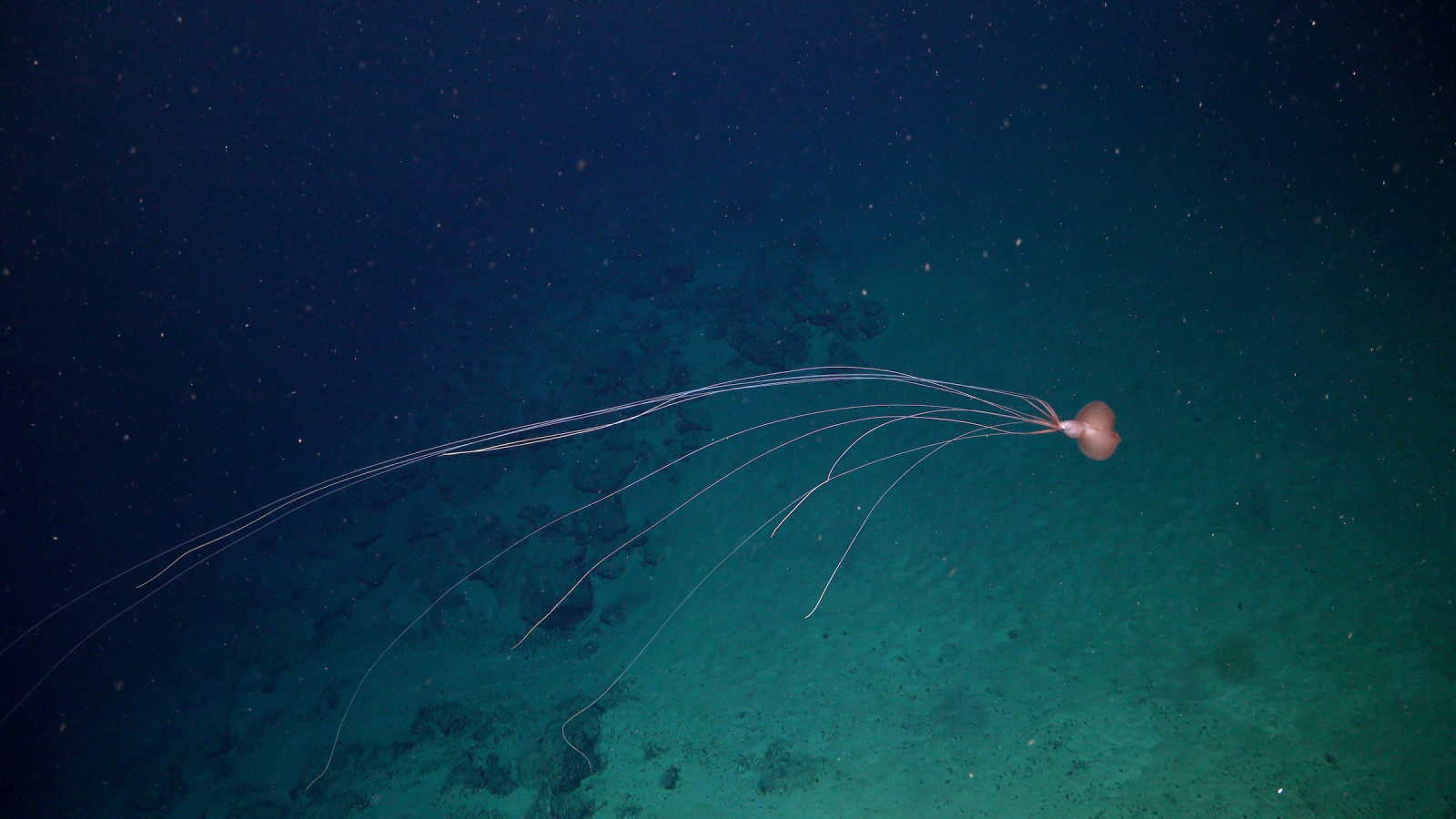
Deep Encounter With Two Bigfin Squid at 3,634 Meters
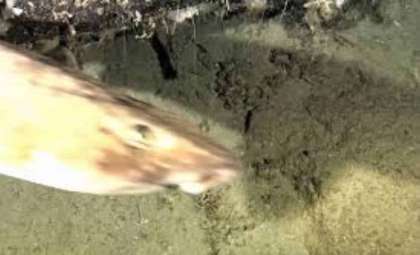
At a greater depth of 3,634 meters, the researchers encountered two specimens of bigfin squid from the genus Magnapinna, regarded as some of the most mysterious marine creatures in the deep ocean. This discovery added a vital biological aspect to a mission primarily focused on geological investigations within the Doldrums zone. Initially targeting vents, faults, and underwater mountains, the team returned with unprecedented images and samples that shed light on ecosystems within one of the least explored parts of the Atlantic.
While the formal scientific reports are forthcoming, these observations mark a significant advance in deep ocean exploration.
“We arrived searching for vents, faults, and seamounts. We leave with something even more valuable: a deeper understanding of ecosystems in one of the least explored regions of the Atlantic Ocean,” said Paula Zapata Ramirez of the Universidad Pontificia Bolivariana. “Every sample, every image, and every discovery brings us one step closer to understanding the hidden parts of our planet.”

0 comments
Sign in to Comment