
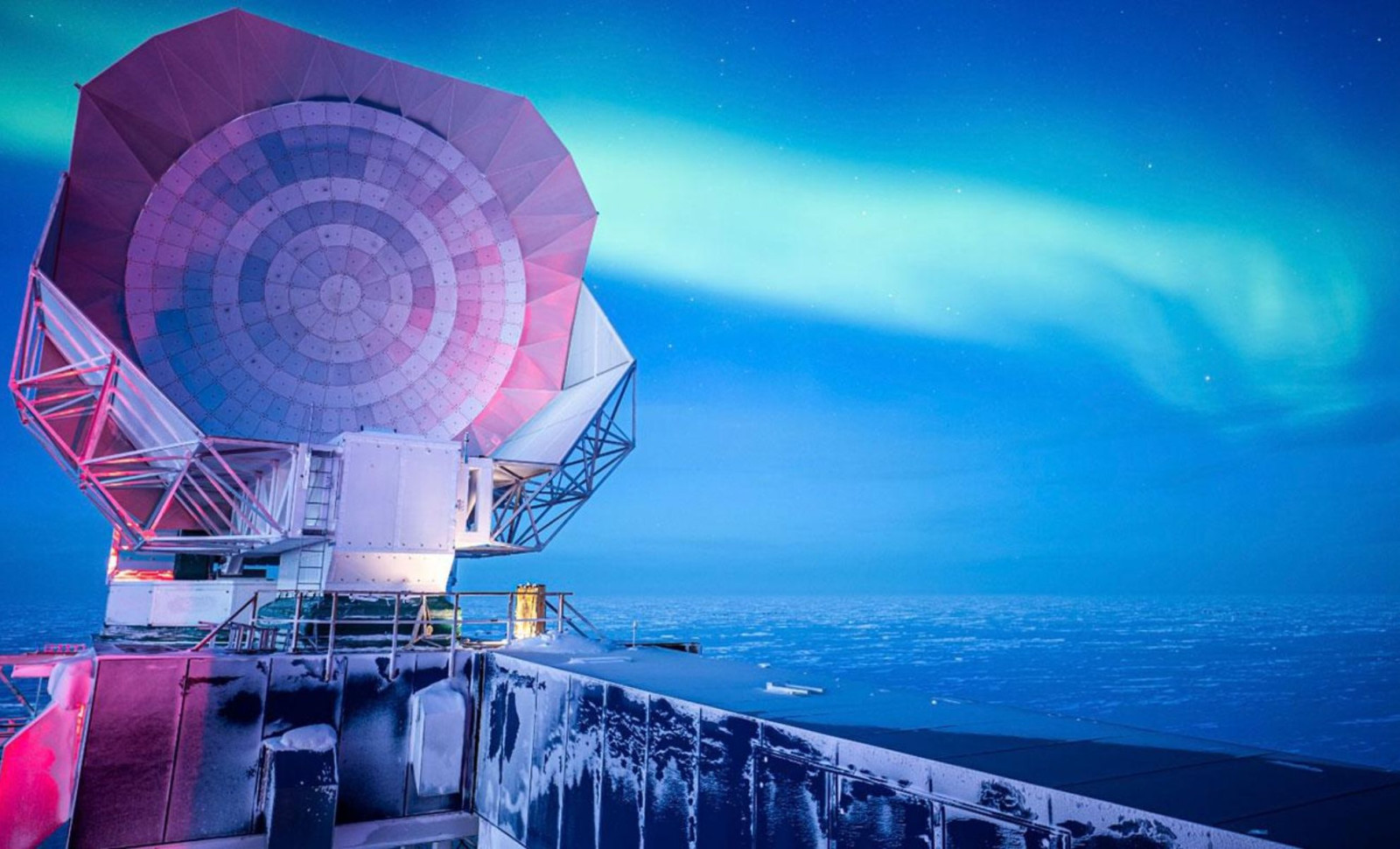
A groundbreaking astronomical survey has significantly broadened our understanding of the cosmos by confirming more than 7,000 galaxy clusters, many of which were previously unknown. Utilizing data gathered from the South Pole Telescope in Antarctica, the newly published arXiv preprint unveils one of the most detailed catalogs of the universe’s largest gravitational groupings, laying vital groundwork for future investigations into dark matter, dark energy, and the universe’s structural evolution.
Comprehensive Catalog Marks a New Chapter in Galaxy Cluster Studies
This extensive catalog is the culmination of five years of research conducted with the South Pole Telescope at the National Science Foundation’s Amundsen-Scott South Pole Station. Featuring the advanced SPT-3G camera, the instrument surveyed about 1,600 square degrees—equivalent to roughly 4% of the night sky. From an initial list of 8,892 galaxy cluster candidates, scientists confirmed 7,190 clusters through follow-up optical and infrared imagery.
The significance extends beyond numbers; approximately 20% of these clusters are absent from earlier catalogs, and for 4,824 clusters, this is the first time their hot gas has been detected, providing a novel dataset for exploring cosmic large-scale structures. The catalog captures cosmic history reaching back approximately 7.8 billion years, with around 1,800 galaxy clusters whose light takes that long to reach Earth. This data has been shared publicly on arXiv, enabling astronomers worldwide to refine cosmological theories.

Lindsey Bleem, the lead author and physicist at Argonne National Laboratory as well as a senior colleague at the UChicago Kavli Institute for Cosmological Physics, highlighted the importance: “Using the SPT-3G’s exquisitely deep cosmic microwave background measurements, this catalog opens a novel perspective on the early universe and will underpin many future cluster cosmology studies.”
Tracing Invisible Giants Through Primordial Radiation
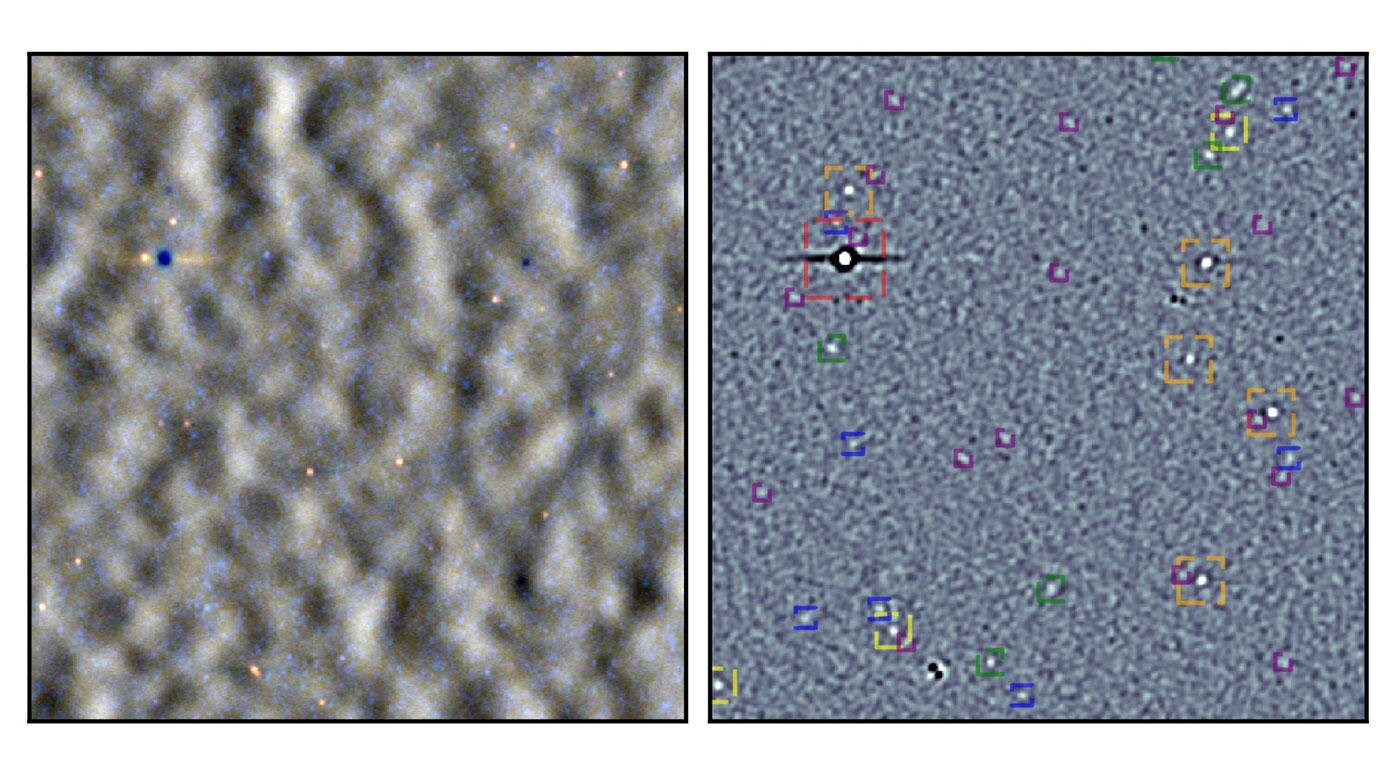
This study differs from traditional optical methods as it harnesses the cosmic microwave background—the residual radiation from the Big Bang. The passage of this ancient light through galaxy clusters causes scattering by hot electrons, producing subtle changes in the microwave background known as the Sunyaev-Zeldovich effect. These faint imprints act like shadows that reveal the locations of clusters, even those too distant or faint for optical detection.
This approach is particularly powerful since the signal's strength remains fairly constant over vast cosmic distances, enabling detection of clusters otherwise hidden. The enhanced SPT-3G detector, outfitted with nearly 16,000 sensors, achieves the sensitivity needed to capture these subtle effects with outstanding accuracy. The survey's depth allows identification of dimmer, farther clusters than many past sky surveys, offering fresh insights into the assembly of massive cosmic structures through time.
Creating such an extensive catalog demanded meticulous verification to guarantee reliable detections for future research. Kayla Kornoelje, a graduate researcher from University of Chicago working at Argonne National Laboratory, described the process: “Ensuring the trustworthiness of every single detection took careful scrutiny. Our aim was to build a dataset useful for confident cosmological analysis.”
Insights Gained From Thousands of Galaxy Clusters
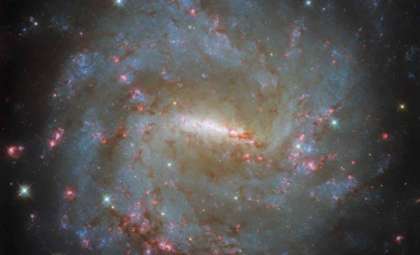
Galaxy clusters are among the universe's largest gravitationally bound assemblies, harboring hundreds to thousands of galaxies surrounded by extensive clouds of hot gas and concentrated dark matter. Their population changes over time, making them essential tools for exploring the universe’s expansion and the role of dark energy. The new catalog also sheds light on conditions inside clusters, revealing increased dust emission in earlier cosmic times, which helps scientists understand star formation and galaxy growth in dense cosmic regions. Thanks to its size and uniformity, this sample enables comparisons across diverse cosmic epochs, elucidating the evolution of massive structures as the universe expanded. Combining microwave data with visible and infrared confirmations generates a uniquely rich resource for both cosmology and galaxy development studies.
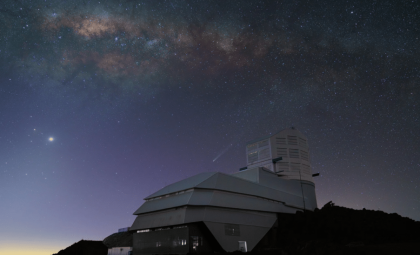
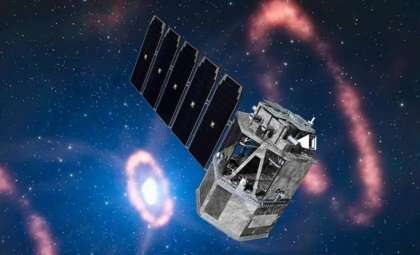
Moving forward, the catalog's value will rise as better mass estimates and new distant cluster detections enhance its scope. Projects like the Legacy Survey of Space and Time at the Vera C. Rubin Observatory in Chile and the European Space Agency’s Euclid mission will complement these findings with optical observations capable of verifying even more remote clusters identified by the SPT-3G survey. Sebastian Bocquet, senior scientist at Munich’s Ludwig Maximilian University Observatory and part of the South Pole Telescope team, remarked on the catalog’s potential: “This SPT-3G cluster collection will enable us to investigate how cosmic structure evolved over the last 10 billion years.” As upcoming observatories deliver fresh data, the South Pole Telescope catalog is set to become a cornerstone for uncovering the universe’s growth from its earliest moments into today’s vast cosmic web.
- Categories:
- Astronomy



0 comments
Sign in to Comment