
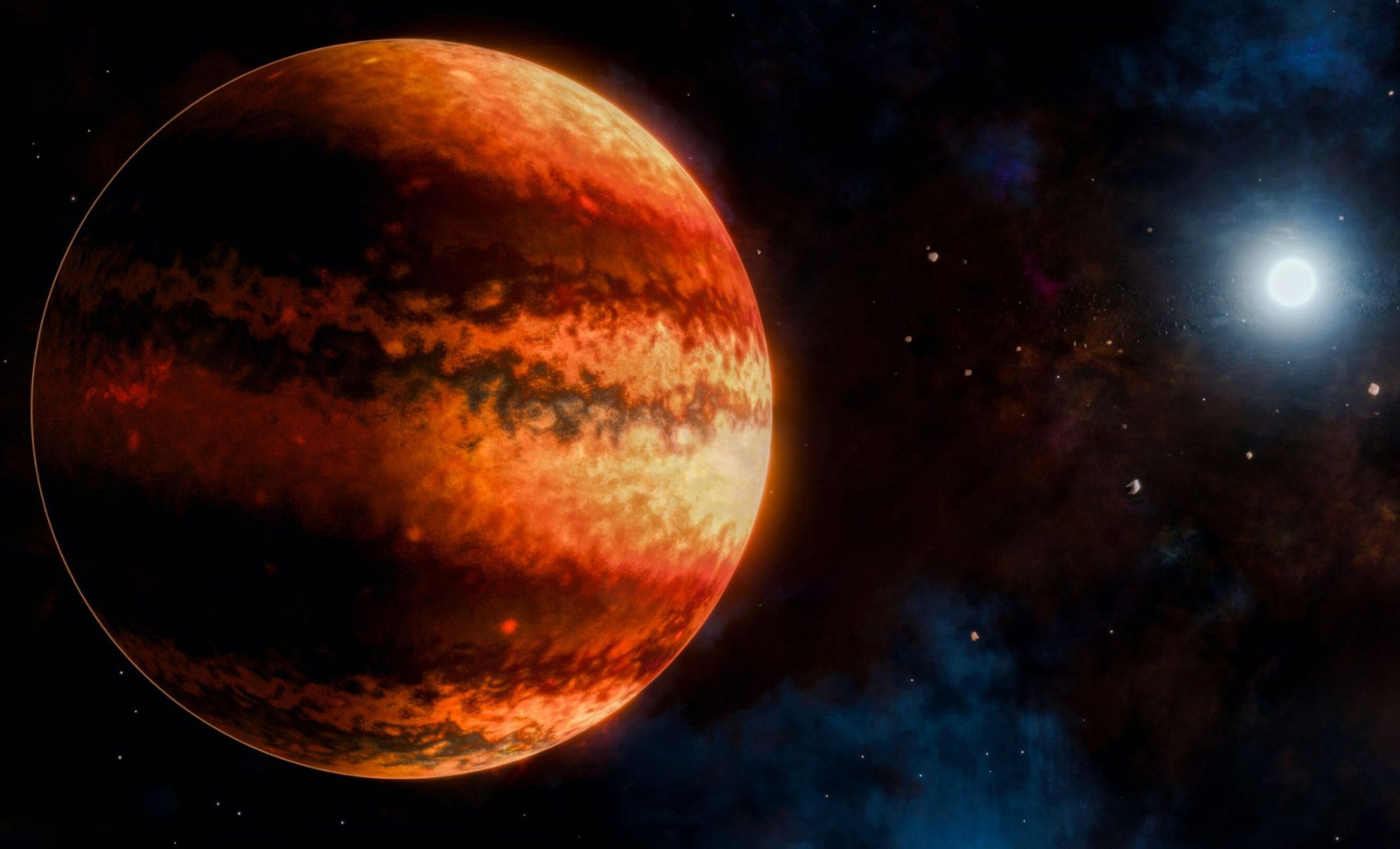
A colossal super-Jupiter boasting an unusually lengthy 180-day orbit has come into view after extensive monitoring, earning its place among the exoplanets with the lengthiest confirmed transits. This breakthrough, detailed in the Monthly Notices of the Royal Astronomical Society, highlights the advancements in detecting distant exoplanets through transit observations once thought nearly unattainable.
An Exceptional World That Redefines Exoplanet Exploration
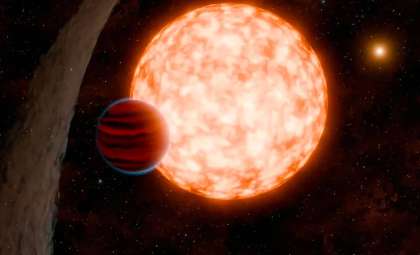
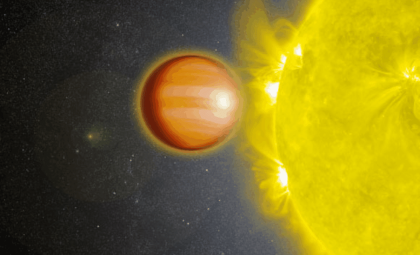
For over twenty years, the transit technique has revolutionized the pursuit of planets beyond our solar system by observing subtle dimming in starlight when planets pass in front of their stars. Although highly effective, this method is biased toward planets on close-in orbits that transit frequently. Detecting a planet with a half-year orbital period demands remarkable dedication and timing, which was precisely the case with NGTS-38 b. This enormous planet, approximately 8% larger than Jupiter and with a mass nearly 4.5 to 5 times that of Jupiter, joins the exclusive category of super-Jupiters. Initially discovered using data from NASA’s Transiting Exoplanet Survey Satellite (TESS), an international collaboration, spearheaded by Queen’s University Belfast, invested several years to verify its presence. This achievement underscores how the frontier of exoplanet detection is extending beyond the short-period giants that have predominated past findings. The publication in the Monthly Notices of the Royal Astronomical Society confirms that NGTS-38 b is among a rare group of long orbit transiting giants, opening new windows for studying planets far from their stars compared to the well-known hot Jupiters discovered in earlier exoplanet surveys.
Persistent Observations Over 200 Nights Cracked the Case
Validating NGTS-38 b demanded extraordinary perseverance, far beyond what is typical for planets with shorter orbital cycles. A single transit event rarely suffices to confirm planetary status, necessitating additional observations. Toby Rodel recounted the challenging process: “The initial detection came from TESS with a solitary transit observed on Christmas Day 2020. Following this, our team directed the Next Generation Transit Survey (NGTS) instruments in Chile to monitor the star for over 200 nights, ultimately capturing the concluding stages of a second transit.” The confirmation also depended on detecting tiny star movements caused by the planet’s gravitational pull using spectroscopy. Rodel explained, “By analyzing the star’s light spectrum, we could observe minuscule shifts indicating the gravitational tug of the planet. Integrating these radial velocity measurements with transit data enabled us to establish that the planet completes its circuit every 180 days.” These combined methods provided precise measurements of the planet’s size and mass, transforming a mysterious signal into a well-defined planetary system.

A Giant with an Intriguing, Eccentric Path
What sets NGTS-38 b apart is not only its prolonged orbit but also its somewhat elliptical trajectory, unlike the nearly circular orbits typical of many solar system planets. As Rodel noted, “This planet experiences cooler conditions than most well-studied exoplanets, offering a unique chance to examine planetary atmospheres at lower temperatures.” He added, “While our solar system’s planets tend to follow round orbits, NGTS-38 b travels on a more oval path. Its nearest point to the star lies just beyond Mercury’s distance from the sun, while at its farthest, it is almost as distant as Earth. Given that its star is hotter and larger than our sun, the planet remains warmer than Earth despite its orbit.” These traits place NGTS-38 b in a less explored group of massive planets that can shed light on how giant planets form and migrate. Unlike the scorching environments typical for hot Jupiters, this exoplanet’s more moderate zone could reveal fresh perspectives on atmospheric development and orbital dynamics.
Potential for Rings or Moons Around This Distant Giant?
The substantial mass and distant orbit of NGTS-38 b prompt fascinating questions regarding the presence of moons or ring systems. Its strong gravitational field and separation from the star may enable it to retain such companions. Rodel emphasized this exciting possibility: “Due to its massive size and distance from the host star, NGTS-38 b could support moons or rings, a feature yet to be observed around planets outside our solar system.” While no satellites or rings have been discovered yet, the system represents a prime target for upcoming advanced telescopes. Independent validation by other researchers reinforces confidence in this finding and highlights its significance within the expanding roster of exoplanets. Each discovery of a long-period transiting planet provides astronomers with a rare chance to study planetary systems resembling our own, with prolonged monitoring unveiling hidden giant worlds that eluded detection for years.
- Categories:
- Astronomy





0 comments
Sign in to Comment