
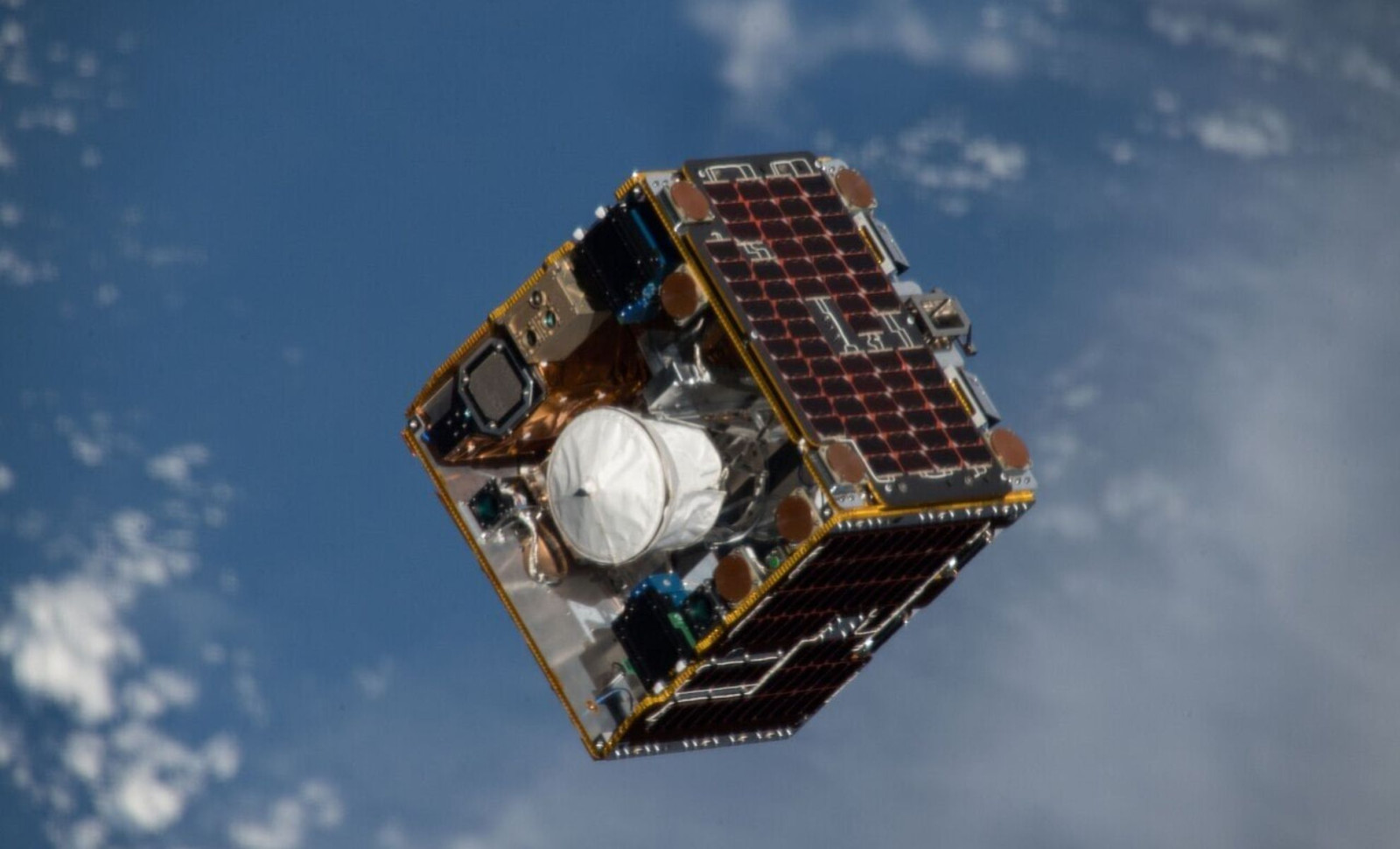
Researchers from China have devised an innovative reusable membrane net system aimed at effectively capturing hazardous orbital debris, removing it from Earth's vicinity, and then resetting for subsequent missions. Published in Space: Science & Technology, this design integrates a flexible multilayer membrane, built-in electronics, power sources, and shape-memory alloys to address a longstanding challenge in space cleanup: securing unpredictable debris without causing additional fragments.
Reusable Nets to Transform Orbital Debris Management
The near-Earth orbital region is cluttered with inactive satellites, discarded rocket parts, and collision remnants, all moving at high velocities. Even small debris pose serious risks to functioning spacecraft, so developing methods for debris mitigation and removal is a critical engineering objective.
Existing proposed approaches often involve trade-offs between accuracy, system complexity, and expense. For instance, robotic arms excel when handling objects with predictable shapes and motions. However, their use risks damaging fragile debris, creating more pieces. Laser techniques, meanwhile, avoid contact but demand powerful energy sources and precise knowledge of target characteristics.

Nets offer a promising alternative by enveloping erratic or tumbling objects rather than relying on precise grasping points. This quality allows them to capture noncooperative debris, which weren’t designed for servicing or retrieval.
Traditional space nets, however, tend to be single-use and difficult to manipulate post-deployment. This usually requires sending dedicated spacecraft for each removal, which becomes prohibitively costly when thousands of dangerous objects are involved.
The new proposal aims to overcome this limitation by developing a membrane capable of deploying, encapsulating debris, maintaining shape during extraction, and folding back into the servicing satellite for repeated use.
Mechanism Behind the Shape-Transforming Membrane Capture
The envisioned process starts with a chaser satellite approaching close to the target debris. At the correct position, it launches four projectile-like units attached to each corner of a folded membrane.
Simulations from the team suggest launching the projectiles at about a 30-degree angle. This momentum swiftly unfurls the membrane and directs it around the object, allowing full enclosure without needing a single point of contact.
What sets this design apart is the layered internal structure. The flexible membrane houses integrated components such as electronics, batteries, and shape-memory alloys (SMAs). SMAs can alter or restore their form when triggered, enabling the satellite to actively manage the net’s configuration after deployment.
Once the debris is enveloped, the embedded SMAs help the membrane retain shape and secure the object. The chaser can then steer the captured debris toward a controlled deorbit or alternate path for atmospheric burnup.
Uniquely, the membrane is designed to release and fold back into the satellite after each capture, allowing repeated debris retrieval missions without deploying new nets.
This reusability is crucial because removal costs decrease significantly if one spacecraft can handle multiple debris pieces, enabling cost-efficient cleanup campaigns despite ongoing engineering challenges for operational deployment.
Simulations Highlight Critical Deployment Parameters
The study, reported in Space: Science & Technology, uses numerical models to explore the membrane’s behavior during unfolding, deformation, and wrapping around various targets.
Rather than conventional finite element analysis (FEA), researchers applied the Multiparticle Method (MPM), representing the membrane as interconnected mass points linked by spring-damper elements.
This approach efficiently captures complex mechanical responses like bending and stretching with less computational load, which is vital for modeling the rapid and dynamic deployment phases.
The simulations identify the 30-degree launch angle as optimal, but also reveal that deployment distance matters greatly.
For instance, releasing the membrane projectile at a 2-meter (6.6 feet) gap can expose it to peak forces near 3,374 newtons, whereas increasing that range to 3 meters (9.8 feet) decreases the peak force by half.
Such sensitivity means small adjustments influence the net’s mechanical requirements and mission tactics significantly.
Engineering Challenges from Ultra-Thin Membrane Design
The membrane’s minimal thickness of just 10 microns exposes it to extremes of mechanical stress during capture operations.
Crafting this ultra-thin composite demands layers that manage energy supply, electronic control, mechanical flexibility, and shape memory, each complex on its own, yet needing to function seamlessly together.
Durability under repeated use remains an uncertain factor, as orbital conditions such as temperature swings, radiation, and mechanical fatigue may weaken the material over time.
Notably, the simulated environment omitted factors like solar radiation pressure and atmospheric drag, which can alter debris dynamics in orbit, potentially complicating deployment and maneuvering of the captured object.
Additionally, real orbital debris varies wildly—some spin erratically or have fragile parts that might break upon contact—so actual performance may differ from theoretical models.
Consequently, while this design shows promising feasibility, further testing and development are needed before it can be deemed operationally ready for space missions.
- Categories:
- News









0 comments
Sign in to Comment