
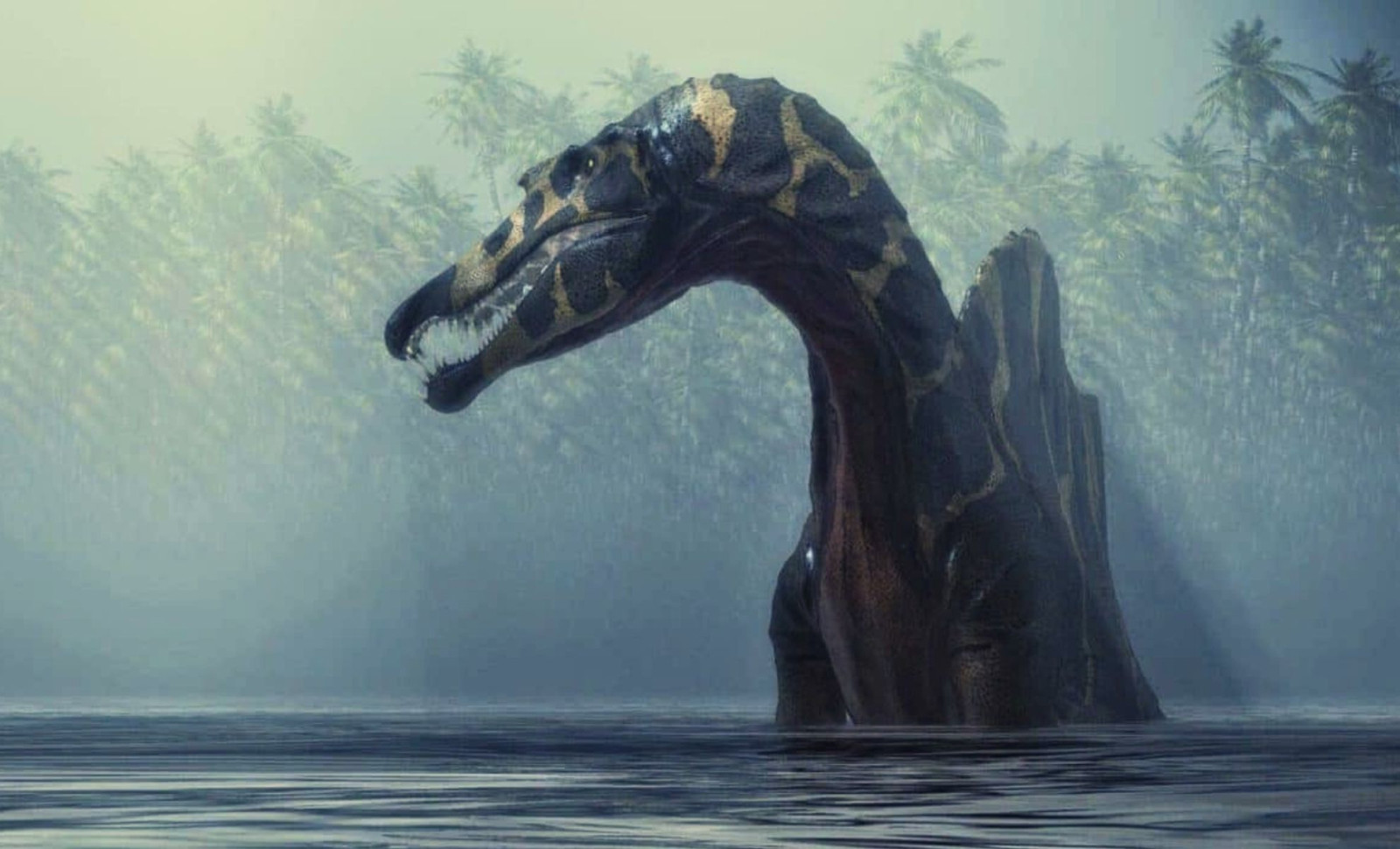
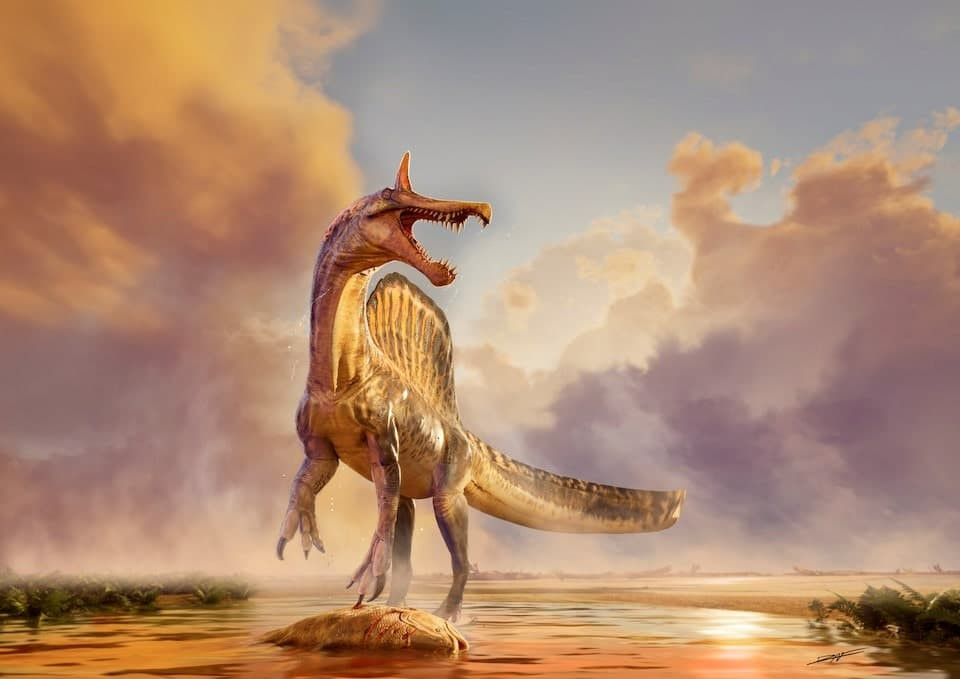
Paul Sereno, a paleontologist from the University of Chicago, likens the hunting method of a recently discovered dinosaur to that of a heron, wading through shallow waters to catch fish. “I believe this creature primarily fished in water about 3 feet deep,” Sereno shared with NPR, “though it was large enough to stand in waters up to 6 feet deep without floating.”
The team has named this newly identified dinosaur Spinosaurus mirabilis, uncovered from sandstone formations in Niger. This species roamed the Earth approximately 95 million years ago during the Cretaceous Period, inhabiting a marsh-like region in what is now central Sahara Desert.
Details of this remarkable find appear in a Science journal article. This discovery represents only the second confirmed species within the Spinosaurus genus, which was first identified in 1915 and for over 100 years included just one species, S. aegyptiacus.

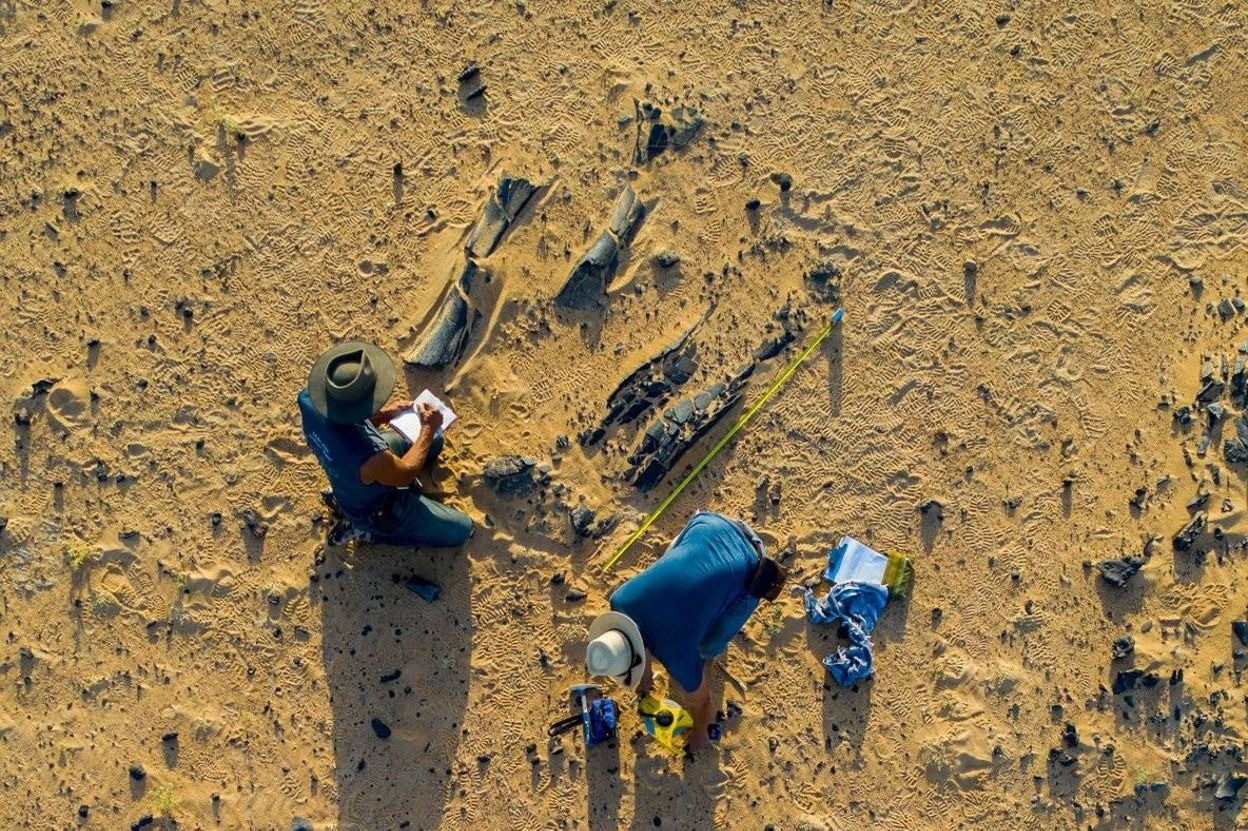
The fossils were discovered between 500 and 1,000 kilometers—about 310 to 620 miles—away from the closest marine shoreline present during that epoch. This finding contributes valuable insight into ongoing debates about whether Spinosaurus species lived and hunted in open oceans or frequented shallow inland waters.
A Distinctive Crest Unearthed Before Species Identification
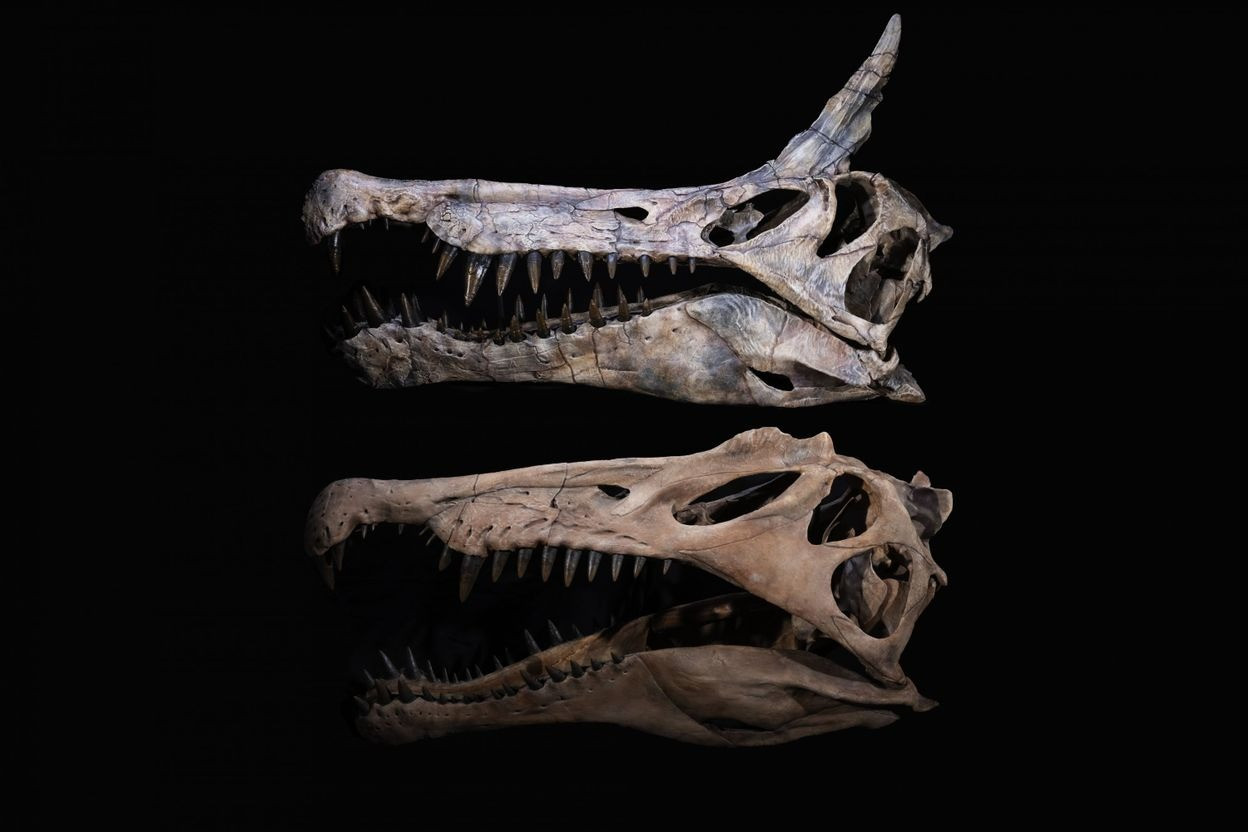
The name S. mirabilis derives from its massive, scimitar-shaped crest atop its skull, a curved, blade-like form resembling a short sword with a broad tip. This crest distinguishes the species from its relative, S. aegyptiacus, which featured a smaller and flatter ridge along its snout.
Daniel Vidal, a paleontologist on the team, first noticed an unusual bone protruding from the ground at the remote site called Jenguebi in November 2019. Initially, it resembled a vertebra. “It was incredible,” Vidal recalled. “It was like spotting a unicorn.”
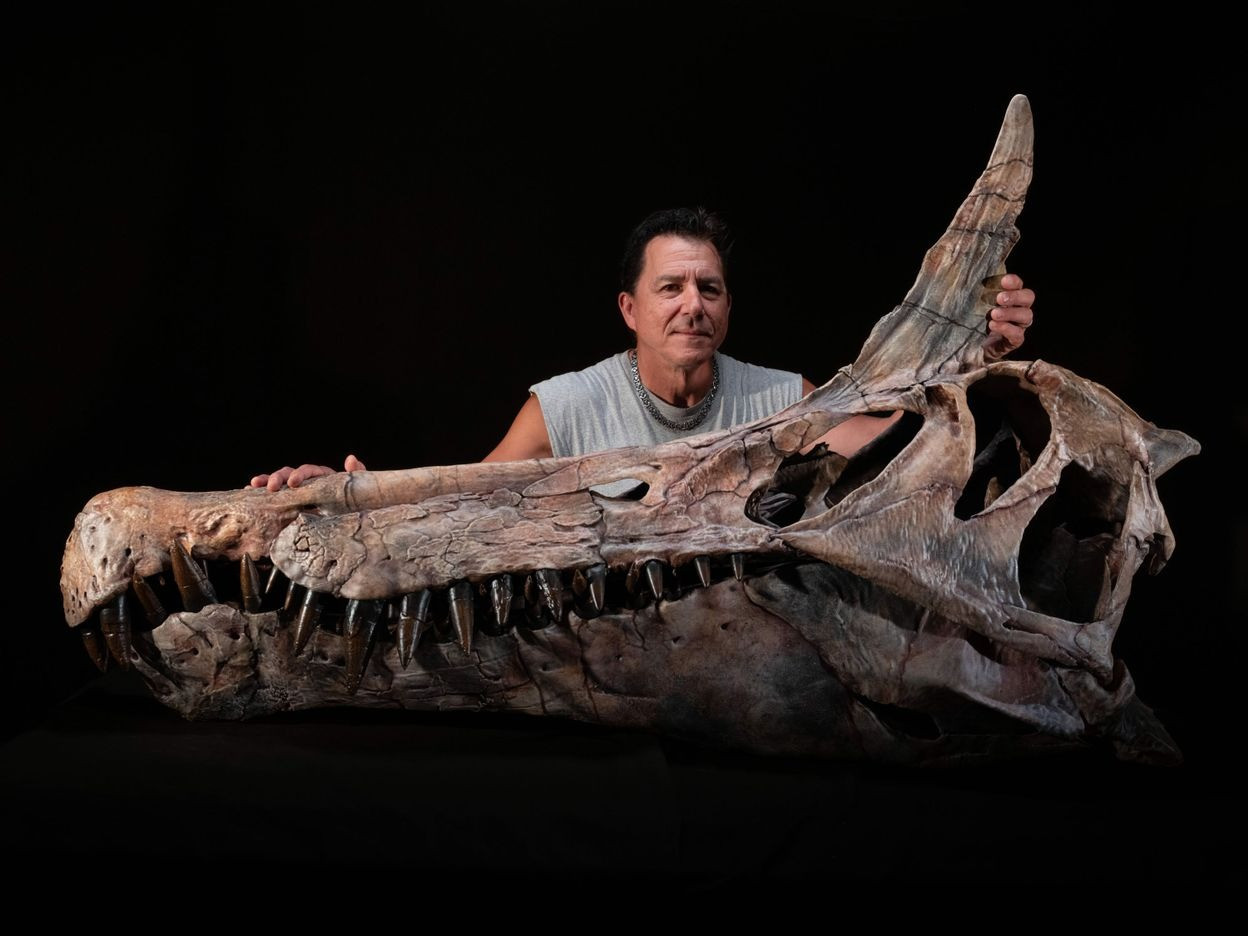
The texture of the crest and its intricate network of blood vessel channels suggest it was sheathed in keratin, the same substance that forms human nails and hair. Unlike other dinosaur crests with air pockets, this solid bone structure was likely too fragile for combat purposes.
When the team revisited Jenguebi in 2022 with more researchers, they uncovered two additional crests along with more jaw fragments. This second discovery convinced them they had found a distinct, previously unknown species instead of an unusual specimen of the known Spinosaurus.
Fossil Location Challenges Marine Dinosaur Lifestyle Assumptions
Fossils of S. aegyptiacus mainly come from Egyptian and Moroccan sites adjacent to former seas. This led some scientists to propose Spinosaurus species predominantly lived in marine or coastal waters.
However, the Jenguebi site presents a different narrative. Nearby, partial skeletons of long-necked dinosaurs were embedded in river sediments, indicating the S. mirabilis fossils originated from a forested terrain dissected by rivers rather than a coastal environment.
Sereno described the dinosaur’s behavior in this habitat: “I picture this creature as a kind of ‘hell heron’ effortlessly wading on robust legs into waters up to two meters deep, but primarily hunting in shallower zones for the abundant large fish of the era.”
Unlike most theropods with underbites, S. mirabilis had interlocking teeth, where the upper and lower tooth rows slid between each other and extended beyond the jaws, aiding in securing slippery prey rather than tearing flesh.
Expedition to a Remote Central Sahara Dig Site
Sereno’s interest in this region originated from a report dating back decades. In the 1950s, French geologist Hugues Faure documented discovering a dinosaur tooth in Niger, sparking Sereno’s quest to find similar fossil locations in the central Sahara. “I knew it was like searching for a needle in a haystack,” he reflected.
Today, Jenguebi is a dry and barren landscape with sparse trees and wide stretches of sand. The local Tuareg people refer to it as Sirig Taghat, which means No water, no goat.
Leading a 20-member research team, Sereno oversaw the excavation, which yielded not only the remains of S. mirabilis but also fossils from Carcharodontosaurus, titanosaurs, and various fish species.
“This discovery was so unexpected and extraordinary, it evoked strong emotions among our team,” Sereno remarked. “I will always treasure the moment at camp when we gathered around a laptop to view the new species for the first time, after one of our team used solar power to create 3D digital bone models and assemble the skull right in the heart of the Sahara. That’s when the full importance of the find truly hit us.”
“The local people we collaborate with have become lifelong friends, including the man who led us to Jenguebi and the remarkable spinosaurid,” Sereno added. “They recognize the scientific and national significance of our work together.”
- Categories:
- Science



0 comments
Sign in to Comment