
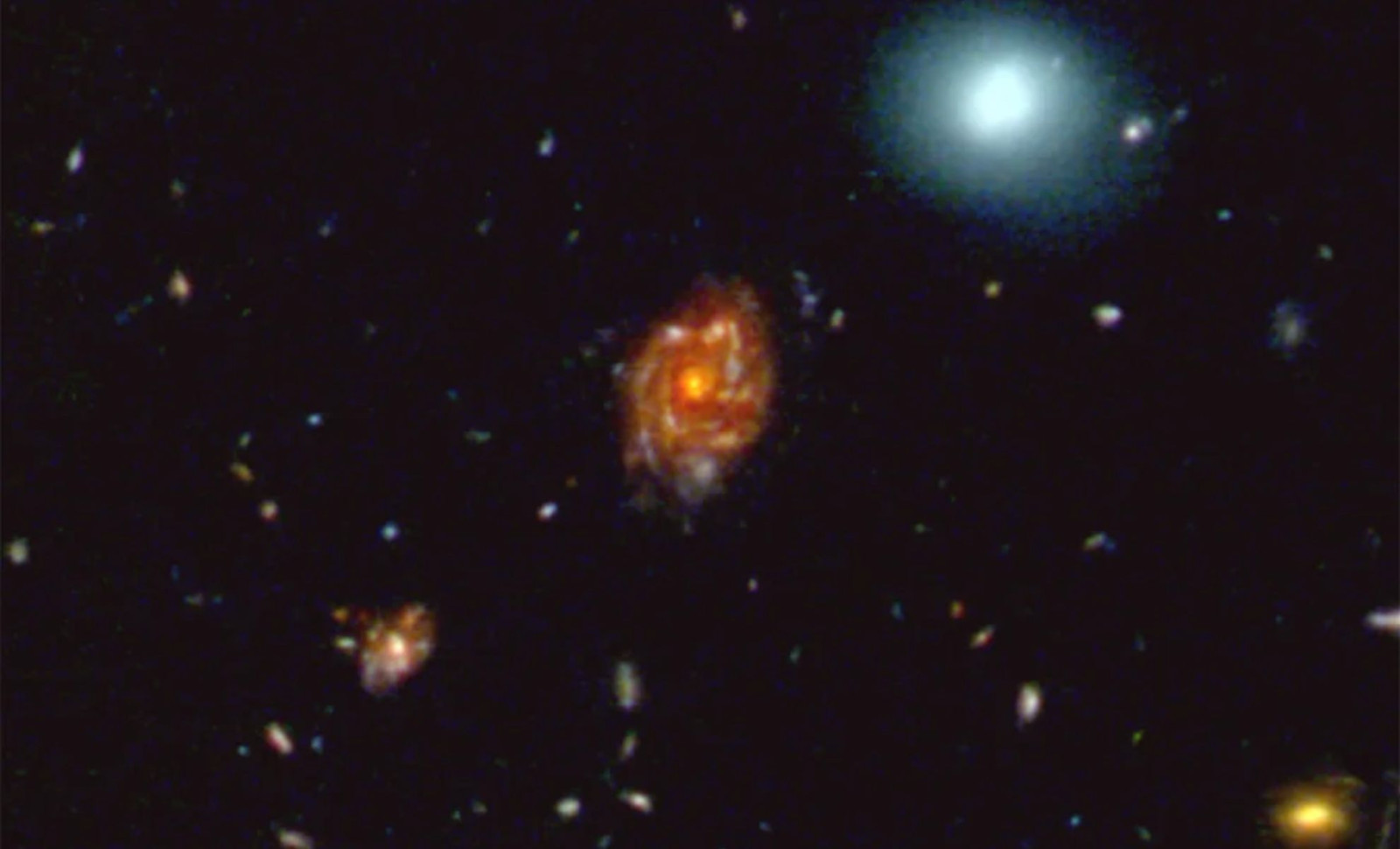
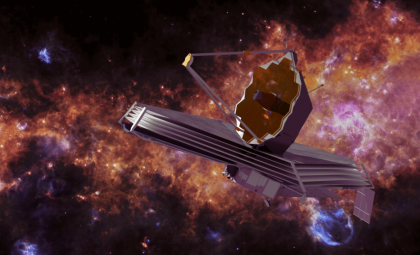
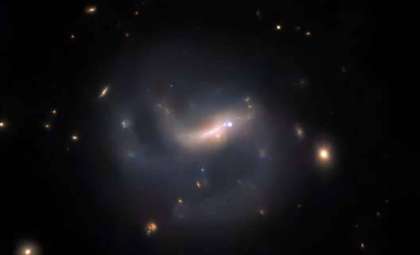
The James Webb Space Telescope (JWST) has detected a barred spiral galaxy unprecedented in distance. Dubbed M1149-BSG-z5, this galaxy lies at a redshift of 5.1, making it the farthest barred galaxy identified to date. This finding significantly revises our understanding of when such distinctive galactic structures first emerged, as earlier theories suggested stellar bars were uncommon amid the turbulent early universe.
An international research team led by Xiaohan Wang from Tsinghua University located this galaxy using the Near-Infrared Imager and Slitless Spectrograph (NIRISS) aboard JWST during its Cycle-2 observing campaign.
They discovered the galaxy within the imaging parallel field of the Medium-band Astrophysics with the Grism of NIRCam in Frontier Fields survey, as outlined in a paper uploaded to the arXiv preprint server on June 23.

A Barred Spiral Galaxy from the Reionization Era
Stellar bars represent one of the most distinct and prominent features in spiral galaxies. They play a vital role in galactic dynamics by channeling gas and stars across the disks over cosmic timescales.
While barred structures are frequent in nearby galaxies, they were presumed to be scarce during the universe’s formative epochs when galaxy assembly faced highly turbulent conditions. JWST observations have already uncovered barred galaxies near a redshift of 4.0, comprising about 3% to 7% of galaxies detected at redshift 3.5.
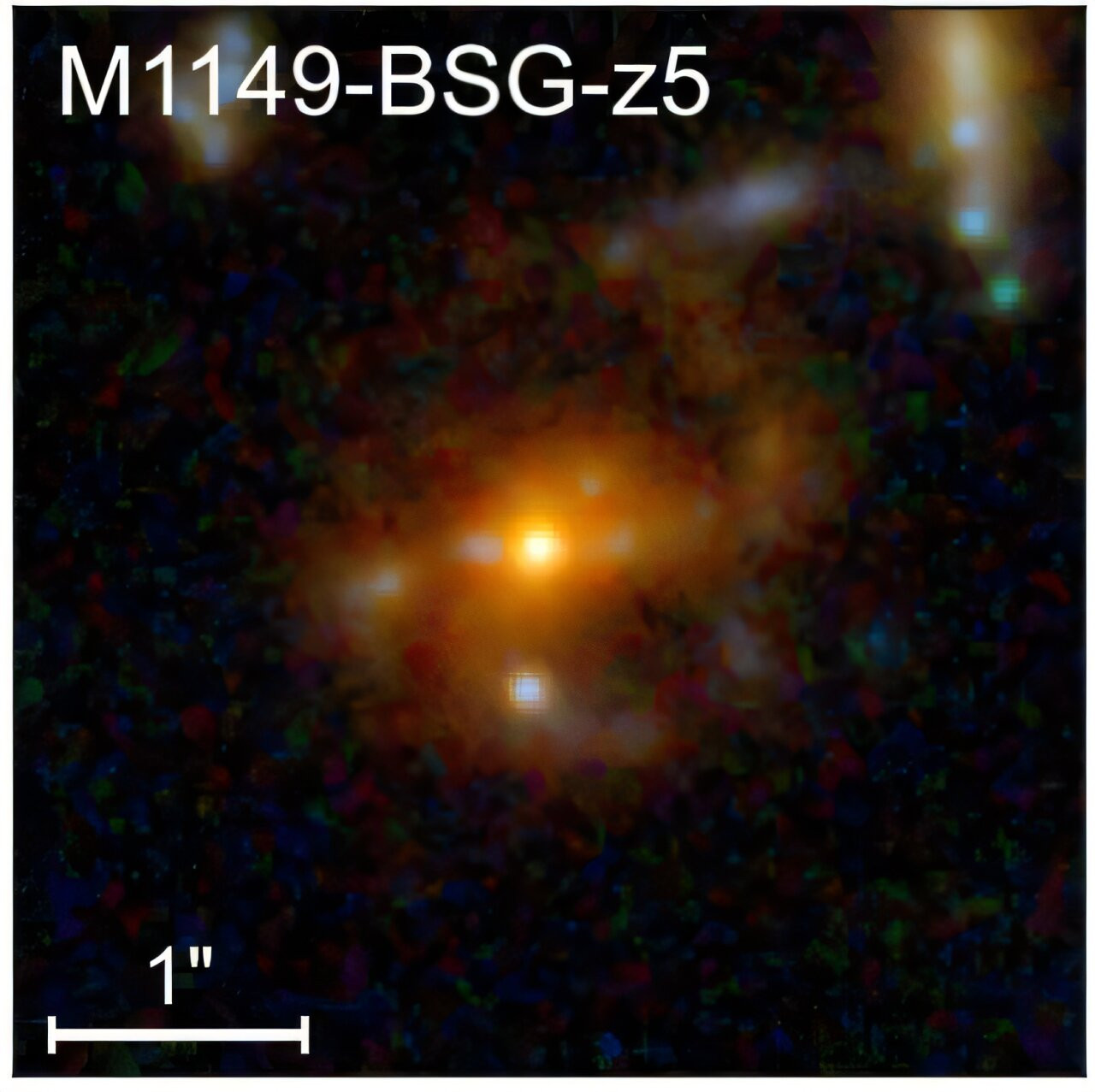
M1149-BSG-z5 surpasses these earlier findings. Hosting a stellar bar nearly 14,700 light-years long, it holds the record as the most distant barred spiral galaxy identified so far.
A Massive Galaxy with an Energetic Core
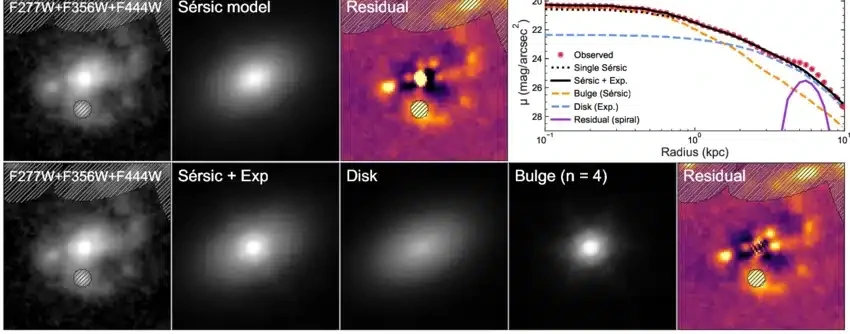
The research characterizes M1149-BSG-z5 as a considerable galaxy. Its effective radius is approximately 8,500 light-years, with spiral arms stretching to about 17,900 light-years. The stellar mass is estimated near 28 billion solar masses. Star formation is vigorous, occurring at an estimated pace of 144 solar masses annually, underscoring active star creation despite its ancient status.
Additionally, the researchers detected an active galactic nucleus (AGN) within the galaxy. The ratio of black hole mass to stellar mass is roughly 0.001, which is lower than many high-redshift AGNs but comparable to those observed in local active galaxies, according to the study.
A Galaxy Mature in Chemical Composition
M1149-BSG-z5 impresses not only due to its bar but also its chemical properties. The galaxy exhibits a metallicity around 50% that of the Sun, indicating that earlier stellar generations had enriched its interstellar medium with heavier elements despite the universe’s young age.
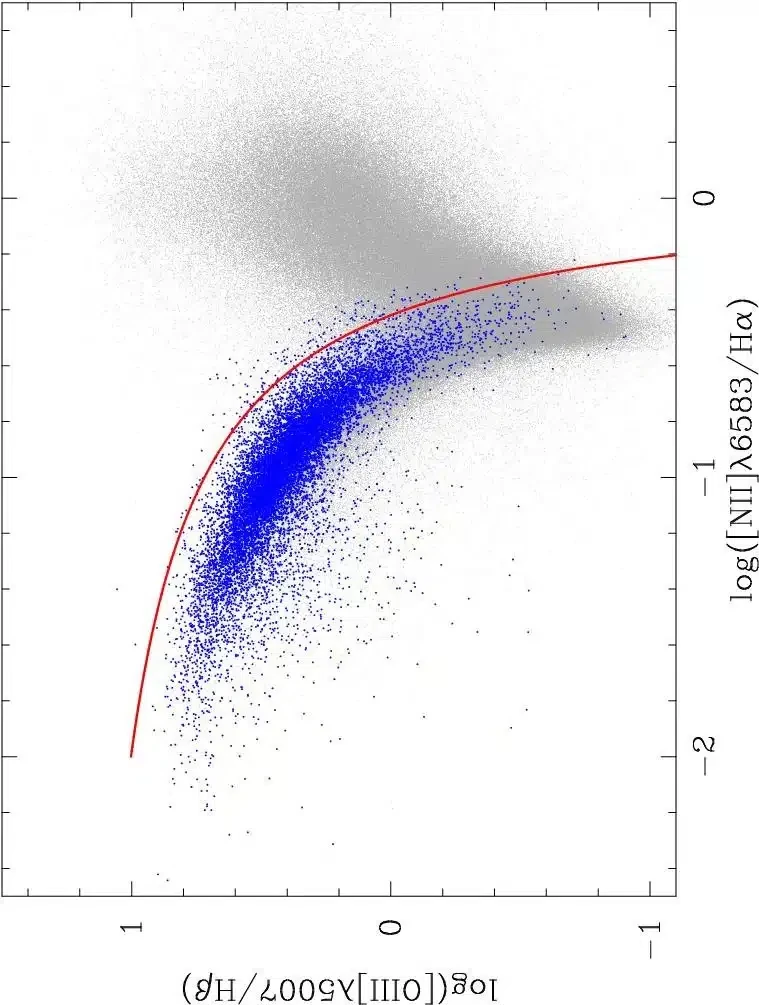
The team also analyzed the galaxy's placement on the Baldwin, Phillips, and Terlevich (BPT) diagram, a diagnostic tool used to ascertain whether a galaxy’s gas is primarily ionized by star formation or driven by an active galactic nucleus (AGN).
The paper reveals that metallicity levels, BPT diagram positioning, and overall physical attributes designate M1149-BSG-z5 as a massive, chemically evolved galaxy existing at an elevated redshift.
In comparison to peer galaxies of similar epochs, M1149-BSG-z5 is notably larger. It exceeds the size of most galaxies observed around redshift 5, yet it matches the dimensions of barred galaxies detected between redshifts 2 and 4. The team also identified a companion galaxy approximately 69,000 light-years away, suggesting possible gravitational interactions that could have influenced the creation of the stellar bar.
- Categories:
- Space


0 comments
Sign in to Comment