
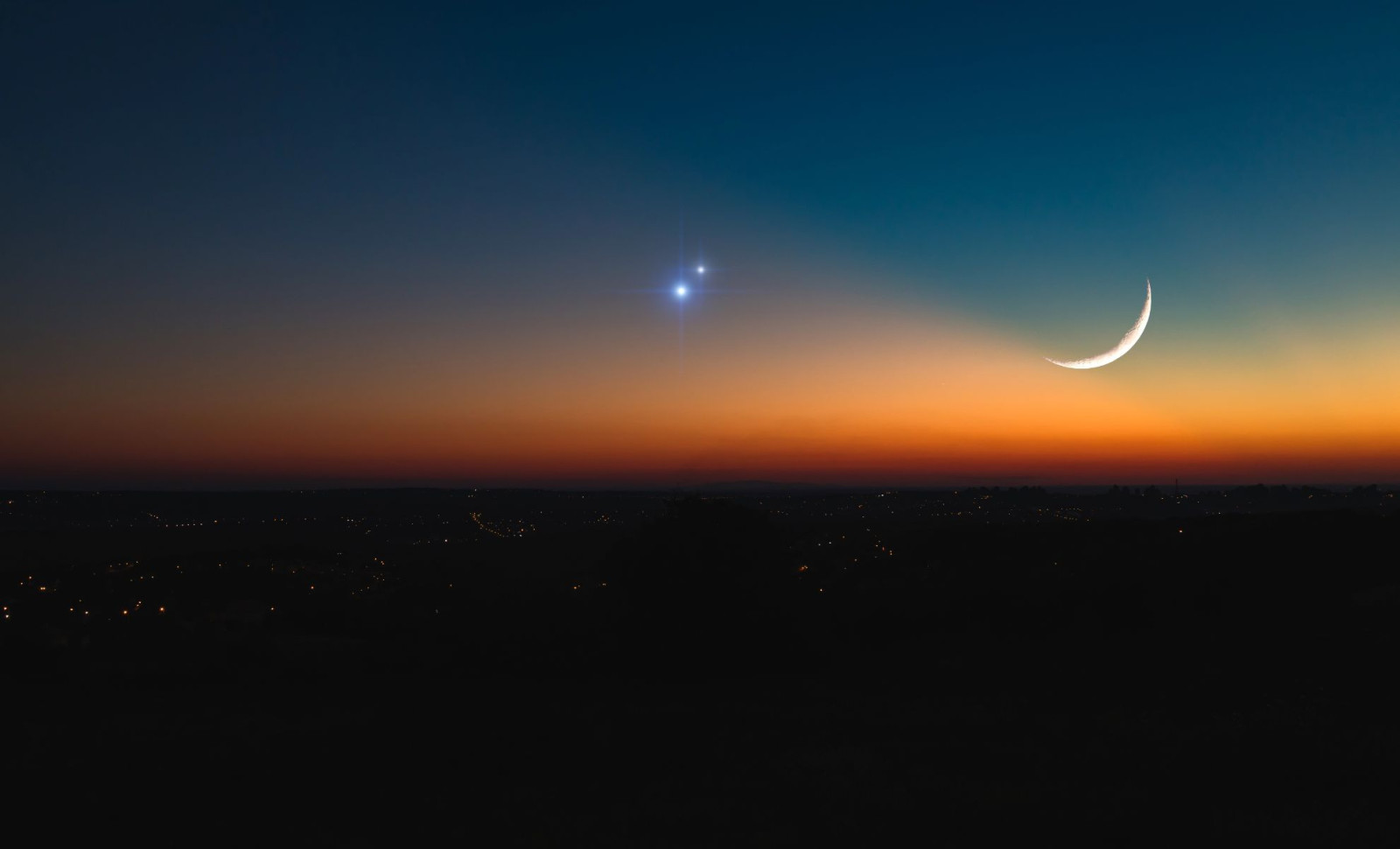
This July, Venus will stage two stunning celestial events in the western evening sky. First, it will closely approach the bright star Regulus, followed by a graceful appearance alongside a delicate crescent moon. Both can be enjoyed without optical aids, offering an accessible way to witness planetary motion with the naked eye.
Venus Nears Regulus Within One Degree
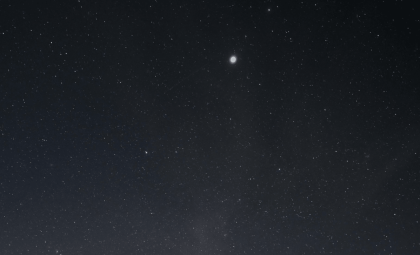
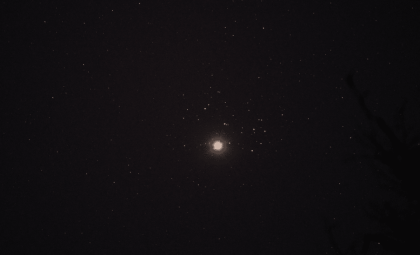
During the period from July 7 to July 12, Venus will hold a captivating close proximity to Regulus, the most luminous star in the constellation Leo. The planet will sweep within three degrees of the star, reaching its nearest point on July 9 when it passes just one degree to the north of Regulus.
The brilliance contrast between these two is remarkable: Venus will shine about 158 times brighter than Regulus. This difference makes Venus stand out vividly even during the lingering twilight after sunset, while Regulus reveals its softer, blue-white glow as evening deepens.

Observers following this event will notice Venus’s shifting position over several nights. On July 7, it appears to the right of Regulus. By the close conjunction on July 9, Venus moves to the star’s upper right. By July 11, it drifts to the upper left side, offering a clear demonstration of planetary motion against the mostly unchanging starry backdrop.
Regulus, marking the end of the Sickle of Leo — a backward question mark of six stars — is historically known as one of the four royal stars, symbolizing cosmic quadrants. Seeing it paired temporarily with Venus adds a striking dynamic to this well-known Leo pattern.
Best Viewing Times for Venus and Regulus
As detailed by Space.com, those located in mid-northern latitudes should look toward the western horizon around 9:45 p.m. local daylight time during mid-twilight for ideal viewing. Visibility can depend heavily on your exact latitude, terrain, weather, and how open your view of the western horizon is.
No telescope is necessary to enjoy the sight, though binoculars can enhance spotting because the pair remains low above the horizon. Seeking a dark, unobstructed location without interference from buildings, trees, or bright lights is recommended.
Venus’s dazzling brightness will make it the easiest to spot early as twilight fades, while Regulus’s dimmer light requires darker conditions to become visible near Venus.
Since the conjunction spans several nights, inclement weather on the closest approach date does not mean missing out; you can track Venus’s movement relative to Regulus for multiple days surrounding July 9.
Venus Aligns with a Crescent Moon on July 17
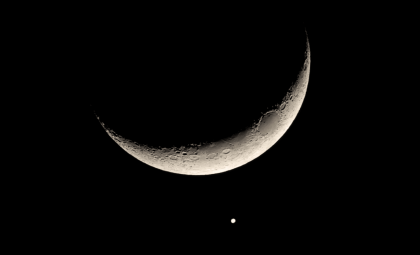
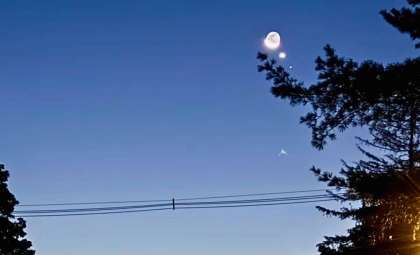
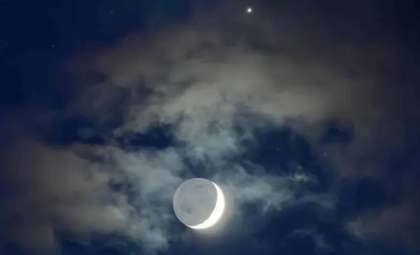
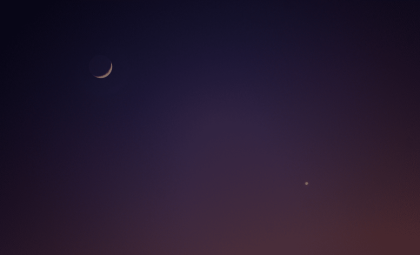
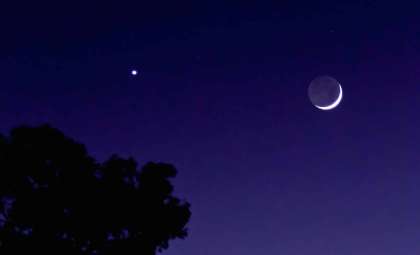
About a week later, on July 17, Venus will be found close to a young waxing crescent moon that is roughly 3.5 days old and about 17% lit. The slim crescent should be easily discernible as dusk deepens.
The moon and Venus won’t be exactly side by side; the lunar crescent will sit roughly six degrees to Venus’s left during mid-twilight. Together, their combined brilliance will create an attractive scene low in the west-northwestern sky.
As the two descend after sunset, they'll set around 10:30 p.m. local time for those in mid-northern regions, providing ample time to observe.
Using binoculars can highlight earthshine, a faint glow on the lunar night side caused by sunlight reflecting from Earth. This makes the moon’s full outline subtly visible in a soft grayish-blue hue, adding depth to the crescent’s appearance.
Why Venus Is Gradually Lowering in the Evening Sky
Venus started the year behind the sun, reaching its superior conjunction on January 6. It remained hidden for several weeks, then emerged from the sun’s glare in March, shining as the brightest point in the western evening sky.
In mid-June, Venus soared to nearly 30 degrees above the horizon after sunset and was visible for about two and a half hours. Its trajectory now leads it southward relative to the sun’s path, causing Venus to appear progressively lower each evening and to set earlier when viewed from mid-northern latitudes.
Despite continuing to increase its angular separation from the sun for a while, this southward movement means Venus’s altitude in the sky diminishes, shifting when it’s visible after dark.
On August 15, Venus will reach its maximum elongation of 46 degrees, but will be positioned lower in the western sky compared to July’s close encounters. This serves as a reminder that a planet’s angular gap from the sun doesn’t solely dictate its height above the horizon; factors like the season, observer location, and ecliptic orientation also influence visibility.
Venus’s Phase Change and Departure from the Evening Sky
By late September, Venus will rapidly approach the horizon. Through telescopes—and potentially steady binoculars under good conditions—the planet’s apparent size will increase while its lit portion narrows into a slim crescent shape.
This phase shift results from Venus’s orbit being closer to the sun than Earth’s, changing how much of its sunlit hemisphere is visible, much like lunar phases.
Those observing from mid-northern latitudes will find Venus challenging to spot in late September as it hangs close to the west-northwestern horizon after sunset. The planet reaches inferior conjunction on October 24, passing between Earth and the sun, appearing about six degrees south of the sun.
Because this conjunction occurs south of the sun, it will be better viewed from the Southern Hemisphere than from northern latitudes. After disappearing from the evening sky, Venus will make a stunning return in the dawn sky during November.
By Christmas, Venus is predicted to shine brilliantly as the “Morning Star,” dominating the eastern predawn horizon and captivating early risers. The July visual pairings with Regulus and the crescent moon represent just one phase in Venus’s extended journey from evening prominence to a powerful morning presence.
- Categories:
- News

0 comments
Sign in to Comment