

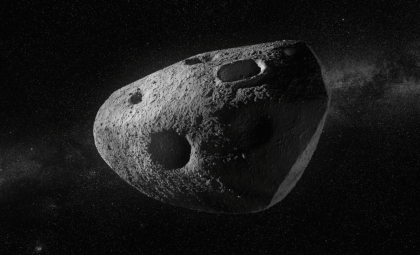
China is set to boost its planetary defense strategy by launching a comprehensive national early alert system aimed at identifying asteroids that could pose risks to Earth. This initiative aligns with worldwide efforts to detect and track near-Earth objects to minimize potential threats from space.
Enhancing Planetary Defense: China’s Strategic Expansion
With its eye on advancing beyond exploration, China is stepping up its space agenda to include planetary protection. The new early detection framework is designed to spot hazardous near-Earth objects well ahead of time, enabling scientists to project precise orbits and devise possible intervention strategies.
This move reflects the growing global consensus that asteroid tracking demands constant vigilance, advanced technology, and international collaboration. While major asteroid impacts remain improbable in the short term, experts agree early discovery is crucial for mounting effective defense efforts.

According to Xinhua, Chinese authorities stress that the potential hazard should not be underestimated despite the lack of any predicted collisions in the near future.
“No asteroid has so far been identified that will definitely collide with Earth in the foreseeable future, but concerns over impact risks are not unfounded. Many near-Earth asteroids remain undetected,” the state-run media outlet Xinhua quoted Li as saying in a report by Science and Technology Daily.
This declaration underscores a key issue in planetary defense: numerous asteroids remain undiscovered, making comprehensive tracking a complex challenge.
China to build space-ground monitoring system for asteroids #CoolChina pic.twitter.com/r4SzGeJByy
— CGTN (@CGTNOfficial) July 1, 2026
The Ongoing Challenge of Identifying Stealthy Asteroids
While astronomers have cataloged a significant number of near-Earth asteroids, many smaller or even sizable objects remain concealed. Detection is especially tricky when asteroids approach from the sunward side or have low reflectivity, limiting the reach of ground-based optical systems.
To tackle these hurdles, scientists increasingly utilize a blend of wide-field telescopes, radar technologies, infrared detectors, and advanced orbital simulations. Upcoming space observatories are also poised to close observation gaps by sensing asteroids invisible from Earth.
China’s planned early warning network may enhance global planetary defense infrastructure, provided it introduces unique observational assets rather than mirroring existing platforms. The effectiveness of such systems depends heavily on rapid data sharing for international validation and ongoing refinement of impact forecasts.
Global Collaboration Key to Maximizing China’s System Impact
Planetary defense is an intrinsically multinational effort, as impacts do not respect borders. Data collected in one country gains substantial value when combined with observations from various global observatories and spacecraft positioned throughout the Solar System.
Astronomer Kirsi Virkki points out that China’s upcoming contributions could be particularly beneficial if they expand current global monitoring efforts rather than duplicate them.
“If China launches a similar mission, hopefully it has some capability that the other two do not, and that it shares the data internationally and not only for Chinese scientists,” Virkki said.
She further noted that future Chinese projects could reinforce the global planetary defense framework by complementing ongoing international initiatives.
“Hopefully, as China’s planetary defense plans become more specific, we’ll see telescopes and space telescopes that complement the existing or planned capabilities of other countries, rather than repeat redundantly, and contribute data openly and collaboratively,” Virkki said.
These views echo a common sentiment among planetary scientists: the most significant progress in protecting Earth from asteroid threats will arise from coordinated international monitoring networks that continuously survey the skies and openly share their findings.
- Categories:
- Space










0 comments
Sign in to Comment