
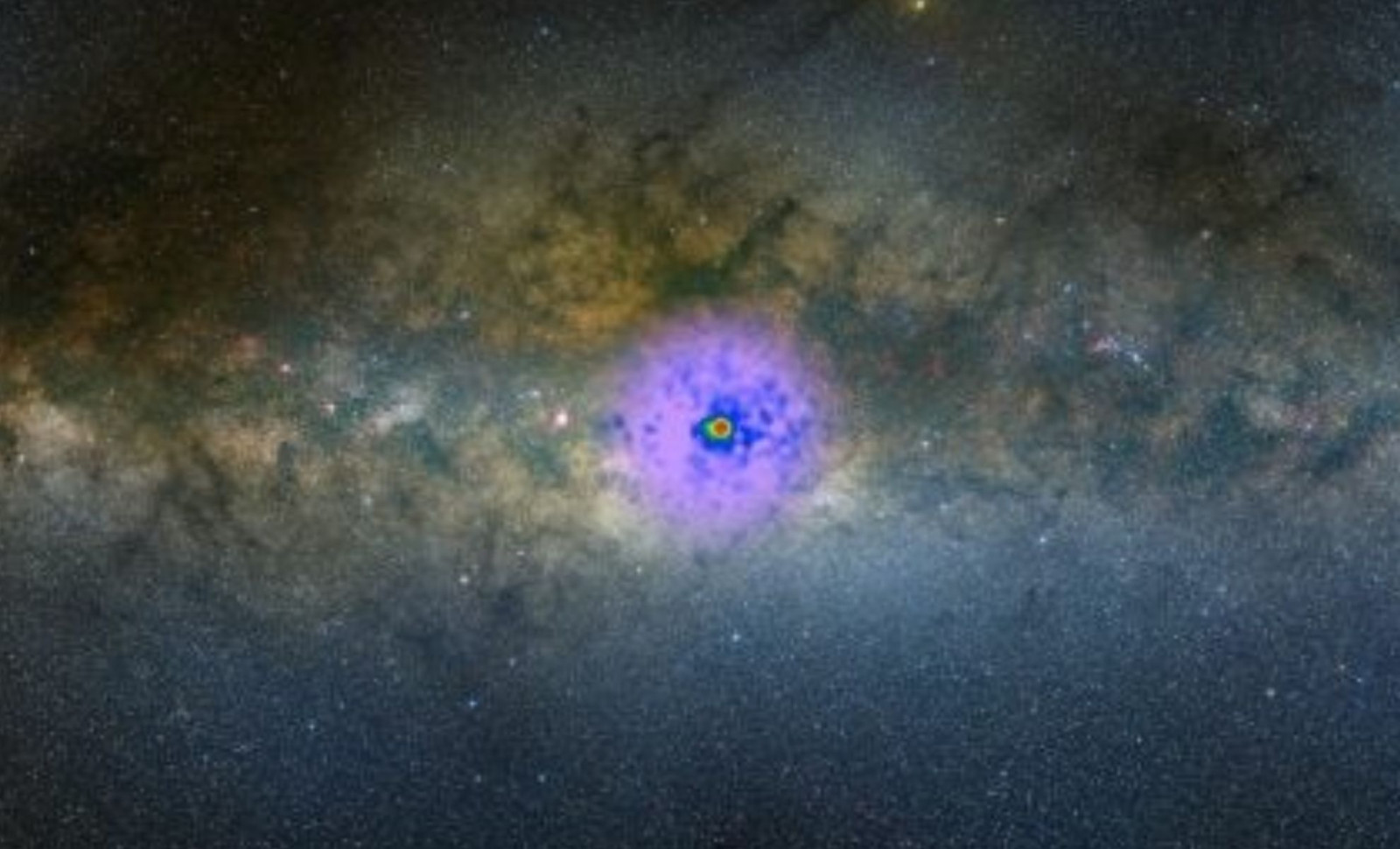
Utilizing advanced machine-learning techniques, researchers have reignited the discussion over the mysterious gamma-ray radiation emanating from the core of the Milky Way. By analyzing both the spatial distribution and energy levels of the detected photons, they concluded that dark matter still stands as a viable cause behind the so-called Galactic Center Excess.
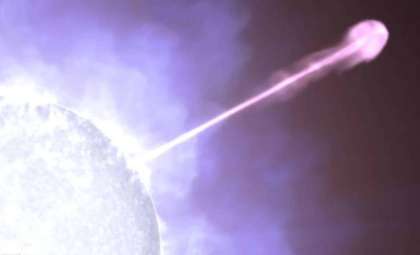
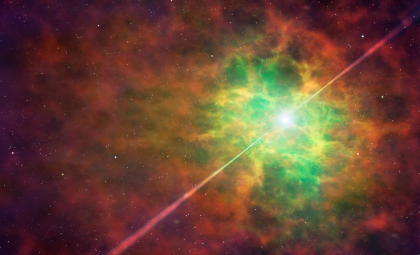
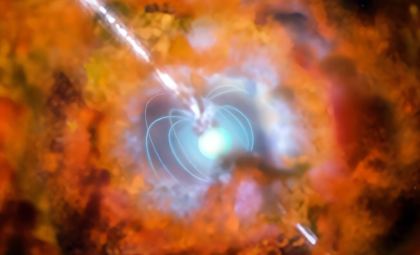
For decades, astronomers have sought to identify the source of this faint, nearly spherical halo stretching across thousands of light-years around our galaxy’s center. The debate has centered mainly on two possibilities: the self-destruction of theorized dark matter particles and emissions from an extensive, hidden population of fast-rotating neutron stars known as millisecond pulsars.
Disentangling these potential origins has proven challenging because the Galactic Center is a highly luminous and complex gamma-ray environment with overlapping sources. A global research team, led by scientists from the University of Vienna and Lawrence Berkeley National Laboratory, applied a machine-learning algorithm trained on over a million simulated gamma-ray datasets to shed new light on this puzzle.

Incorporating Photon Energy Offers New Insights
Earlier statistical approaches predominantly supported millisecond pulsars as the most likely cause of the Galactic Center Excess. However, these studies often neglected crucial information—the energy of each individual gamma-ray photon.
The new analysis integrated the photons' spatial locations with their energy measurements, providing a more comprehensive evaluation of the two leading theories. Published in Physical Review Letters, the findings reveal that including energy data significantly alters prior conclusions.
“Interpreting the signal is particularly difficult because the Galactic Center is an exceptionally bright and crowded region of the gamma-ray sky,” said Florian List, a study author and researcher at the University of Vienna.
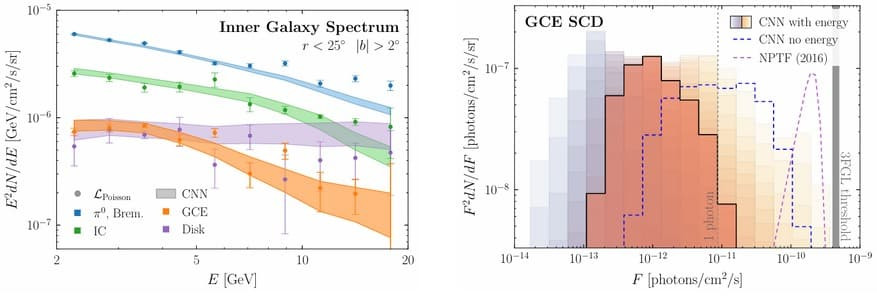
Previous studies suggested that the glow arose from relatively bright yet unresolved point sources, bolstering the case for millisecond pulsars. Contrary to this, the current research indicates that such sources, if responsible, would have to be far dimmer than once thought.
A Dark Population of Thousands of Faint Pulsars Needed?
If millisecond pulsars generate the gamma-ray glow, the analysis suggests more than 35,000 of these faint stars would need to be densely packed near the Milky Way’s center.
This count far exceeds the few hundred to a few thousand pulsars considered in many earlier models. Moreover, each pulsar’s emission would have to be unusually weak and difficult to detect.
“Our new analysis shows that the sources would have to be so faint that they would be almost indistinguishable from the emission expected from annihilating dark matter,” said Nick Rodd, a co-author from Lawrence Berkeley National Laboratory.
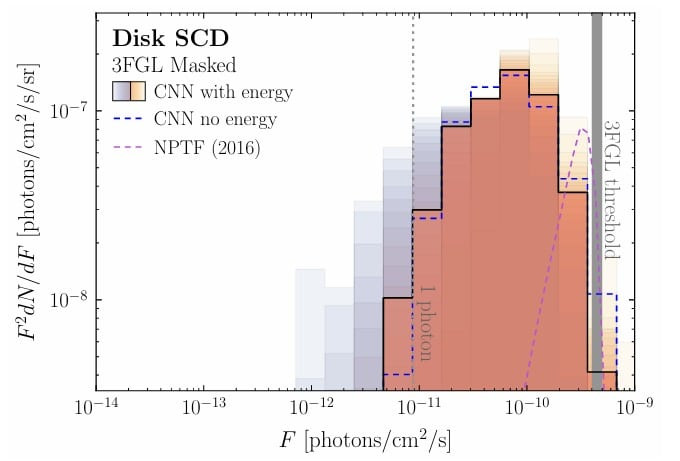
The team observed that this significant overlap complicates efforts to distinguish a massive assembly of faint millisecond pulsars from gamma rays that would arise if dark matter particles were annihilating. While the findings do not discount the pulsar origin story, they do challenge one of the strongest arguments previously used to dismiss a dark matter cause.
Dark Matter’s Role Remains Ambiguous
This latest study does not prove dark matter is behind the Galactic Center Excess. Rather, it highlights that former evidence favoring unidentified point sources falls short of excluding dark matter as the potential source.
“The origin of the Galactic Center Excess is one of the longest-running debates in astrophysics,” List said. “Our work does not show that dark matter is responsible for the signal. However, it suggests that it is still too early to rule out this possibility.”
When photon energies were taken into account, the interpretation shifted considerably. If pulsars are indeed responsible, an extraordinarily numerous and faint population would be necessary to explain the luminosity.
- Categories:
- Astronomy



0 comments
Sign in to Comment