
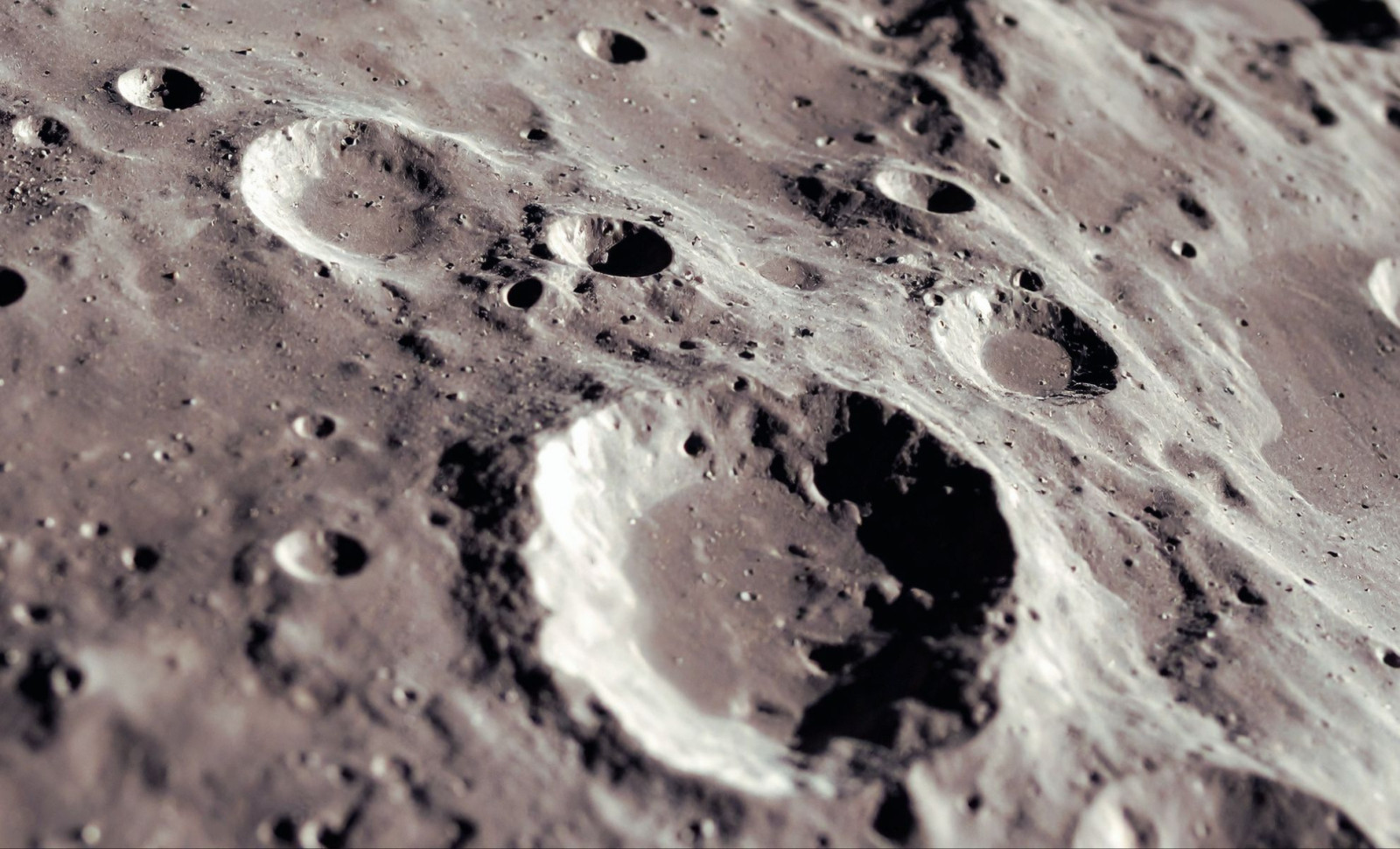
A recent paper in The Planetary Science Journal reveals that many AI-produced catalogs of lunar craters fall short of expectations when subjected to strict scientific evaluation, raising concerns about relying on artificial intelligence in planetary studies.
Evaluating AI Accuracy in Lunar Crater Detection
Scientists at the Southwest Research Institute analyzed eight expansive lunar crater datasets generated by AI, comparing them to a benchmark catalog meticulously compiled by experts over several years. Their aim was to assess whether automated techniques can reliably identify and measure impact craters, vital records that chronicle the solar system’s history.
Lunar craters serve as key indicators for dating planetary surfaces by examining their quantity, distribution, and size. Since asteroid strikes occur at relatively steady rates over geologic time, more densely cratered surfaces typically signify older terrain. Such analyses help scientists reconstruct the moon’s and other terrestrial bodies' geological evolution.

Automation through AI has garnered interest because manually detecting thousands of craters is labor-intensive. These tools promise to enable planetary surveys at scales unattainable by human effort alone.
The new findings reveal that published performance metrics for AI crater databases can be misleading. When evaluated by the same methods applied to human-generated catalogs, many AI datasets showed notable accuracy declines.
“AI has enormous potential to help with repetitive, time-consuming scientific tasks, especially gathering some of our data,” said Dr. Stuart J. Robbins of SwRI’s Solar System Science and Exploration Division in Boulder, Colorado, and lead author of the study. “But our analysis shows that researchers should not assume an AI-generated crater catalog is ready for scientific use solely based on its published metrics.”
Challenging Established Metrics for AI Crater Detection
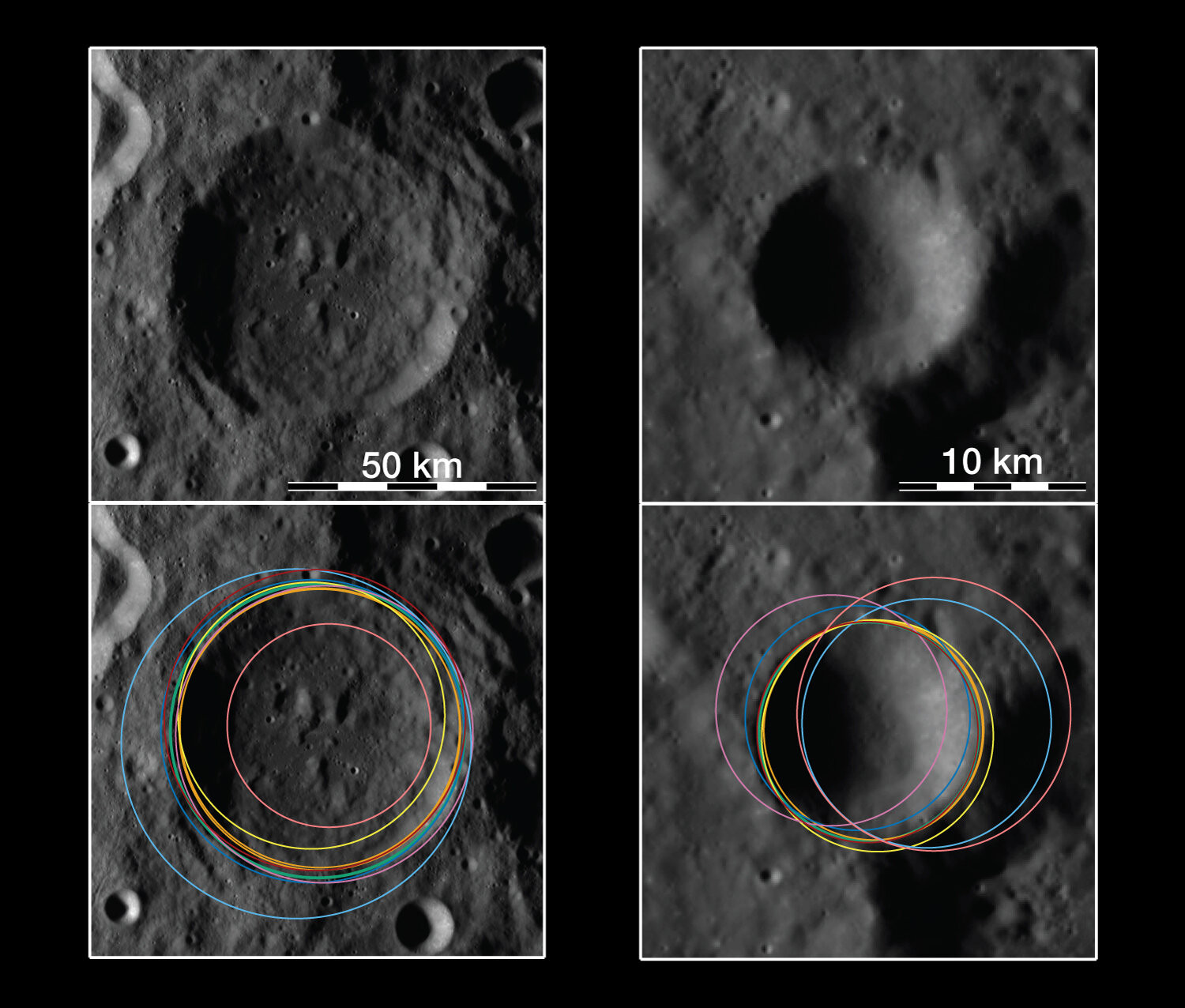
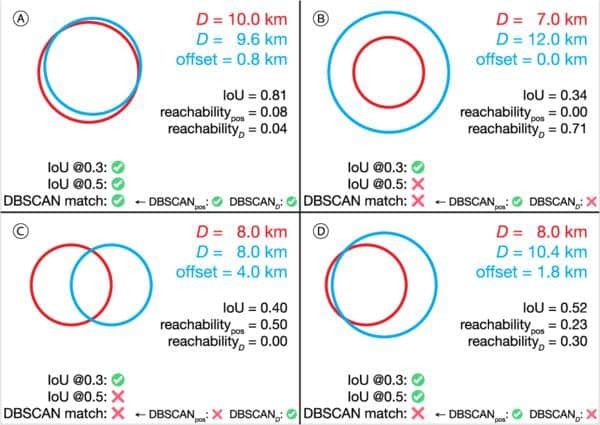
The study, entitled “A Comparison of Lunar AI-Based Crater Databases Using Uniform Criteria,” scrutinized eight autonomous crater catalogs with global coverage. The team matched these automated results against a comprehensive manual catalog using consistent criteria to evaluate alignment with human expert standards.
Results showed that success definitions heavily influence reported accuracy. Algorithms might detect crater-like forms but fail to precisely match their spatial location, size, or physical parameters as required for rigorous planetary science.
This distinction impacts scientific interpretations since crater datasets underpin geological dating and planetary evolution models, beyond mere shape recognition.
“A crater catalog is not just a random list of circles,” explained Robbins. “If a crater’s position is off, duplicated, or its size is incorrect, it distorts scientific conclusions. For example, duplicate craters can artificially inflate surface ages in models.”
The researchers found that several AI datasets performed well under coarse accuracy measures but exhibited critical shortcomings when analyzed with detailed, domain-specific metrics. This gap underscores the need for specialized validation in planetary science.
Crater Size Significantly Affects AI Detection Reliability
A key insight was that AI catalog precision is strongly influenced by crater diameter. While detection of large craters often succeeds, smaller craters are more frequently missed or inaccurately characterized, limiting usefulness for particular research.
Smaller craters are crucial for studying recent impacts and surface dynamics, while larger craters offer insight into older geologic events. Inconsistent performance across sizes means catalogs may only serve selective scientific investigations.
“Diameter dependence matters,” Robbins said. “A catalog might look acceptable from one overall number, but when you break it down by crater size, it may be useful for one question while unreliable for many others.”
The paper reported some AI crater databases saw accuracy reductions by more than tenfold when evaluated with stricter, human-comparable criteria focused on repeatable identification.
The authors advocate for future AI crater resources to provide transparent details on match criteria, error quantification, and independent validations to aid scientists in assessing their applicability.
Establishing Robust Standards for AI in Planetary Mapping
The study does not discourage AI’s role in planetary exploration but stresses the necessity of rigorous assessment before fully endorsing AI datasets for scientific use.
As new missions generate vast amounts of extraterrestrial imagery, automated analyses are poised to become invaluable. Accurate AI tools can accelerate surface mapping and uncover patterns that would take decades by manual effort.
Researchers emphasize viewing AI as an assistive tool requiring thorough vetting rather than a substitute for expert judgment. Planetary data integrity hinges on understanding AI’s detection mechanisms and potential errors.
“AI might transform crater cataloging and speed up data acquisition substantially,” Robbins concluded. “But for now, scientists must carefully evaluate these tools to see whether their performance truly supports robust science.”
Future lunar mapping success likely depends on integrating AI with rigorous scientific oversight. Enhanced, validated AI crater catalogs could become powerful assets in deciphering the moon’s geological past and planetary history across the solar system.
- Categories:
- Astronomy





0 comments
Sign in to Comment