
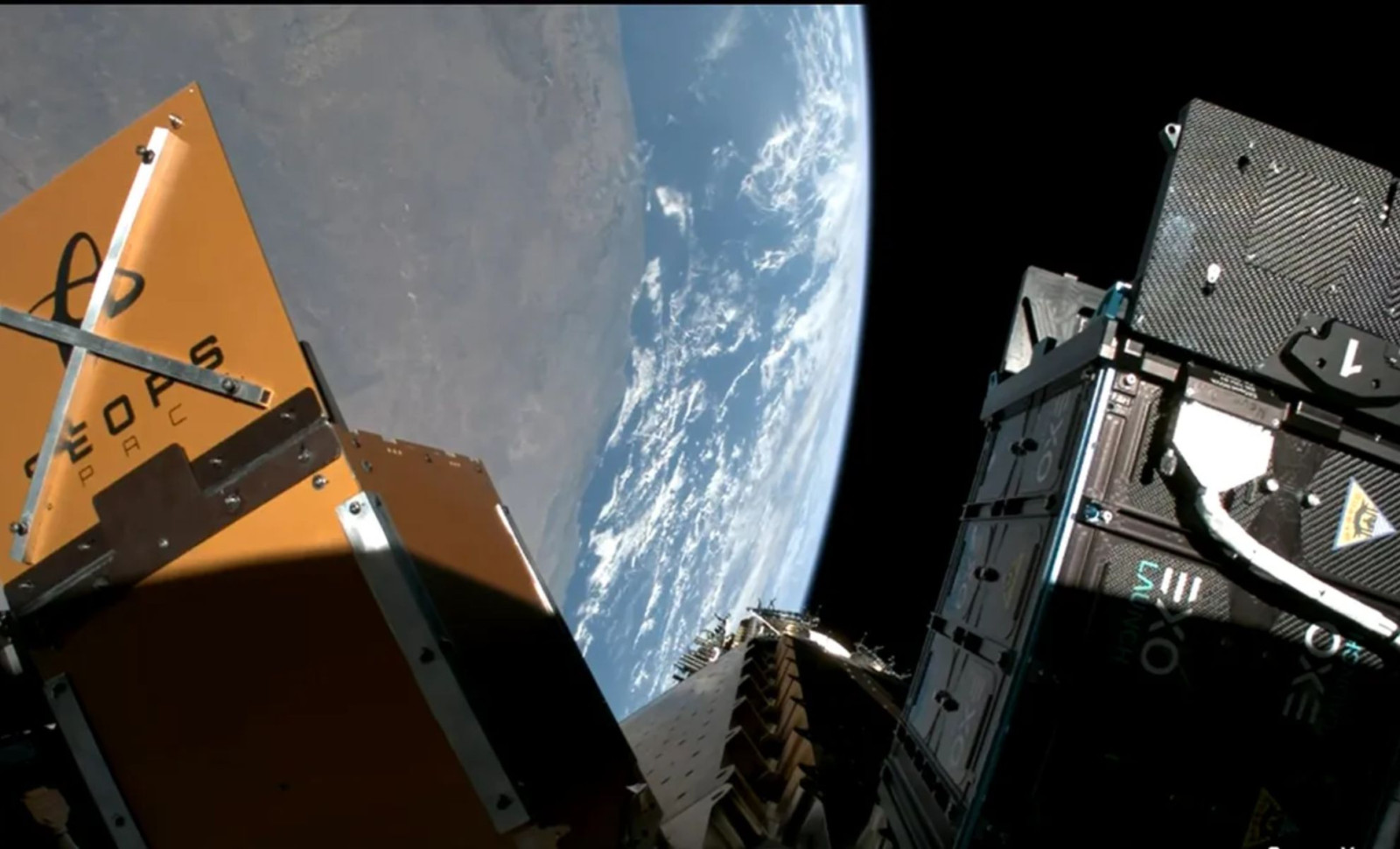
Aboard a SpaceX Falcon 9 rocket, a compact experimental satellite has marked a significant breakthrough that could transform space exploration. The BOHR CubeSat, created by City Labs, became the inaugural commercially built nuclear-powered satellite to reach orbit during the Transporter-17 rideshare mission. While the satellite primarily operates with solar panels, its key objective is to test an innovative betavoltaic power source capable of providing uninterrupted energy in environments with limited or no sunlight.
An Innovative Power System Joins the Space Race
The core of BOHR features City Labs’ NanoTritium technology—a compact betavoltaic system that harnesses electricity from the natural radioactive decay of tritium. Differing from traditional radioisotope thermoelectric generators found on NASA’s Voyager spacecraft, which transform heat to electricity, the NanoTritium captures beta particles released during decay through semiconductor material. This method offers a stable and continuous power source that functions regardless of solar availability, making it ideal for missions where solar power falls short.
Although BOHR still depends on solar cells for most functions, its mission is designed to prove the technology’s effectiveness amid space’s challenging conditions before advancing to larger-scale applications. This achievement stems from extensive engineering efforts aimed at miniaturizing nuclear power systems while complying with rigorous launch safety rules. “This marks a pivotal moment for commercial nuclear energy in space,” said City Labs CEO Peter Cabauy. The company sees the mission as proof that nuclear-powered spacecraft can transition from theoretical to practical under current regulations.

Among the 81 payloads that flew on the SpaceX Transporter-17 mission was City Lab's BOHR (Betavoltaic Orbital High-Reliability), the 1st commercial nuclear-powered satellite. Following its deployment, we spoke with City Lab CEO Peter Cabauy about the technology. pic.twitter.com/5UpEIQ3fHy
— Spaceflight Now (@SpaceflightNow) July 7, 2026
Unlocking New Frontiers Beyond Solar Power
Numerous high-value scientific targets within the Solar System pose challenges for spacecraft relying solely on solar energy. Permanently shadowed regions near the Moon’s South Pole, deep-space missions drifting far from sunlight, and long-term operations under extreme conditions all require dependable power regardless of illumination. These constraints have fueled growing interest in compact nuclear power solutions that can offer uninterrupted energy for years or decades. City Labs aims for its technology to play a role in overcoming these challenges.
“City Labs’ BOHR arrives as the first commercial answer to that challenge,” the company said in a statement.
The company’s aspirations extend well beyond this initial CubeSat trial, with plans to scale their nuclear technology for more rigorous scientific, commercial, and defense missions. The increasing global interest in establishing a lasting human presence on the Moon gives added importance to this endeavor, as future lunar bases will need dependable power during the lengthy two-week lunar night and inside never-illuminated craters.
Regulatory Breakthroughs and Safety Measures
Deploying satellites with radioactive components demands comprehensive regulatory scrutiny, making BOHR’s orbit insertion a critical policy achievement alongside its technical goals. Funded through a U.S. Department of Defense contract, this mission was the first commercial nuclear-powered launch approved under the Federal Aviation Administration’s nuclear launch framework, established by National Security Presidential Memorandum-20 in 2019. Tritium’s relatively low radiation output and favorable engineering traits distinguish this project from larger radioisotope power systems.
“City Labs’ tritium-based power systems… are engineered for safe handling, transportation, and integration within standard commercial launch environments,” the company stated.
As highlighted by Space.com, the convergence of regulatory authorization, commercial development, and successful deployment illustrates how private companies are now forging avenues once dominated by government agencies.
Implications for Future Space Power Solutions
The BOHR mission marks only the start for City Labs in pioneering new commercial nuclear power systems for space. Engineers will closely analyze the spacecraft’s performance over time to collect vital data on the NanoTritium technology in orbit, guiding future iterations. If the results meet expectations, similar power units could be employed in satellites operating in harsh environments, robotic explorers, lunar installations, and spacecraft needing uninterrupted low-level power for extended missions.
While current capabilities fall short of powering large colonization or industrial projects, each milestone reinforces confidence in nuclear power’s feasibility and helps advance regulatory acceptance.
“BOHR demonstrates that safe, compact, and regulatory-approved nuclear power systems are ready for routine commercial deployment,” Cabauy said.
This quiet CubeSat launch could ultimately be viewed as a foundational moment in developing a new era of reliable, lasting space energy—supporting missions to shadowed lunar regions, distant planets, or new commercial frontiers.
- Categories:
- Space










0 comments
Sign in to Comment