
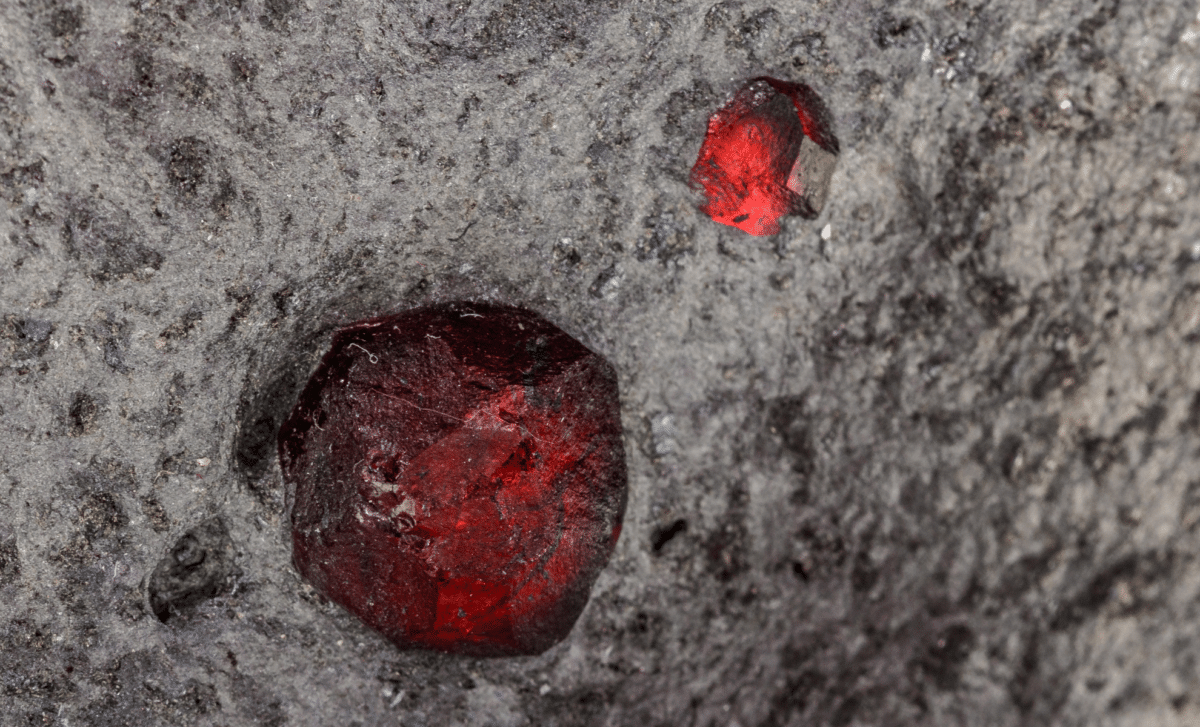
Tucked within a fragment of a Martian meteorite, scientists have identified minuscule grains of garnet, marking a groundbreaking milestone in planetary geology. This iron-rich garnet, called andradite, was found within a tiny piece of rock from Mars—an unprecedented discovery that could shed light on ancient geological phenomena that shaped the Red Planet billions of years ago, as first highlighted by ScienceAlert and comprehensively reported in Geochemical Perspectives Letters.
Small Mineral, Big Revelations About Mars’ Past
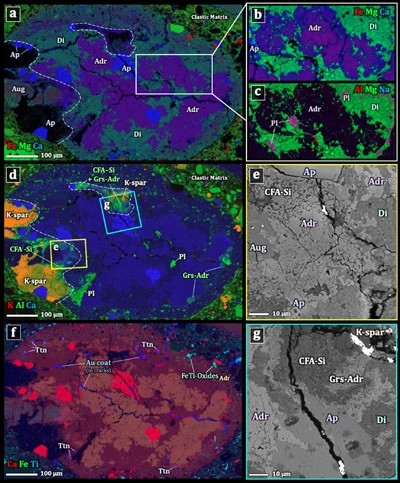
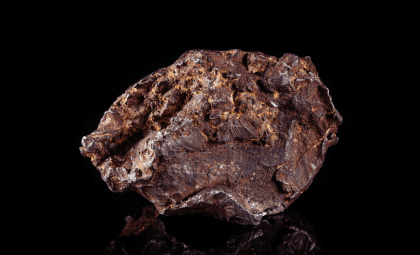
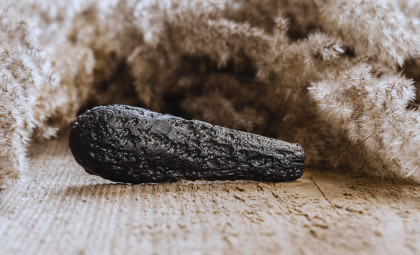
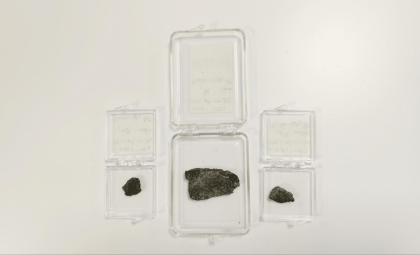
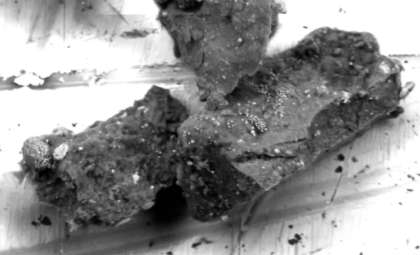
The meteorite, designated NWA 8171, is part of the collection housed at the Royal Ontario Museum. At a glance, the specimen seemed ordinary relative to other space rocks studied, but closer inspection of a minuscule 0.8 by 0.5 mm fragment revealed several tiny crystals of andradite garnet.
Garnets are renowned for their ability to capture details about the environment in which they formed, including temperature, pressure, and chemical composition. Until now, no definitive garnet had been documented in Martian samples, marking this find as a breakthrough for researchers aiming to reconstruct early Martian geology.

Tanya Kizovski, a planetary geologist at Brock University, emphasizes the importance of this find. “Uncovering this garnet broadens the spectrum of geological processes known to have taken place on Mars,” she remarks.
She further elaborates,
“This new garnet-bearing rock type could give us clues to how Mars has changed throughout its history and new insights into the ancient environments that could have formed the garnet and related minerals.”
This revelation suggests a previously unknown Martian rock variety and hints that ancient Martian geologic conditions were more complex and varied than once thought.
The Near Miss: How This Discovery Almost Went Unnoticed
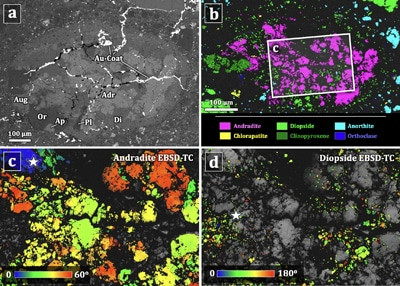
The garnet crystals' subtle appearance contributed to their initial oversight. Unlike the distinctive red garnets familiar on Earth, the andradite found in NWA 8171 tends to exhibit a muted yellow-green hue, closely resembling common minerals found in extraterrestrial rocks.
Initially, researchers mistook these grains for pyroxene, a widespread mineral in meteorites and volcanic rocks. It was only after detecting minor chemical discrepancies that they employed more detailed analytical techniques to reassess their findings.
Kizovski recounts the pivotal moment: “This small part of the meteorite caught our attention because of its peculiar chemistry,” she explains.
“At first, we assumed it was a mineral called pyroxene, which is very common, but then we decided to take a second look.”
This follow-up investigation confirmed the mineral’s true identity as garnet. The episode underscores the value of revisiting well-studied specimens with enhanced methods, revealing hidden insights that eluded earlier researchers.
Insights Into Mars’ Early Geological Environment Through Garnet
The discovery prompts an essential inquiry: by what processes did this garnet form?
On Earth, garnets typically originate under high temperature and pressure conditions or through chemical transformations characteristic of metamorphism. The precise mechanism for garnet formation on Mars remains undetermined, making this find particularly fascinating.
“Garnet is a classic example of a mineral often found in metamorphic rocks on Earth. The process of metamorphism transforms igneous or sedimentary rocks into a new form through exposure to extreme heat, high pressure, or hot fluids,” Kizovski explains.
Researchers are investigating several possible origins. One theory suggests that substantial meteorite impacts could have generated sufficient heat and pressure to induce metamorphism within the Martian crust. Another hypothesis considers magma intruding through the crust, altering surrounding rocks at depth. It’s also possible both factors played roles in garnet formation.
Kizovski highlights,
“On Mars, the heat and pressure needed to produce garnet through metamorphism could have come from the impact of a meteorite hitting the surface of Mars, magma rising up into the Martian crust, or both.”
Validating any of these mechanisms would deepen our understanding of Mars’ geological complexity and its evolutionary trajectory over billions of years.
Why NWA 8171 Stands Out in Martian Meteorite Studies
Before the garnet revelation, NWA 8171 was already notable for its distinctive basaltic breccia composition—a rock consisting of fragments from different geological sources fused together by molten material.
Scientists liken this to a fruitcake, where the basaltic matrix represents the cake, embedding various mineral fragments like fruit and nuts. This diverse makeup lets NWA 8171 archive multiple stages of Martian geologic processes within a single sample.
Since garnets can preserve detailed formation histories, their presence in NWA 8171 might illuminate ancient thermal events, volcanic activity, meteor impacts, or interactions among Martian rock layers long predating the meteorite’s ejection from Mars.
The study published in Geochemical Perspectives Letters proposes that NWA 8171 could represent a previously unidentified type of Martian rock, elevating its significance for ongoing and future research.
Future Research Aims to Confirm Garnet’s Martian Origin
Despite the enthusiasm for this discovery, there remains ambiguity over whether the garnet formed on Mars or was incorporated into the meteorite from another source.
Given that NWA 8171 is a breccia containing material from diverse origins, researchers cannot yet exclude the possibility that the garnet-bearing fragment arrived from outside Mars before becoming part of the meteorite. Chemical data strongly favor a Martian provenance, but additional evidence is necessary.
Upcoming studies will focus on isotope ratio analysis. Comparing isotopic signatures in the garnet with those from confirmed Martian materials should help verify its origin. A conclusive match would solidify the garnet’s in situ formation on Mars and unlock valuable insights into the planet’s geological evolution.
James Darling, a planetary scientist at the University of Portsmouth, emphasizes the discovery’s impact: “The findings add a striking new dimension to our understanding of the geology of Mars,” he states, “and open an exciting new window into the evolution of our planetary neighbor.”
If confirmed to originate on Mars, these tiny garnet crystals could rank among the most pivotal mineral discoveries from the Red Planet, offering unparalleled glimpses into ancient geological processes hidden for billions of years.
- Categories:
- News


0 comments
Sign in to Comment