
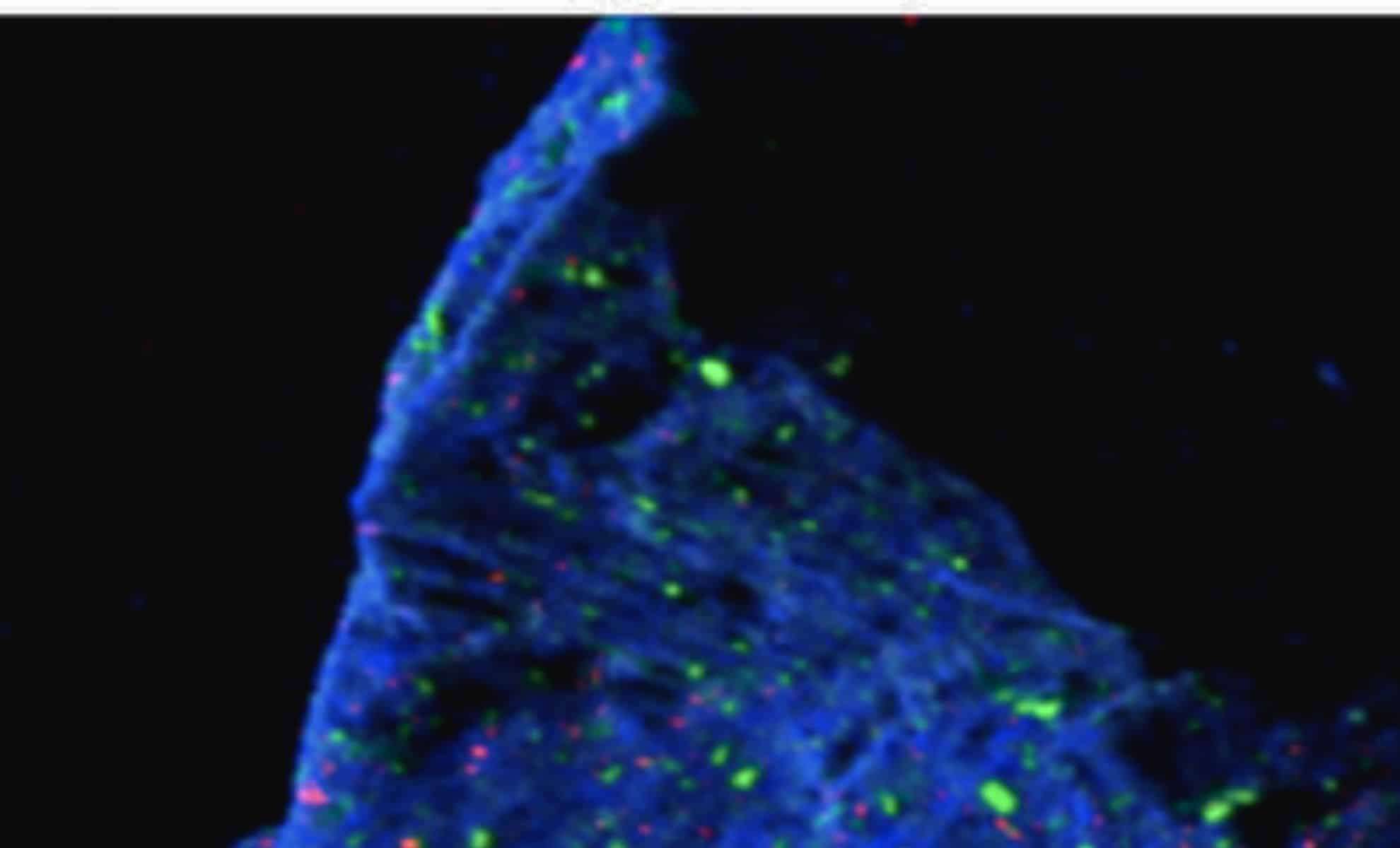
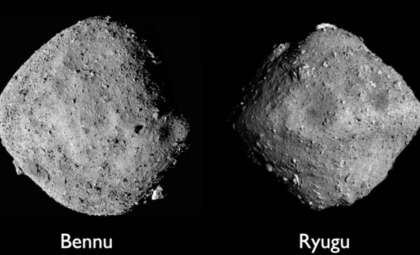
A tiny particle retrieved from the asteroid Ryugu by Japan’s Hayabusa2 mission has unveiled an extraordinary find: a crystalline mineral never before identified on Earth. Featured in the April 2025 issue of Geosciences, this breakthrough holds the potential to transform our insights into the elemental components that might have initiated life on our planet — all derived from under ten milligrams of asteroid material.
Pristine Samples from Outer Space
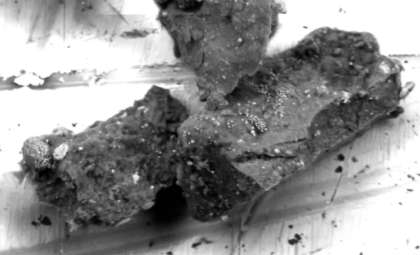
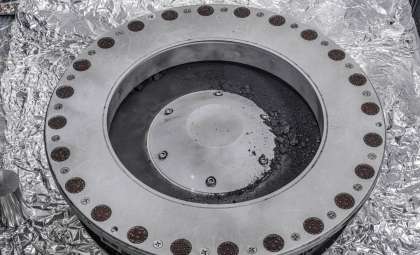
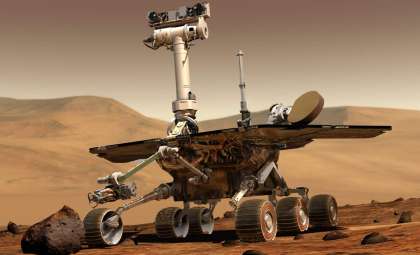
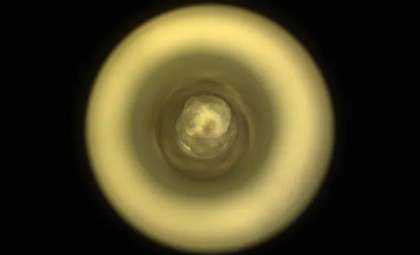
In 2020, the Hayabusa2 spacecraft brought home a mere 5.4 grams of material from Ryugu. Minimal in quantity, these samples represent some of the most chemically untouched substances ever analyzed, unaffected by Earth’s geological upheavals. Among these, two tiny grains—one sourced from Ryugu’s surface and one from its interior—are providing fresh perspectives on early solar system chemistry that existed well before Earth’s formation.
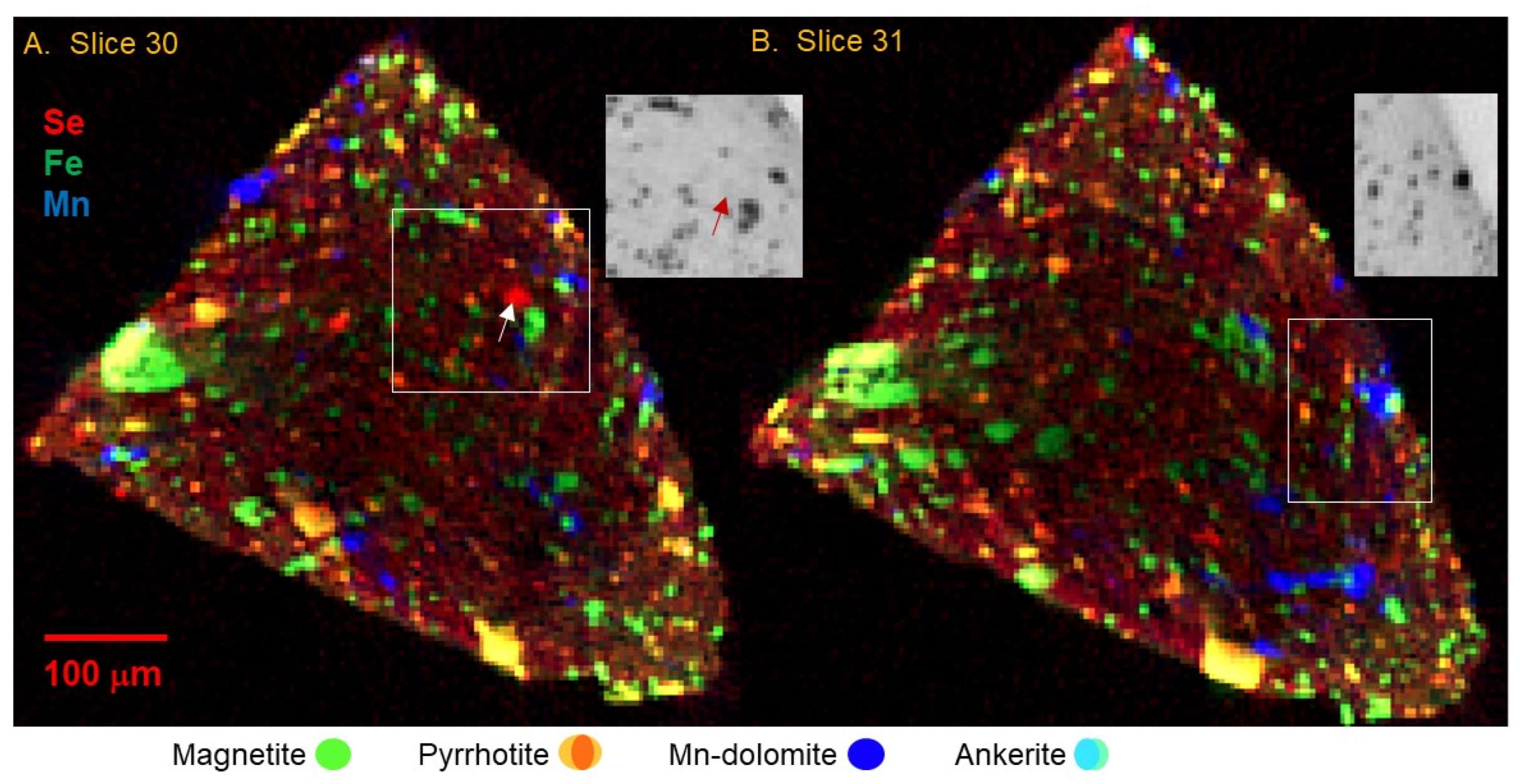
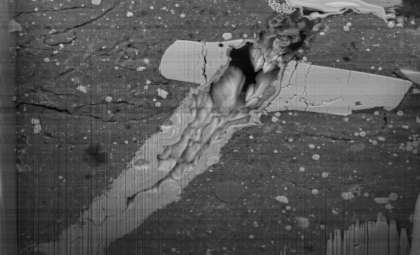
Researchers employed high-resolution X-ray tomography in collaboration with the Brookhaven National Laboratory (BNL) to study the grains’ external and internal structure nondestructively. “Preserving such rare materials is crucial,” Northrup noted, emphasizing the global demand for these limited and invaluable samples.

Discovery of an Unprecedented Mineral
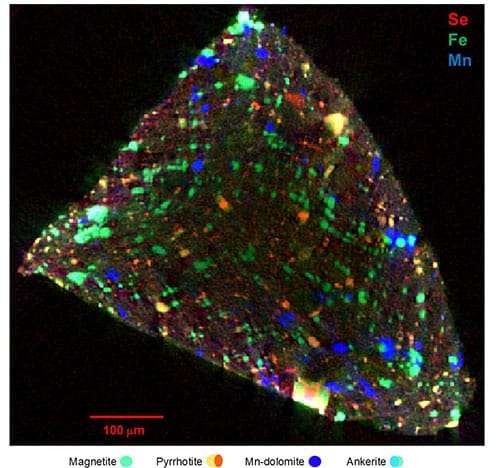
Analyses uncovered a multifaceted combination of elements including selenium, manganese, iron, sulfur, phosphorus, silicon, and calcium—all integral to geological and perhaps biological functions. The spotlight fell on phosphorus appearing in two separate varieties: one resembling the mineral forms found in human bones and teeth, which is remarkable on its own. However, the other variety was an entirely unexpected, alien form.
The team identified an unusual phosphide mineral absent from Earth’s known geology. Subsequent research in 2024 revealed hydrated ammonium magnesium phosphate (HAMP), a compound structurally related to struvite, a mineral typically associated with biological processes on Earth.
Implications for the Origin of Life
The detection of compounds linked to biological phenomena in Ryugu stirs exciting possibilities. Astrobiologist Matthew Pasek remarked in Nature Astronomy that “The presence of HAMP grains in the Ryugu samples reinforces the hypothesis that matter from beyond Earth may have contributed to life’s genesis on our planet.” This theory suggests that precursors to life’s chemistry could have been delivered through celestial bodies.
Ryugu, a carbon-rich asteroid, serves as a chemical time capsule, preserving compounds unaltered since the early solar system. Such minerals and organics offer clues to the fundamental ingredients of life as they existed over 4.5 billion years ago.
HAMP’s discovery contests the prevailing view about mineral formation in abiotic extraterrestrial settings. Struvite on Earth is deeply tied to living systems, so detecting a comparable mineral beyond Earth hints that the chemical pathways toward life might be more widespread throughout the cosmos than previously believed.
Unraveling Cosmic Mysteries from Minuscule Samples
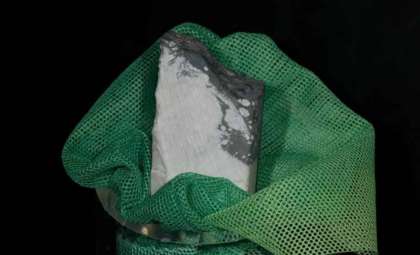
It may be surprising how much can be gleaned from less material than a single snowflake. Northrup’s team worked with just 9.3 milligrams of Ryugu dust—roughly a fiftieth the size of a sugar cube. Yet this slender sample revealed novel minerals, intricate chemical compositions, and potential clues to Earth’s biological origins.
Owing to the constant geological transformations on Earth—tectonics, erosion, and more—much of our planet’s earliest geochemical history has been lost. Meanwhile, Ryugu orbits in space virtually untouched, harboring a preserved record that predates Earth’s oceans, atmosphere, and even a solid crust. Each atom within these grains carries messages from an era before our world existed.
- Categories:
- News

0 comments
Sign in to Comment