
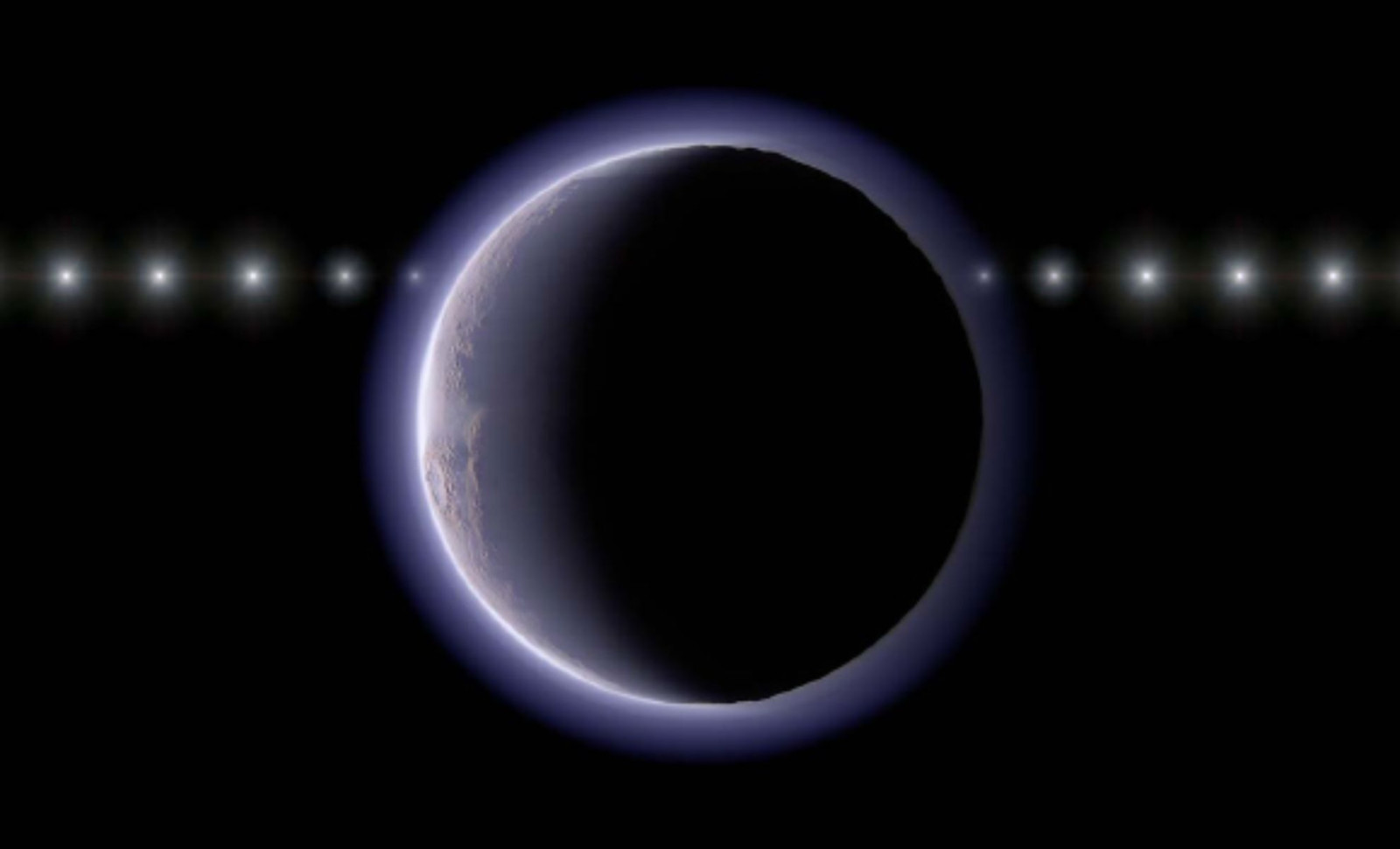
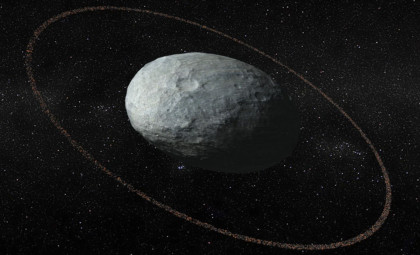
A distant icy body far past Pluto may possess a faint atmosphere. During a rare event, telescopes across Japan observed a star gradually dimming and brightening instead of abruptly disappearing, an indication typical for airless celestial objects. Published in Nature Astronomy, this finding suggests the existence of a tenuous gaseous sheath enveloping the outer solar system object known as 2002 XV93.
Prior to this, Pluto was the sole object beyond Neptune proven to hold a stable atmosphere. Detection of any atmospheric features around a significantly smaller object such as 2002 XV93 immediately draws attention in observational studies of this kind.
An Odd Pattern in the Star’s Light
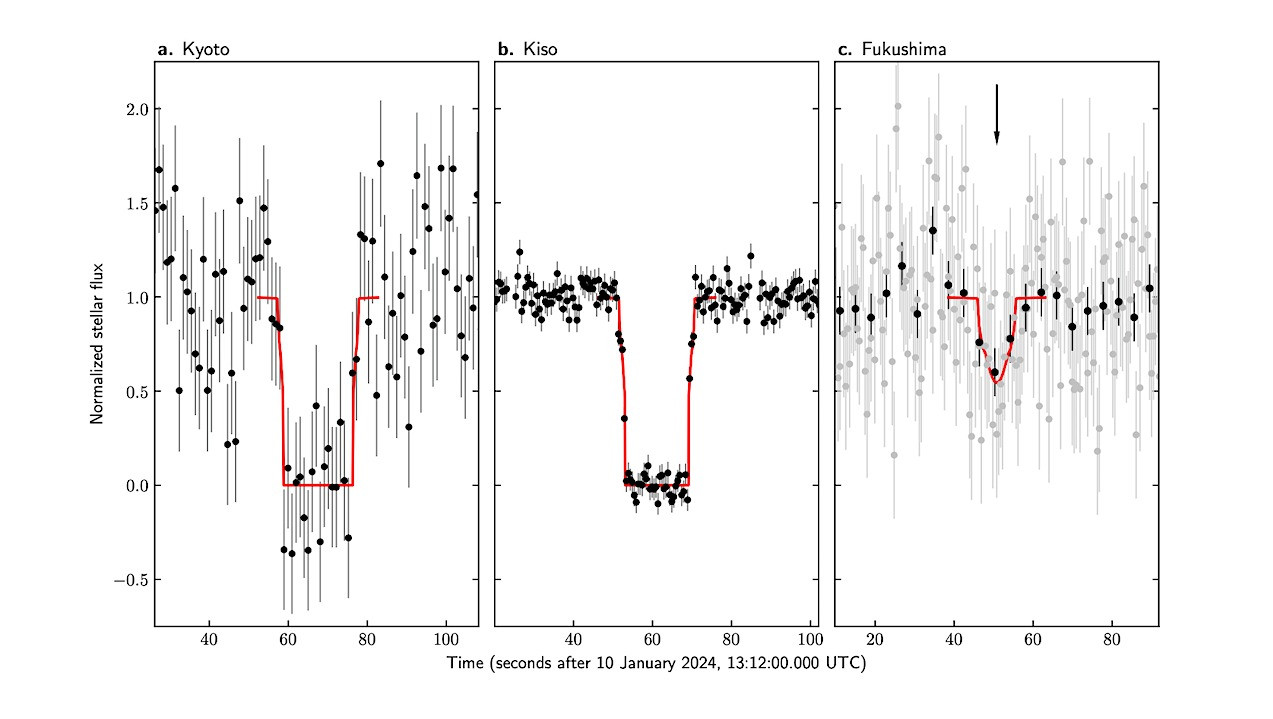
On January 10, 2024, 2002 XV93 moved directly in front of a distant star, producing an occultation seen simultaneously by several Japanese telescopes. Instead of witnessing an instantaneous disappearance of starlight, the brightness varied gradually over approximately 1.5 seconds.

This subtle progression is critical. Typically, an object lacking an atmosphere causes a sudden block in light. Here, the smooth transition hints that the starlight may have been refracted or filtered through a gaseous layer around the object.
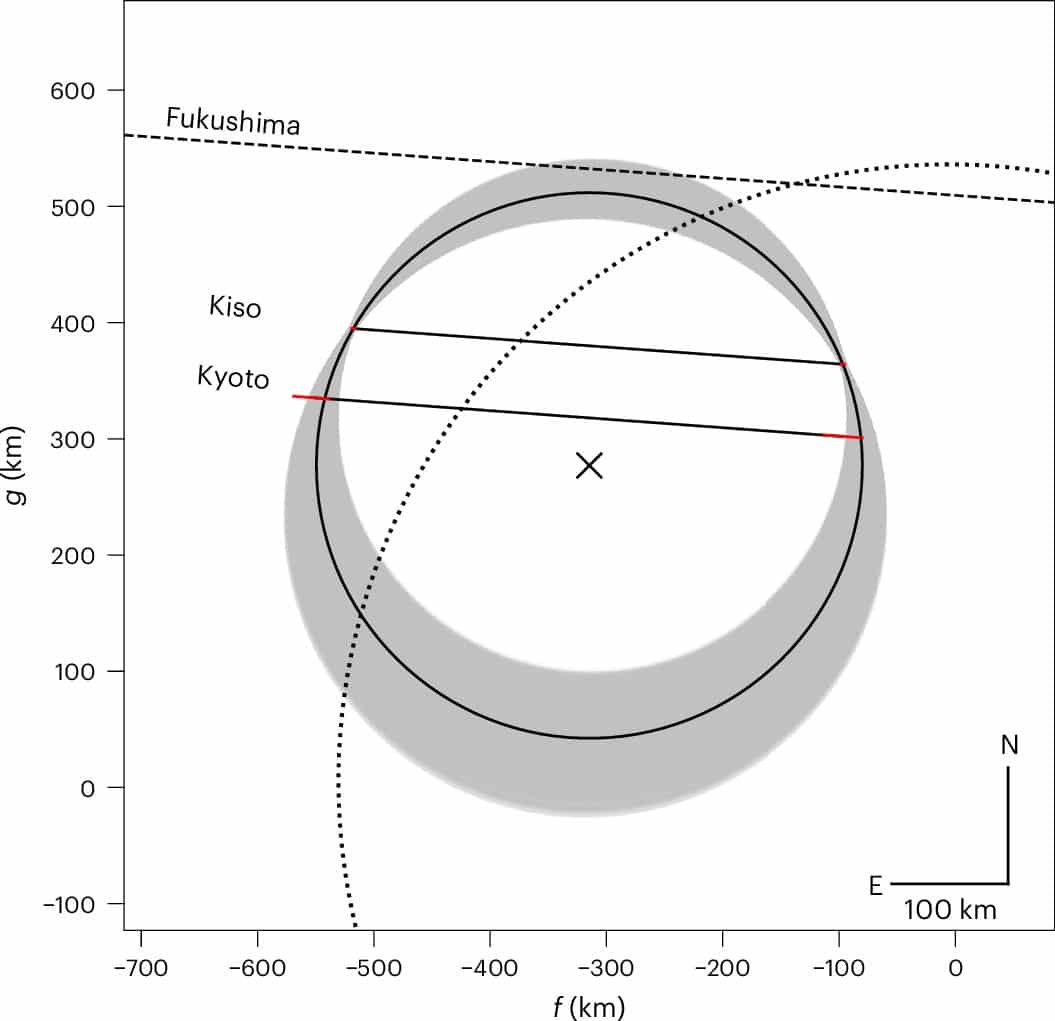
The research team detailed in Nature Astronomy interprets the observation as consistent with a very tenuous gas layer surrounding 2002 XV93. The data were collected via a multi-telescope network precisely established to capture these fleeting events that last only a few seconds.
Ko Arimatsu of the National Astronomical Observatory of Japan expressed being genuinely amazed by the findings. The astonishment arises from the fact that the object is only around 470 kilometers in diameter.
“2002 XV93, has a diameter of approximately 500 km. For reference, Pluto’s diameter is 2,377 km,” the study team explained.
Given its modest size, the object’s gravity is generally thought insufficient to maintain an atmosphere for extended periods, raising intriguing questions about how this layer might persist.
A Fragile Atmosphere on a Small World
If the interpretation holds, the pressure within this potential atmosphere is estimated to be about one ten-millionth that of Earth’s. Such an atmosphere is exceptionally thin, more akin to a faint trace of gas than a substantial gaseous envelope.
The analysis strictly follows the observed light curve showing a gradual dimming rather than an abrupt cutoff, which led to the hypothesis of light refraction through a gas layer. Yet, the dataset represents a single detection event without replication over time.
This means significant knowledge gaps remain. The specific makeup of the possible atmosphere and even its altitude above the surface remain undetermined based solely on this measurement.
Gas, Dust Cloud, or a Temporary Phenomenon?
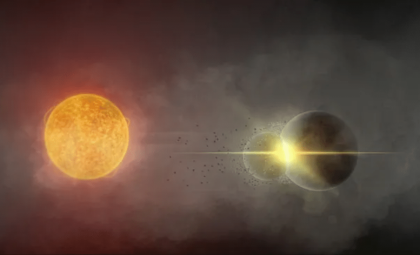
Multiple explanations might clarify the observed occultation signal, though confirmation is pending. One scenario suggests a recent collision with another icy object, releasing a transient cloud around 2002 XV93. Another possibility involves active surface processes like cryovolcanism, which could emit volatile compounds forming a thin aura.
An alternative cautious explanation considers that the signature might stem from a fine dust cloud instead of gas, as dust can produce a similar effect on the starlight, simulating atmospheric properties.
“Observations by the NASA/ESA/CSA James Webb Space Telescope show no signs of frozen gases on the surface of 2002 XV93 that might sublimate to form an atmosphere,” the authors noted.
The researchers emphasize that current data do not yet distinguish between dust and gaseous causes for the observed signals.
- Categories:
- Space





0 comments
Sign in to Comment