
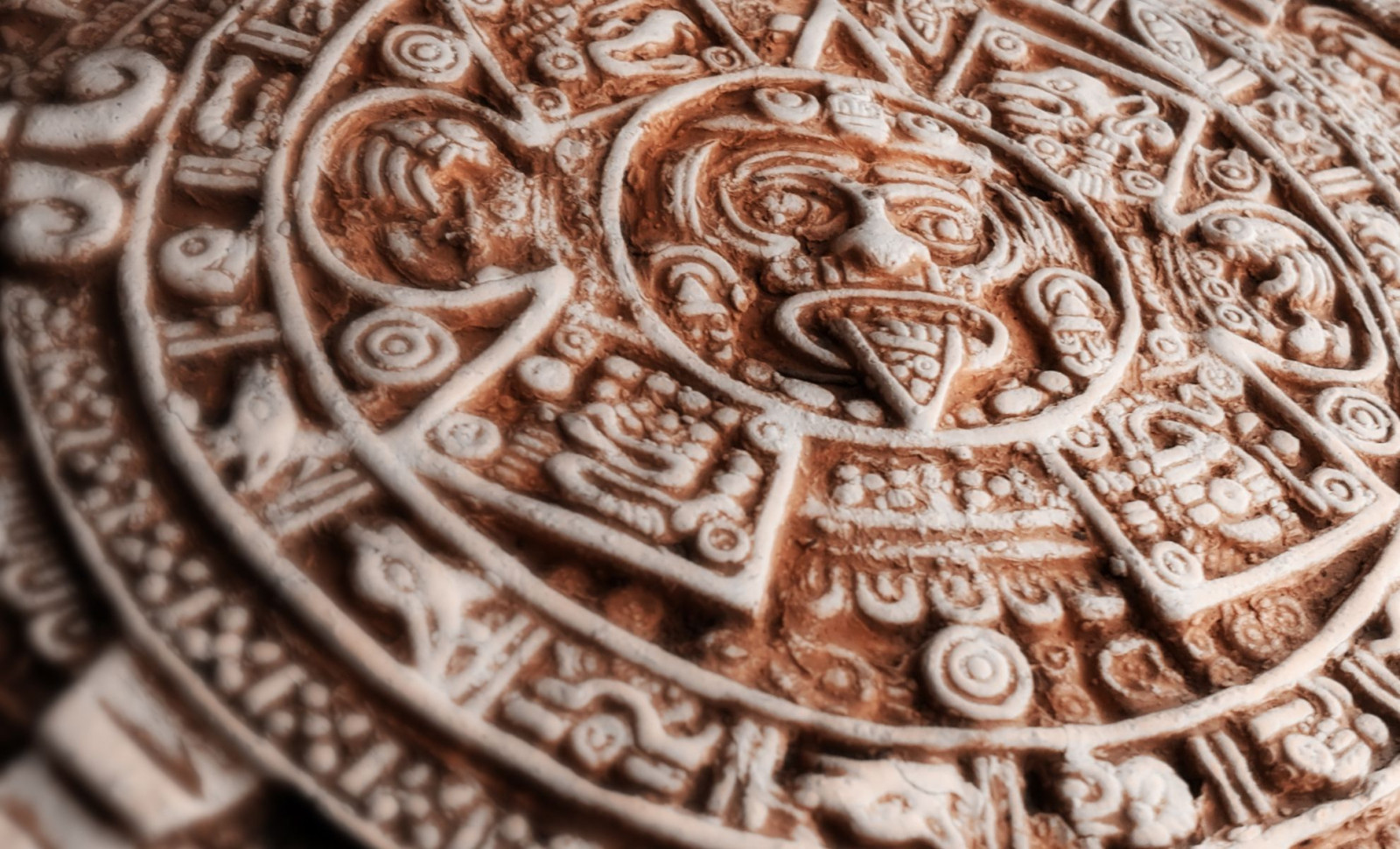
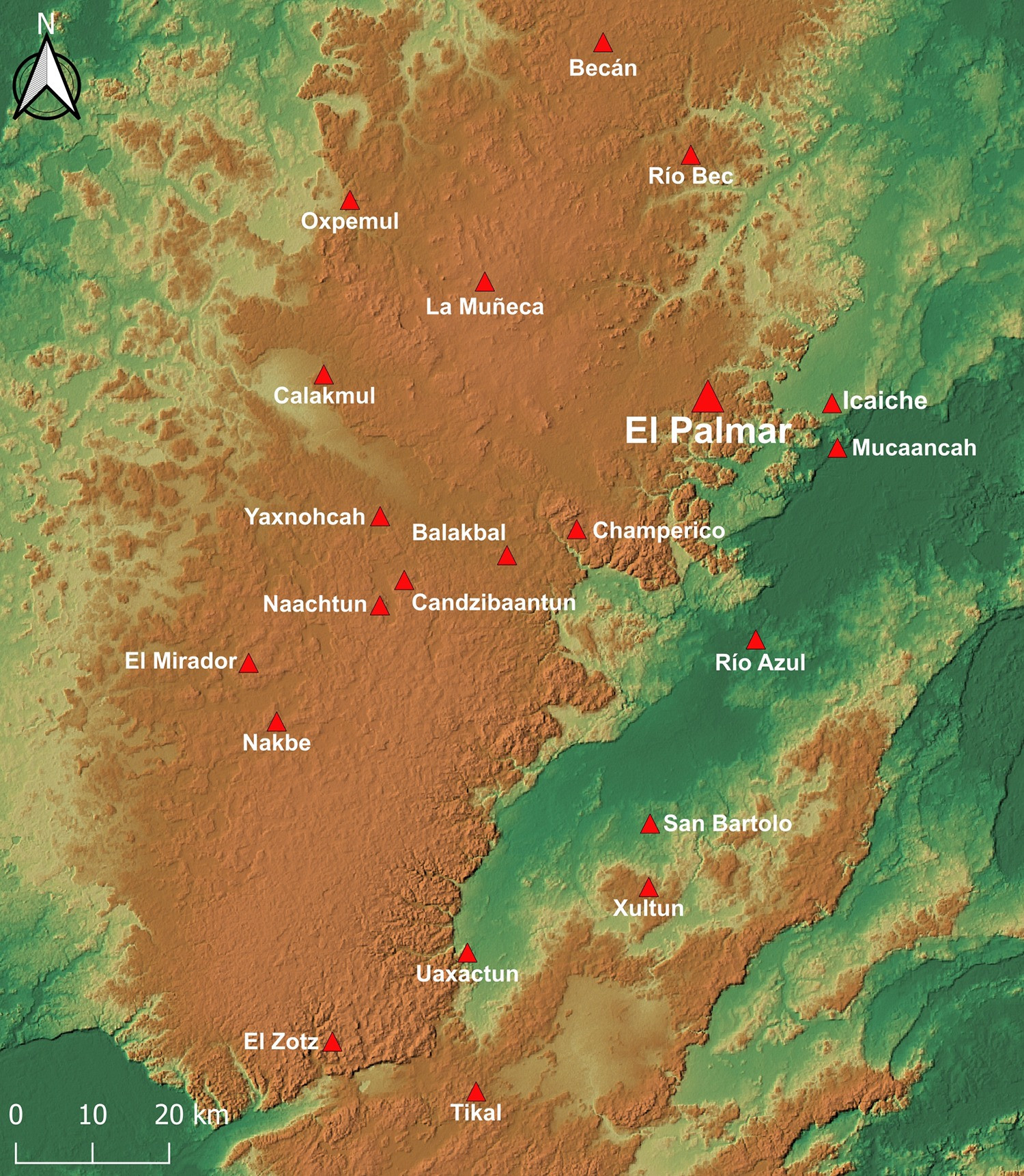
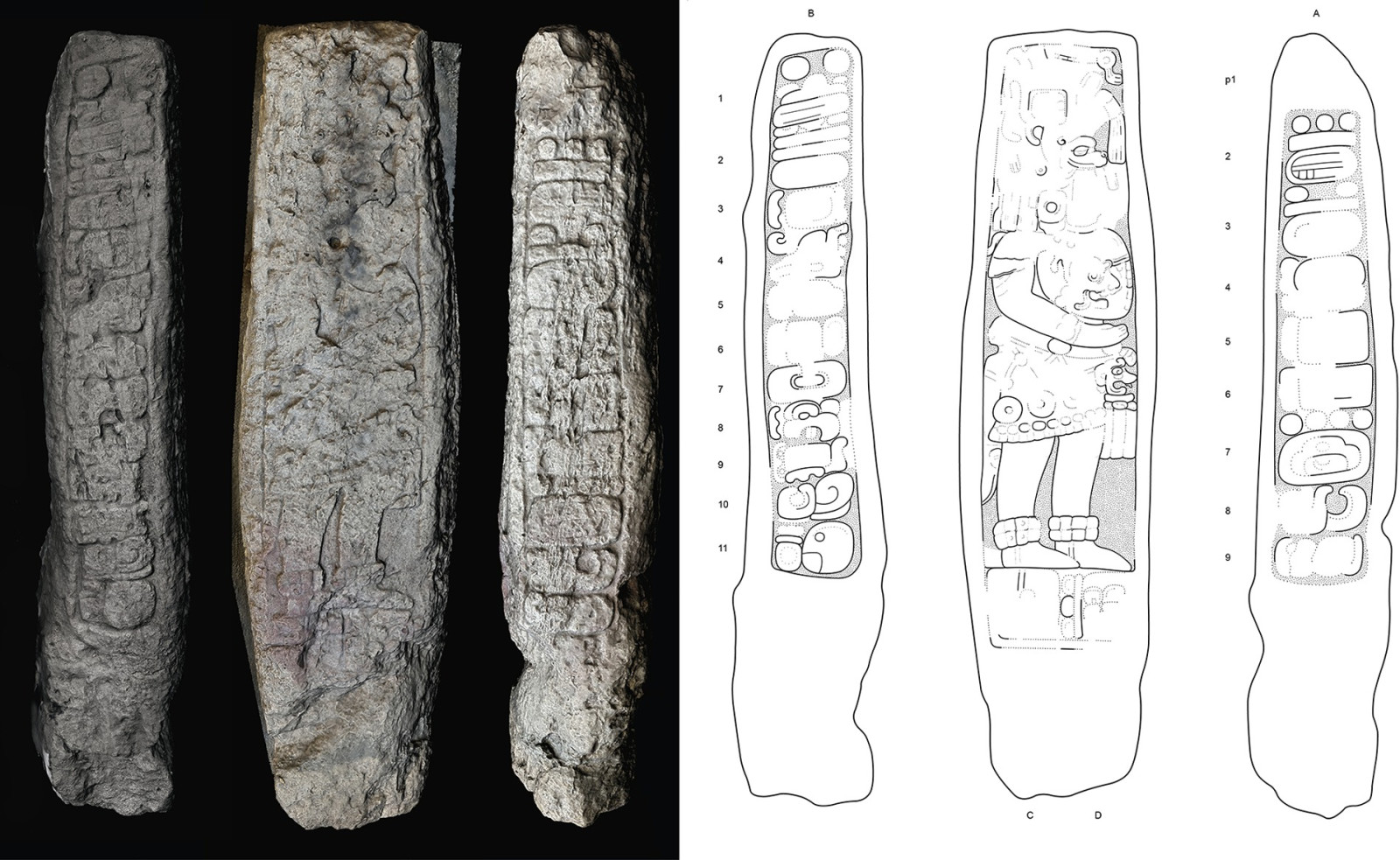
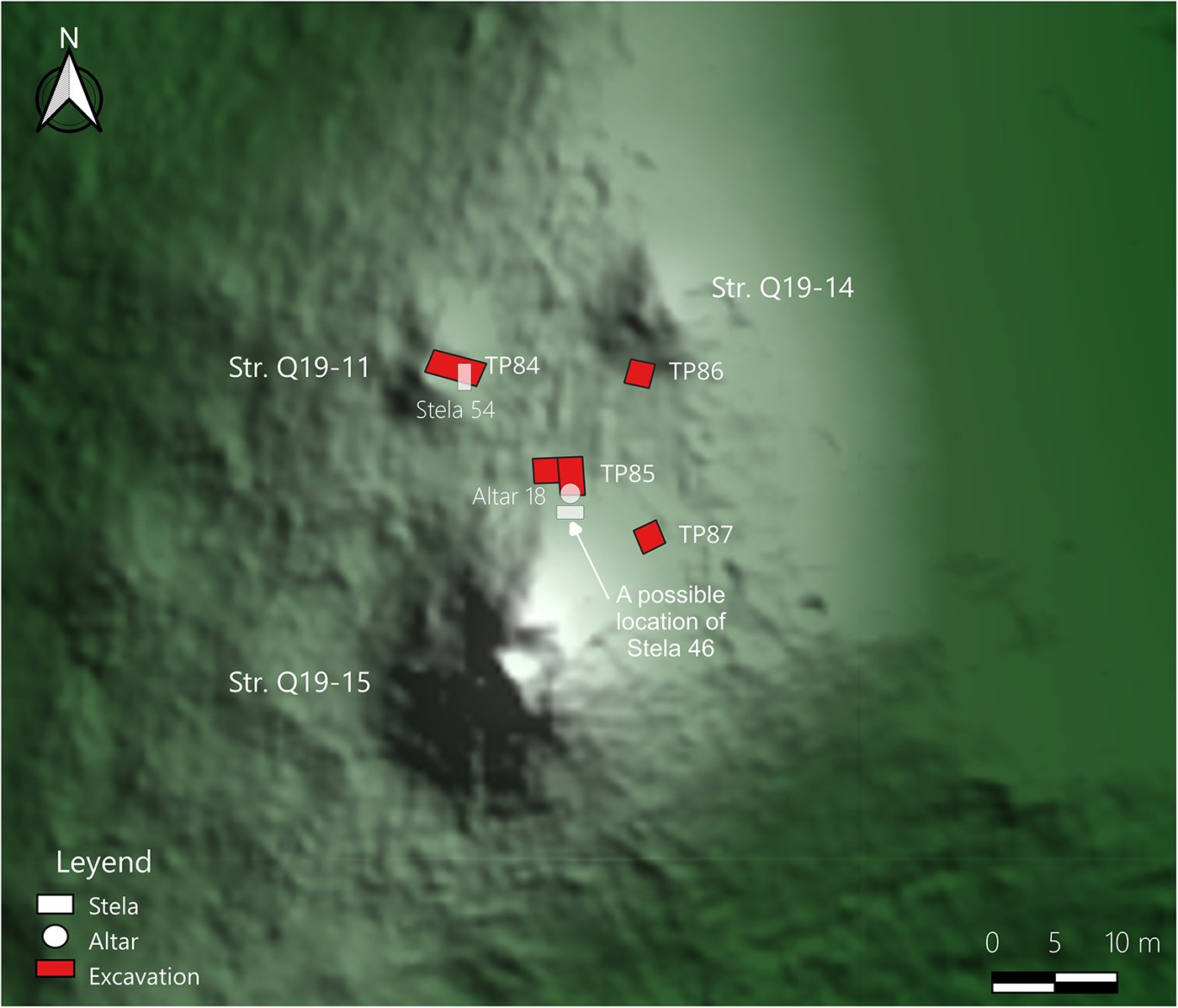
An eroded stone monument discovered at El Palmar, Mexico, could contain the oldest recorded Long Count calendar date in the Maya lowlands. Carved onto Stela 46, the inscription reportedly displays a date from 180 C.E., accompanied by depictions of a ruler associated with a Jaguar deity from the underworld. Published in Ancient Mesoamerica, this breakthrough was made possible through advanced 3D imaging techniques that uncovered details invisible to the naked eye.
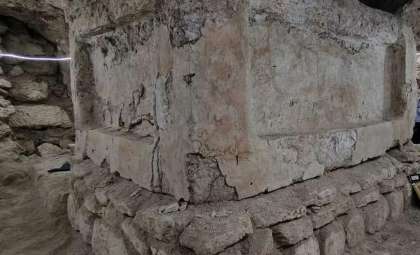
Having endured close to 2,000 years of exposure, Stela 46’s surface is heavily deteriorated, complicating previous attempts to fully interpret its inscriptions. According to Kenichiro Tsukamoto and collaborators from the University of California Davis, only high-resolution digital scanning and reconstruction enabled the extraction of a legible sequence of glyphs from this weathered stone.
The Maya’s Complex Method of Tracking Time
The Long Count calendar operates as a hierarchical system of time units, starting with single days and expanding into longer intervals such as the b’ak’tun, which covers approximately 400 years. Complementing this, the Maya utilized both a 260-day ritual calendar and a 365-day solar calendar, creating an intricate, multilayered understanding of time that was cyclic rather than simply linear.

A study in Ancient Mesoamerica suggests parts of this calendar system may predate the Maya, possibly originating with the Olmec civilization in the same region. This could explain the calendar’s highly developed structure from the earliest inscriptions onward.
The Long Count calendar was deciphered in the late 19th century by German scholar Ernst Förstemann, allowing historians to translate Long Count dates into contemporary calendars. For instance, a well-known date like July 4, 1776, can be expressed in Long Count notation, demonstrating the sophistication of this system.
Far from being purely abstract, this calendar system was deeply embedded in political and ritual life, directly supporting royal authority and governance.
Finding a Date That Shifts Maya History
On Stela 46, researchers identified a Long Count inscription reading 8.7.1.0.0, which aligns with August 31, 180 C.E. according to Kenichiro Tsukamoto and his team. If this interpretation holds, it represents the earliest Long Count date ever documented in the Maya lowlands.
There remains some ambiguity, though. Due to the monument’s degraded condition, an alternative reading of 8.7.0.5.0 has also been suggested. Both possible interpretations place the date in roughly the same era but emphasize the challenges posed by nearly two millennia of weathering.
Whatever the precise value, this inscription predates the subsequent earliest known example, Tikal Stela 29, which displays a date equivalent to 292 C.E. The resulting gap of over a century makes El Palmar critically important for understanding the initial development of Maya calendrical writing.
“El Palmar Stela 46 and subsequent monuments suggest that the Long Count played a vital role in the continuity of kingship during the Classic period. Further study of this region will provide new insights into the emergence of Maya kingship,” said the study’s authors.
The monument also depicts a ruler holding the head of a deity connected with the Jaguar god of the underworld. Such iconography is prevalent in Maya art, often symbolizing political power, warfare, and divine sanction.
Using Digital Technology to Restore the Stone’s Story
The remarkable insights into Stela 46 owe entirely to modern imaging methods. The team employed photogrammetry and high-resolution 3D scanning to capture every minute detail of the monument’s surface, down to sub-millimeter precision.
These technologies revealed faint carved details no longer visible under natural light. Digitally manipulating the 3D model allowed researchers to illuminate the surface from multiple angles, enhancing subtle grooves and inscriptions.
Despite these advancements, the interpretation isn’t definitive. The erosion has left parts of the glyphs open to debate, with the authors acknowledging the ongoing uncertainty surrounding the reading.
- Categories:
- Science










0 comments
Sign in to Comment