
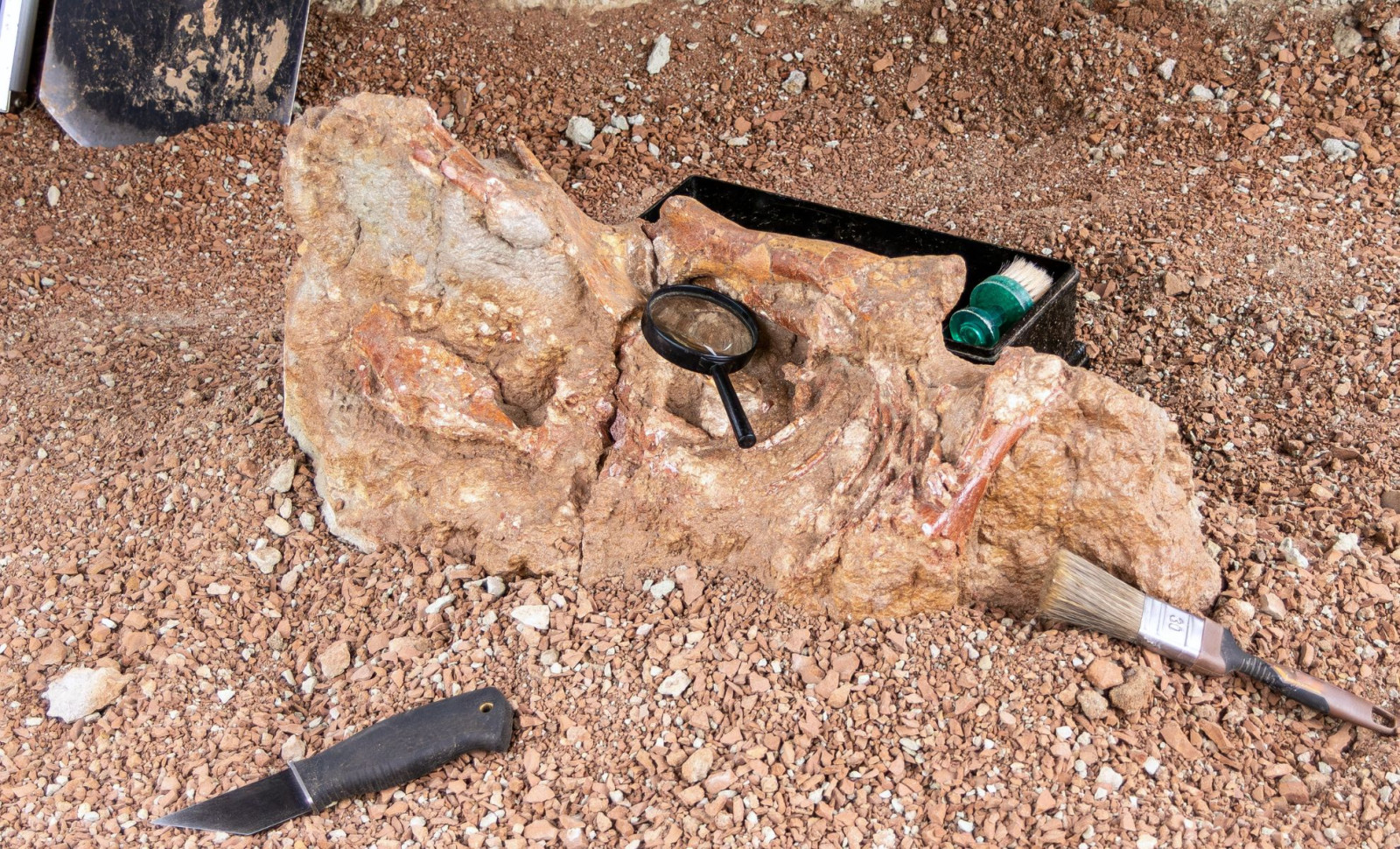
Researchers have identified a new duck-billed dinosaur species from partial skeleton remains unearthed in Romania's Hațeg Basin, naming it Kryptohadros kallaiae. Dating back roughly 70 million years to the Late Cretaceous, this find reveals a richer dinosaur diversity in the area than previously understood.
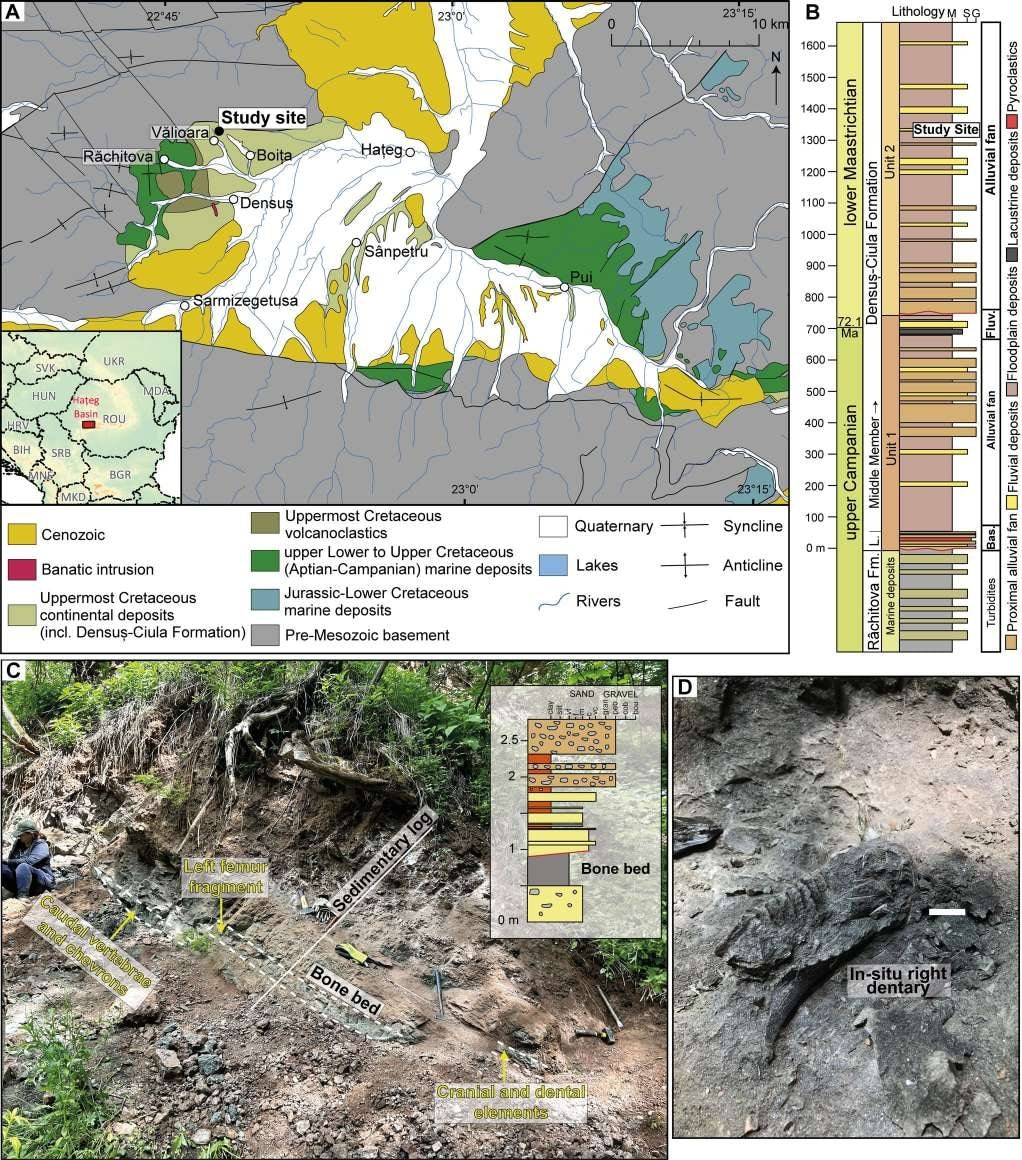
The fossils were excavated at the Fântânele-3 site near Vălioara village within the Densuș-Ciula Formation. During that period, this region of Europe formed part of the European Archipelago—an island system rather than a solid landmass. The Hațeg Basin has long been known for yielding fragmented dinosaur remains, which have often been difficult to assign to specific species.
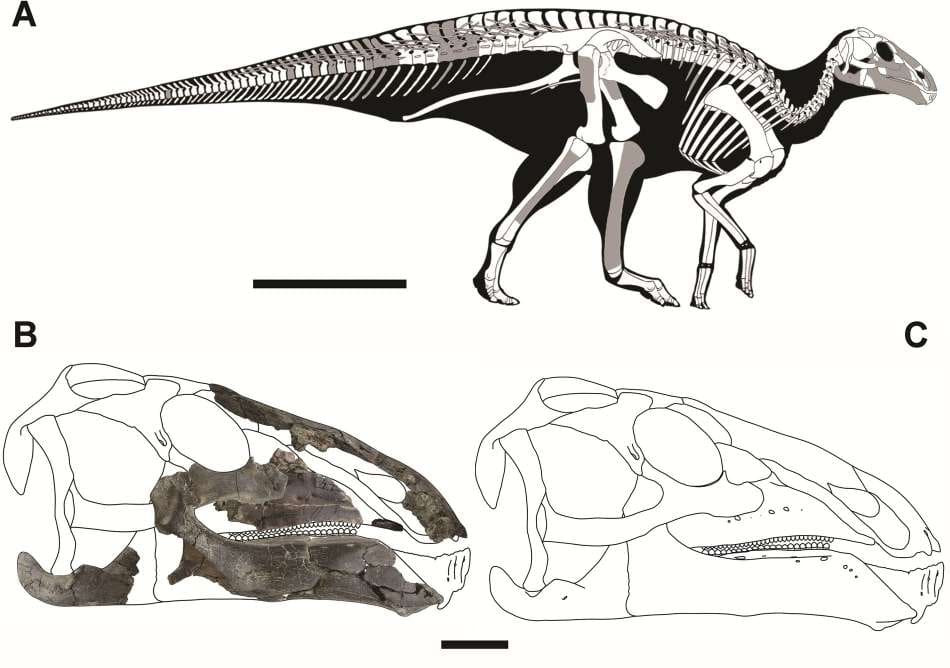
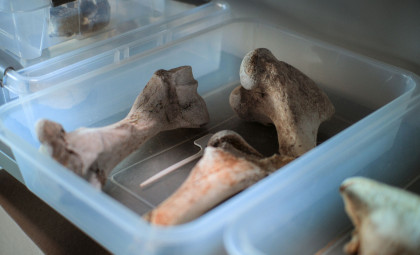
An international research team from Romania, Hungary, and Italy examined the specimen, which includes parts of a skull, rib fragments, tail vertebrae, and a segment of a hindlimb. Despite its incomplete nature, the distinct bone features clearly differentiate it from the locally recognized dinosaur Telmatosaurus transsylvanicus.

Over a Century of Misidentification Corrected
For many years, isolated duck-billed dinosaur bones from the Hațeg Basin were mostly attributed to Telmatosaurus transsylvanicus. As Dr. Attila Ősi of ELTE Eötvös Loránd University noted, this classification was influenced by the scarcity of complete skeletons, especially those including skull elements. Most findings were mere fragments, encouraging the simplification of grouping diverse bones under one known species.
This perspective persisted until recent analyses revealed the presence of multiple species among these bone fragments.
The study team highlighted that although Kryptohadros kallaiae bears a strong resemblance to Telmatosaurus, subtle but consistent skull differences justify distinction between the two. PhD researcher János Magyar explained:
“The similarity between the new species and Telmatosaurus, is quite high, because they are close relatives.” He added, “the differences are mostly visible only in the morphology of the skull elements.”
Multiple Duck-Billed Dinosaurs Shared the Island Habitat
The Hațeg Basin’s island environment fostered dinosaur species that developed separately from mainland populations. This isolation often encourages unique evolutionary adaptations, as seen in this case.
The researchers suggest that both Kryptohadros kallaiae and Telmatosaurus transsylvanicus inhabited the region simultaneously during the Late Cretaceous. This realization revises previous assumptions, indicating that at least two closely related duck-billed dinosaurs coexisted rather than just one dominant species occupying the niche.
The fossils derive from continental layers within the Densuș-Ciula Formation, already known for its mixed and fragmented dinosaur record. These partial remains are helping paleontologists refine their understanding of the ecosystem, moving beyond the outdated concept that a single species occupied each ecological niche.
A New Dinosaur Clade Identified in European Island Fauna
The study further links Kryptohadros kallaiae with Romanian Telmatosaurus transsylvanicus and the Italian Tethyshadros insularis. Published in the Journal of Systematic Palaeontology, the findings define a new group, Telmatosauridae, representing a lineage of duck-billed dinosaurs that evolved uniquely within southeastern Europe’s ancient island environments.
The researchers also emphasize that hadrosauroid dinosaurs did not colonize Europe via a single event. Rather, the study highlights several migration waves between Asia and Europe during the Late Cretaceous spanning millions of years.
“At least six other dispersal events took place between the Albian (113 to 100 million years ago) and the Maastrichtian (72 to 66 million years ago) from Asia towards North America and/or Europe, besides the arrival of the ancestors of Telmatosauridae before the Campanian (84 to 72 million years ago),” noted the authors.
Interestingly, some later European dinosaur groups are absent from southeastern island fossil records, leading researchers to propose that certain migration routes might have bypassed this region, favoring alternate island chains.
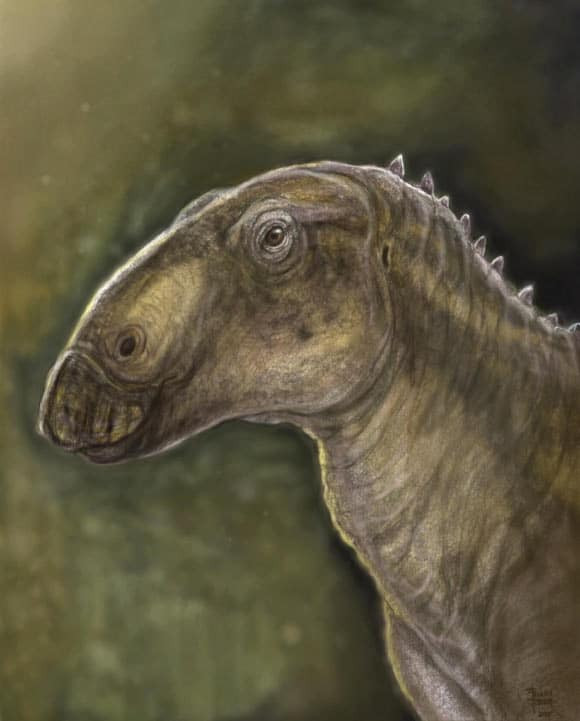
Although Kryptohadros kallaiae is known from incomplete remains, its discovery significantly reshapes scientific perspectives on the ancient island ecosystems of southeastern Europe.
- Categories:
- Science





0 comments
Sign in to Comment