
Professor Hugh Safford from UC Davis has astonishingly identified a Jeffrey pine in California’s High Sierra that now holds the record for the tallest known tree of its species. His work, featured in the Madroño Journal of the California Botanical Society in March 2025, sheds light on how climate change is reshaping California’s alpine ecosystems.
Discovery High on Mount Kaweah
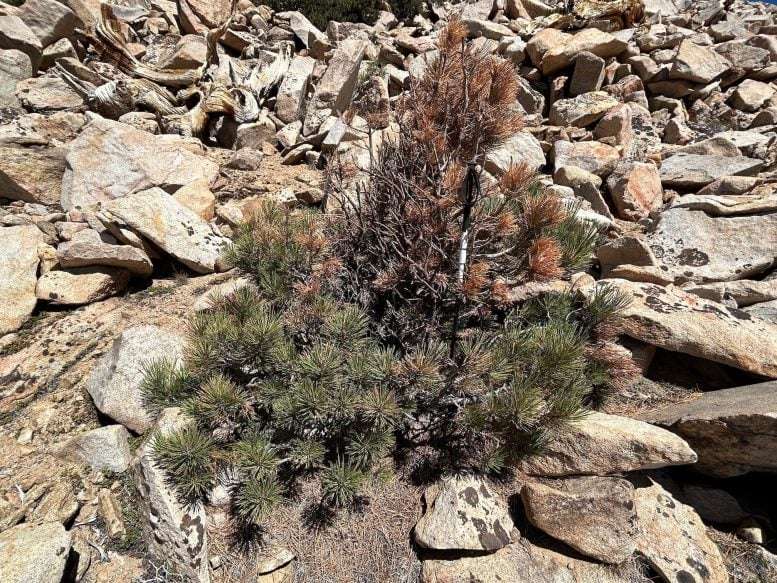
During a September 2024 hike on the southern slope of Mount Kaweah within Sequoia National Park, forest ecologist Safford noticed an unusual tree among lodgepole and foxtail pines, which typically populate the timberline and beyond. To his surprise, he found a Jeffrey pine thriving at an astonishing 12,657 feet. His immediate reaction was one of disbelief: “Why is a Jeffrey pine growing beyond 11,500 feet?”
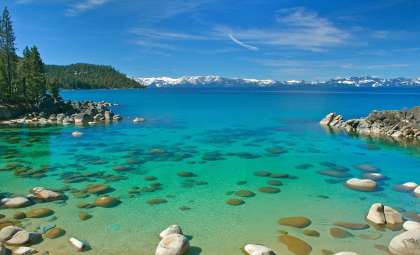
Jeffrey pines typically inhabit the upper montane zones of the Sierra Nevada, frequenting regions such as Lake Tahoe and Mammoth Lakes. They are generally not associated with subalpine environments known for extreme altitudes. Safford’s find exceeds the previously known maximum height by nearly 1,860 feet, marking a remarkable extension of the species’ elevational range.

Setting a New Altitude Benchmark in California
Prior records listed the highest Jeffrey pine at 10,797 feet. This particular specimen surpasses that mark and is now the highest tree ever documented in the state. The species’ appearance at such an altitude highlights the ongoing transformations in Sierra Nevada forests triggered by global warming.
Moreover, Safford documented 14 additional Jeffrey pines growing beyond 11,800 feet, challenging previous assumptions about the limits of their habitat. These resilient trees demonstrate an ability to endure and colonize the harsh conditions typical of the subalpine zone, expanding into territories where they were once absent.
Climate Change Driving Tree Distribution Shifts
The presence of Jeffrey pines at higher elevations reflects broader environmental changes across California’s mountainous regions. Climate change is characterized by earlier snowmelt and warming temperatures, which have crucial impacts on species survival limits. Earlier snowmelt creates conditions conducive to the germination of Jeffrey pine seeds in previously frozen areas.
As air temperatures rise and growing seasons extend, these trees can colonize new zones once considered too austere. Safford’s research suggests that other species may similarly migrate upward in response to climatic shifts.
“This unexpected migratory behavior challenges long-held ecological beliefs about how these systems adapt to warming,” Safford notes. However, this gradual movement may not be sufficient to keep pace with the rapid changes posed by climate warming.
Birds as Agents of Tree Expansion
A particularly intriguing element of the discovery is the role of the Clark’s nutcracker, a bird adept at transporting seeds to elevated locations. The bird’s behavior is crucial for spreading pinecone seeds.
Safford proposes that Clark’s nutcrackers facilitate the colonization of Jeffrey pines at unusual heights by carrying seeds from lower elevation forests to the alpine slopes.
This seed dispersal method, known as seed caching, is vital for the tree’s uphill movement as the Jeffrey pine gradually colonizes new habitats. By burying seeds in snowy ground, the Clark’s nutcracker ensures that some seeds successfully sprout, promoting the upward migration of this species.
- Categories:
- News







0 comments
Sign in to Comment