
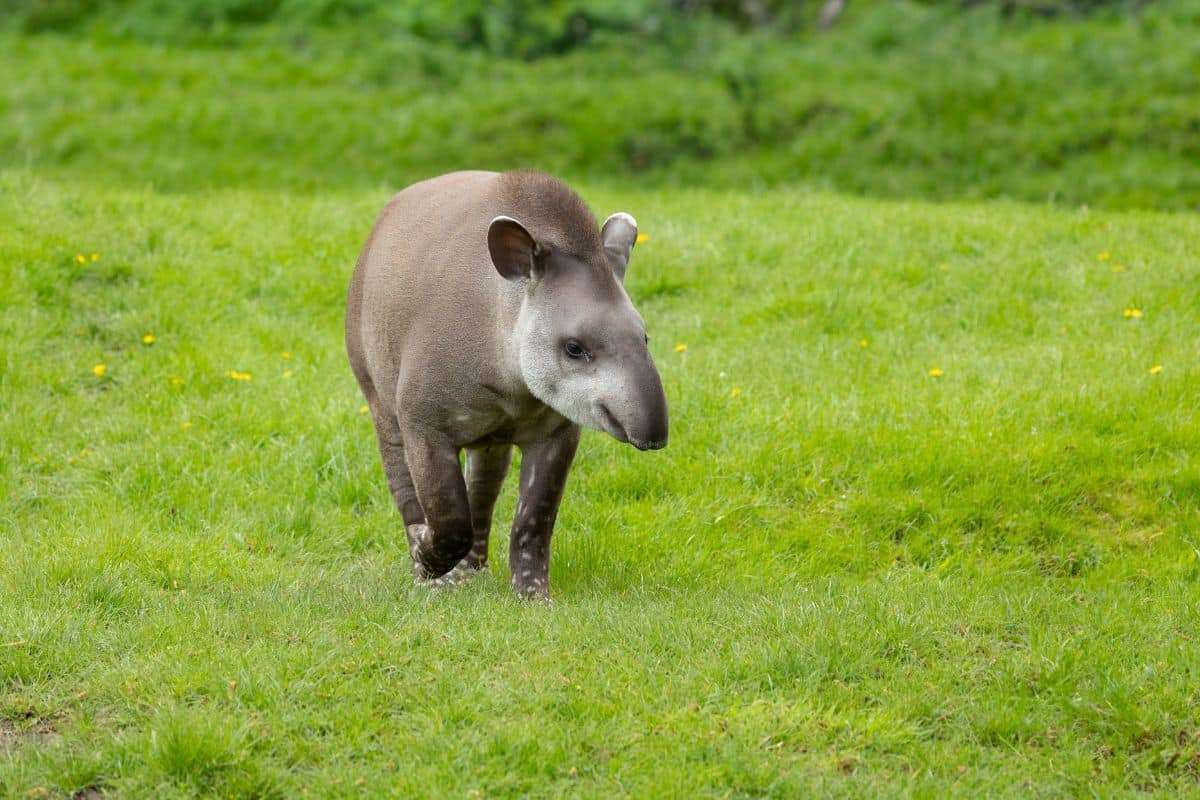
After more than 100 years of absence, the South American tapir has been spotted again in the Atlantic Forest. Recent footage from Cunhambebe State Park reveals three individuals freely moving within this protected area in Brazil’s Costa Verde region. This significant event offers fresh hope for conservation initiatives aimed at preserving the region’s threatened species.
A Long-Lost Species Reemerges
The South American tapir (Tapirus terrestris) vanished from the Atlantic Forest over a century ago due to intense habitat destruction and human expansion. Its last verified presence was documented in 1914 at Serra dos Órgãos National Park. Following decades with no sightings, the animal was believed to be extinct in this habitat—until now.
Images released by Rio de Janeiro’s State Institute of Environment (INEA) and Agência Brasil have confirmed three tapirs wandering the forest, signaling a hopeful turnaround in a region battered by environmental degradation.

“This rediscovery highlights the importance of dedicated conservation zones in helping endangered animals reclaim their habitats,” an INEA representative said. “The Atlantic Forest remains a critical sanctuary for species like the tapir.”
The Tapir’s Vital Ecological Functions
Known as a “forest gardener”, the South American tapir plays a fundamental role in maintaining healthy ecosystems. By eating fruits and plants, it disperses seeds across large areas through its droppings, encouraging forest regeneration and supporting a variety of plant and animal life.
Beyond seed dispersal, tapirs carve pathways through thick underbrush, providing access routes that benefit birds, insects, and other wildlife. Their presence is essential for sustaining the ecological balance that has been missing from the Atlantic Forest for generations.
Conservation Victory or Fortunate Fluke?
The tapir’s resurgence raises an important question: does this mark a genuine conservation success or simply a rare occurrence?
The tapirs’ presence suggests that protected zones like Cunhambebe State Park can provide the necessary conditions for wildlife recovery. Conservation measures in Brazil—including reforestation, anti-poaching enforcement, and habitat rehabilitation—may finally be producing positive results.
Still, specialists caution that a handful of tapir sightings do not yet indicate a full population revival. Across South America, tapirs remain vulnerable, with an estimated 4,500 individuals surviving in the wild—reflecting a reduction of 50% in three decades. Ongoing threats include illegal hunting, habitat fragmentation, and expanding human development.
Threats Confronting Tapirs Today
Despite their imposing size, with adults reaching up to 700 pounds (320 kg), tapirs face significant dangers. Natural predators like jaguars and pumas pose risks, but human activities are the leading cause of their decline. Logging, poaching, and infrastructural growth severely impact populations across Brazil, Argentina, Paraguay, and Venezuela.
Though typically peaceful, tapirs are wild creatures and can behave unpredictably. According to the Scottish Government, tapir attacks on humans are rare but have occurred, usually when an animal feels trapped or threatened.
Implications of This Rare Observation
The recent sighting of the South American tapir within the Atlantic Forest serves as an inspiring example of nature’s resilience when given protection. It underscores the critical need for continued efforts to safeguard endangered species and their habitats.
Enforcing laws against poaching, promoting habitat restoration, and supporting rewilding initiatives will be vital to ensure this tapir population can flourish rather than disappear again. For now, the glimpse of these majestic mammals roaming their historical home fuels hope for the future of South America’s wildlife.










0 comments
Sign in to Comment