
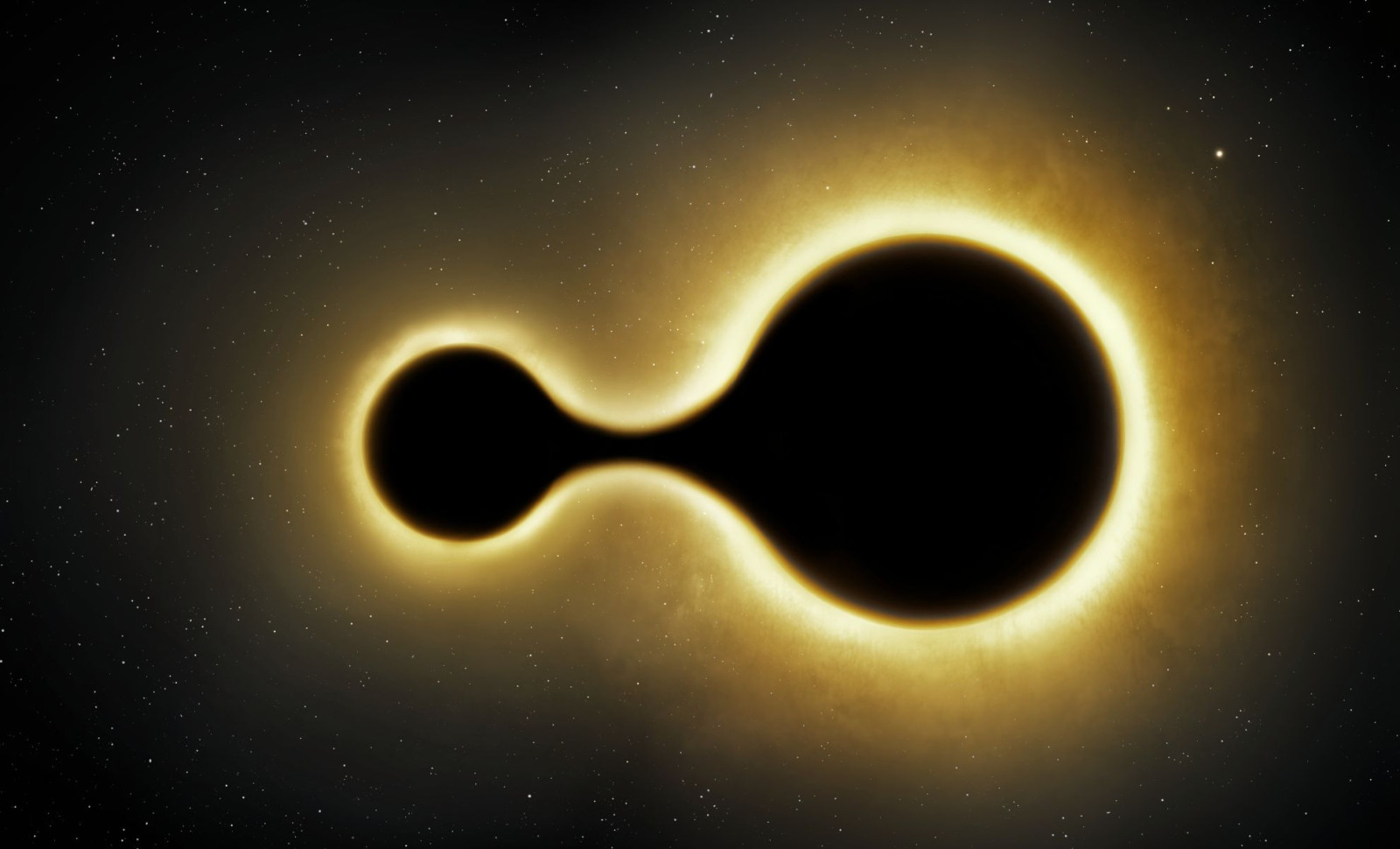
Scientists have revealed that a readily available commercial camera might aid in refining the hunt for black hole collisions by detecting subtle issues within gravitational wave observatories. Their findings, detailed in Classical and Quantum Gravity, introduce a novel method for tracking minute thermal variations on LIGO’s mirrors without the need for new hardware innovation.
Innovative Monitoring of LIGO’s Mirror Surfaces
The Laser Interferometer Gravitational-Wave Observatory (LIGO) has revolutionized our understanding of the cosmos through the detection of spacetime ripples generated by extreme cosmic occurrences such as black hole mergers. Enhancing these detectors demands tackling extraordinary engineering challenges, as they measure displacements tinier than a proton's diameter.
A research team demonstrated that off-the-shelf cameras can yield insightful data about the thermal profiles on LIGO’s critical mirror components. By observing temperature fluctuations over these mirror surfaces, scientists can better grasp the impact of heat-related influences on gravitational wave data.

The study, published in Classical and Quantum Gravity, is centered on enhancing future gravitational wave observatories by mitigating noise sources that currently restrict their sensitivity. Instead of inventing new monitoring instruments, the team investigated whether current imaging devices could fulfill this role.
Richardson likened the technique to assessing an engine’s internal state by examining its exterior temperature patterns.
“You can think of it like taking an infrared picture of a car engine,” Richardson said in the statement. “An engineer can look at the temperature pattern on the outside and infer what’s happening inside the engine. We’re doing the same thing with LIGO’s mirrors.”
An Innovative Approach Utilizing Standard Technology
This discovery is remarkable because many advancements in gravitational wave detection often involve cutting-edge equipment, intricate engineering, and long development cycles. The camera-based strategy paves an alternative route by employing accessible tools to gather critical data from one of the most delicate devices ever constructed.
LIGO’s mirrors require exceptional thermal stability since even the slightest temperature-induced alteration can compromise gravitational wave measurements. Variations in temperature may modify mirror characteristics and introduce noise, complicating the detection of faint cosmic signals.
By imaging thermal distributions, the camera setup could assist scientists in pinpointing heat-related disturbance patterns. This insight would enable improved approaches to managing these effects and enhancing detector accuracy.
“It doesn’t require any new technology development, which is almost unheard of for solving a LIGO instrumentation problem,” Richardson said in a statement.
This technique also holds promise for upcoming gravitational wave instruments designed to capture a broader spectrum of astrophysical events. Increased detector sensitivity may allow astronomers to explore black holes, neutron stars, and other phenomena at unprecedented distances.
Overcoming Quantum Noise in Next-Generation Observatories
Future gravitational wave detectors aim to surpass current capabilities, necessitating solutions for fundamental challenges, including noise arising from quantum mechanics.
“The goal for the next generation of gravitational-wave detectors is to achieve about 10 times the sensitivity of today’s instruments,” Richardson said in the statement. “One of the key obstacles to achieving that is reducing the fundamental quantum mechanical noise that limits the precision of the measurements.”
Enhanced understanding of mirror thermal behavior could be a crucial element in refining detector designs. As these observatories evolve, more precise techniques are essential to mitigate even the faintest sources of interference.
Although the camera method won’t replace LIGO’s sophisticated existing systems, it offers an additional diagnostic tool to identify issues and improve future devices. Such straightforward innovations have the potential to accelerate advancements in gravitational wave research.
- Categories:
- Science











0 comments
Sign in to Comment