
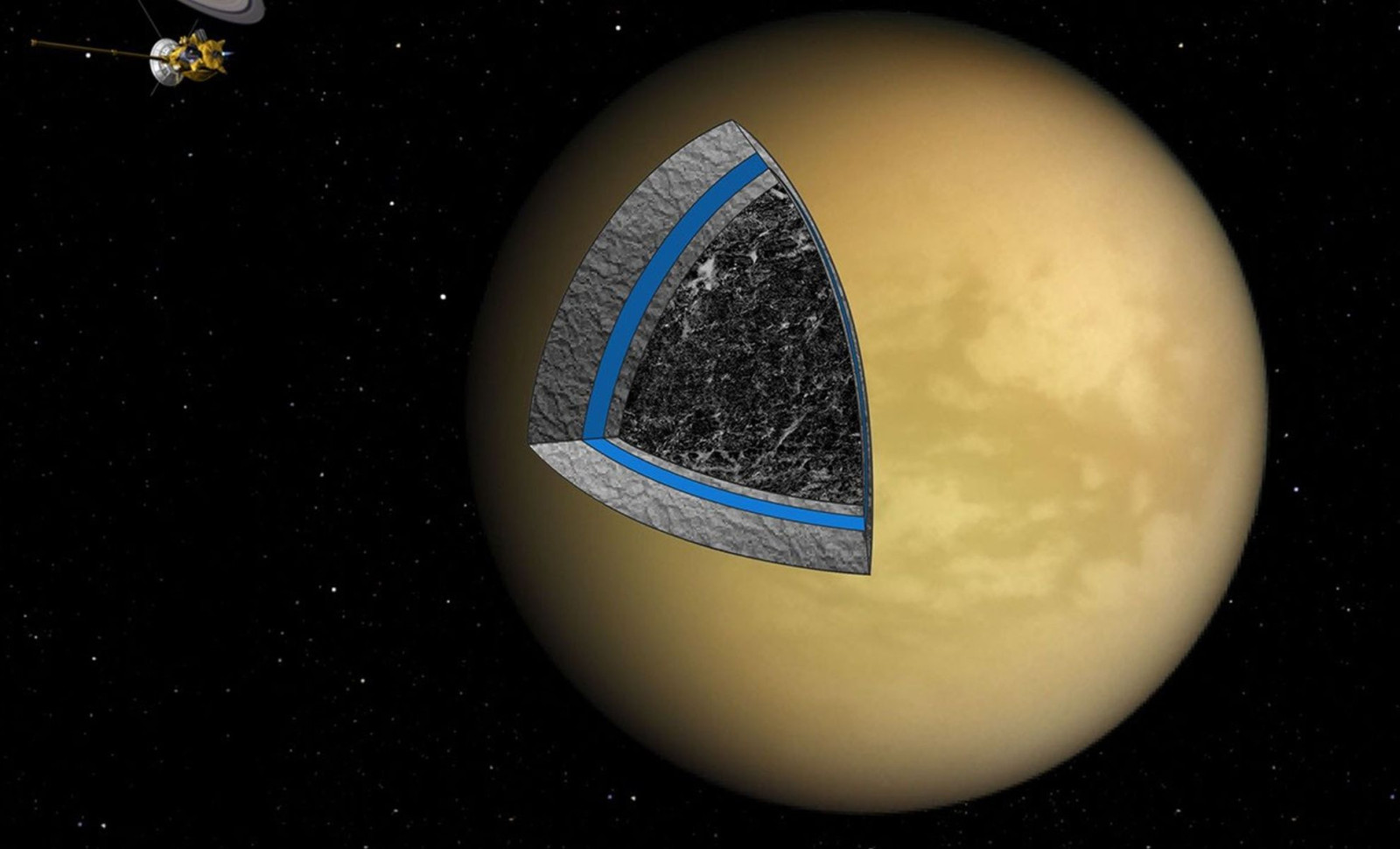
Titan, the largest moon orbiting Saturn, holds potential as a supply depot for extended space exploration. Recent research highlights how its rich reserves of hydrocarbons, abundant water, and other vital resources could serve spacecraft by providing fuel, manufacturing materials, and life-support essentials throughout deep space missions.
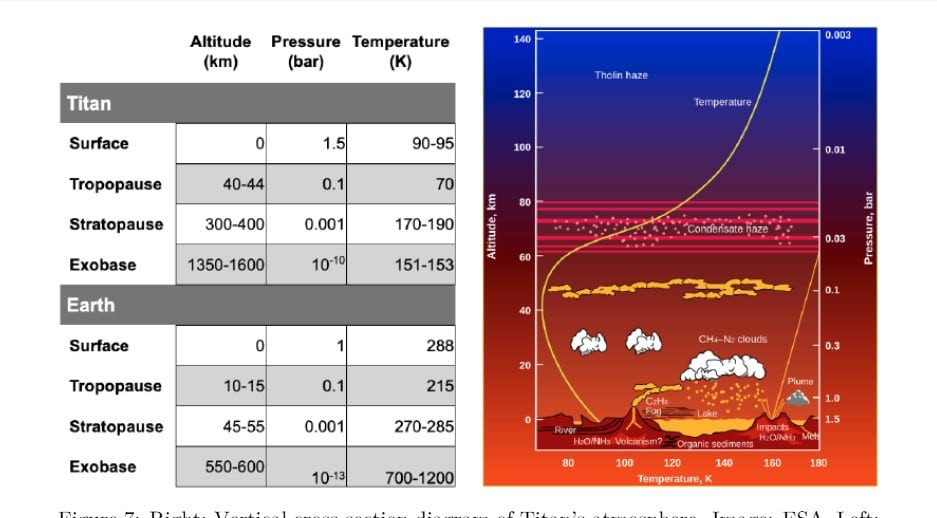
Known for its exotic environment, Titan features atmospheric dynamics and liquid flows unlike any other known moon. Instead of water cycling, Titan’s weather system revolves around methane, within a thick, nitrogen-dense atmosphere, creating a unique and complex setting.
Scientists have been intrigued by Titan’s chemical makeup and its implications for prebiotic chemistry and astrobiology. NASA’s Dragonfly mission, scheduled for launch no earlier than mid-2028, aims to investigate its surface and atmosphere, enhancing our grasp of this remarkable world.

Beyond pure scientific interest, attention has shifted toward Titan’s practical utility for human space exploration. The latest analysis evaluates Titan’s potential to serve as a strategic outpost facilitating deeper space travel.
Envisioning Titan as an Interplanetary Supply Station
The investigation, published in Acta Astronautica, was headed by Conor A. Nixon from NASA’s Goddard Space Flight Center, alongside collaborators Ye Lu and Jennifer E. Ruliffson from the Worcester Polytechnic Institute and University of Florida, respectively.
Focusing on in-situ resource utilization (ISRU), which emphasizes harnessing local assets instead of transporting everything from Earth, this team explored how Titan might complement or surpass traditional ISRU targets like the Moon and Mars.
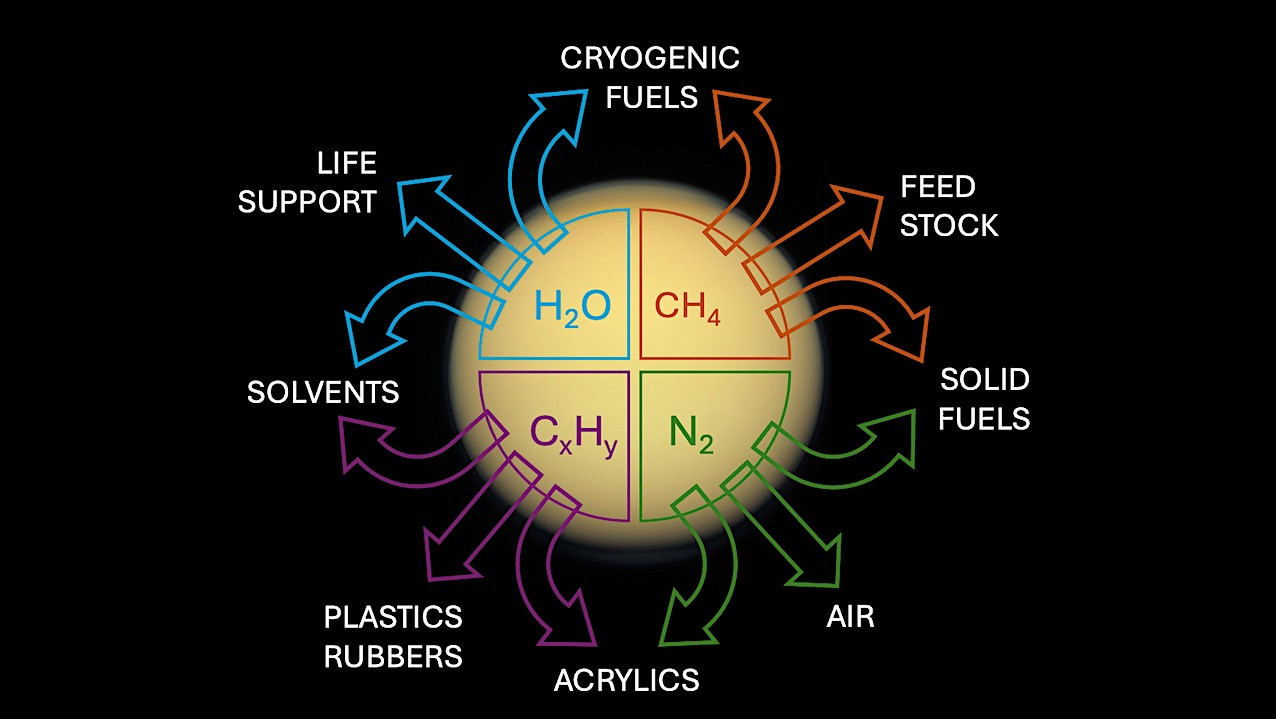
The findings reveal Titan’s atmosphere contains roughly 5% methane, supplemented by surface reservoirs of heavier hydrocarbons such as propane, butane, and other liquid organics.
These compounds could serve as versatile feedstocks not only for fuel but also for producing plastics, synthetic rubber, and chemical precursors critical to manufacturing processes. In an interview with Universe Today, Nixon described the vision:
“So let’s imagine a permanent station on Titan that refines hydrocarbons and stores them as a variety of feedstocks and raw materials: everything from printer ink to fertilizer.”
Methane as a Key Fuel for Saturn System Exploration
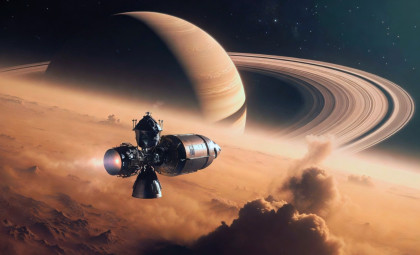
The abundance of hydrocarbons on Titan could underpin refueling points within the Saturnian system. The researchers propose establishing fuel depots both on Titan’s surface and in its orbit to aid spacecraft in replenishing supplies for missions to outer moons.
Building on a prior study by Geoffrey Landis and the Compass Lab at NASA’s Glenn Research Center, which focused on sample-return mission resources, Nixon’s group broadened the scope toward enabling diverse operational needs in space.
These proposed hubs could allow spacecraft to refuel and stock supplies before venturing to moons such as Enceladus and Mimas, further into the Saturn system.
Moreover, Titan could facilitate manufacturing capabilities, enabling the production of tools, spare components via 3D printing, textiles, and other necessities for exploration crews using its indigenous materials.
Water’s Crucial Role in Titan-Based Exploration
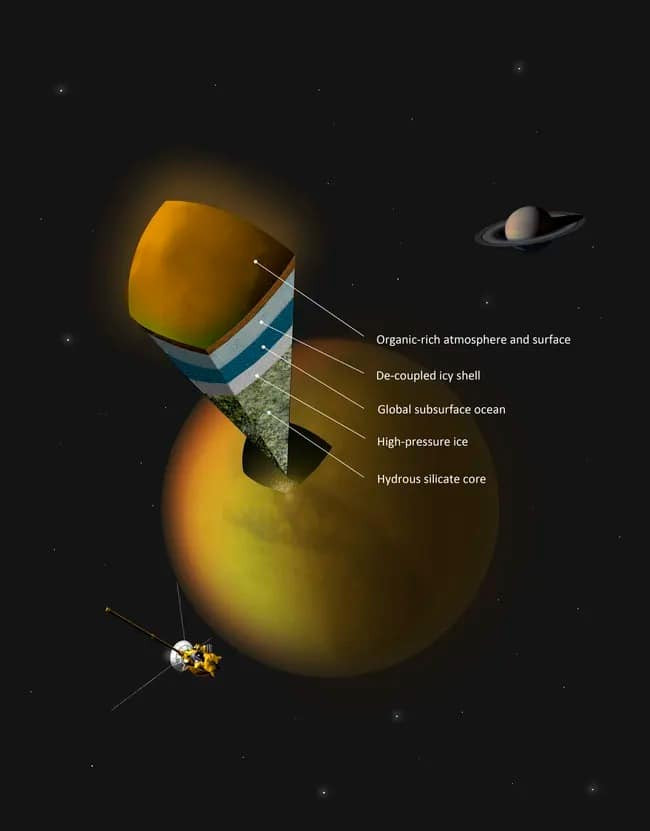
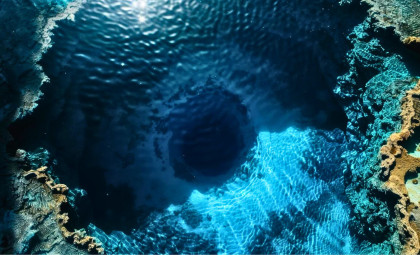
Aside from hydrocarbons, Titan’s significant water resources, which constitute approximately half its mass, amplify its value for extraterrestrial operations. The moon’s interior features a mix of surface ice and a deep hidden ocean beneath the crust.
This subsurface liquid is sustained by additives like ammonia and various salts, helping maintain it in a fluid state. Ice from the surface could be harvested for drinking water, and chemically processed into oxygen and hydrogen fuel.
The study highlights that water can be broken down to generate liquid oxygen (LOX) and liquid hydrogen (LH2), vital components of rocket propellant. As Nixon explained to Universe Today, Titan’s allure stems from its rare combination of a dense atmosphere, abundant hydrocarbons, and accessible water.
- Categories:
- Science





0 comments
Sign in to Comment