
A minuscule fossil uncovered in Queensland has transformed our understanding of the early evolution of Australia's carnivorous marsupial lineage. The newly identified species, Miyumba chrisdickmani, existed approximately 18 million years ago and is now recognized as the earliest known member of the Dasyuridae family, which today includes quolls, Tasmanian devils, and antechinuses.
Originating from the Riversleigh World Heritage Area in northwestern Queensland, one of the continent’s richest fossil deposits, this find stems from jaw fragments analyzed by researchers at the University of New South Wales. These fossils shed new light on a marsupial group whose origins have been previously unclear.
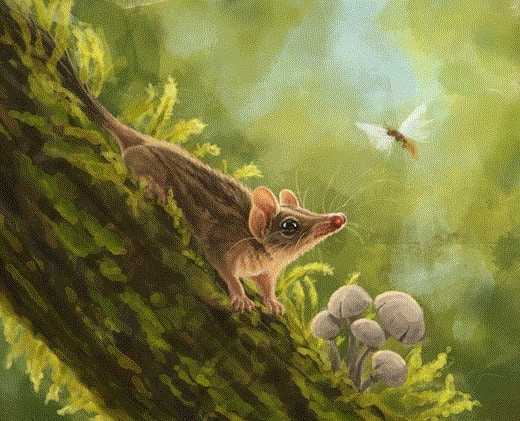
Living in Early Miocene rainforests, Miyumba chrisdickmani was a small predator, weighing between 23 and 33 grams. Its size parallels modern antechinuses and dunnarts, indicating that some of the earliest dasyurids were already adept, lightweight hunters.

The research team notes that the Dasyuridae family today includes 67 species across 21 genera. Unearthing such an ancient specimen offers valuable insights into the evolutionary beginnings of these marsupials.
Small Fossil Offers Vital Evolutionary Insight
Though only partial lower jaws were recovered, they bore crucial evidence. Scientists utilized micro-CT scans to examine the teeth intricately and compared them with numerous extinct and extant marsupial species.
The findings, published in Australian Zoologist, identified a unique dental trait shared by all recognized dasyurids. This represents the first definitive anatomical feature pinpointing the entire family.
Previously, researchers struggled to distinguish early dasyurids due to the lack of distinctive physical markers separating them from related marsupials. The dental characteristics now provide a new benchmark for tracing the family’s origins.
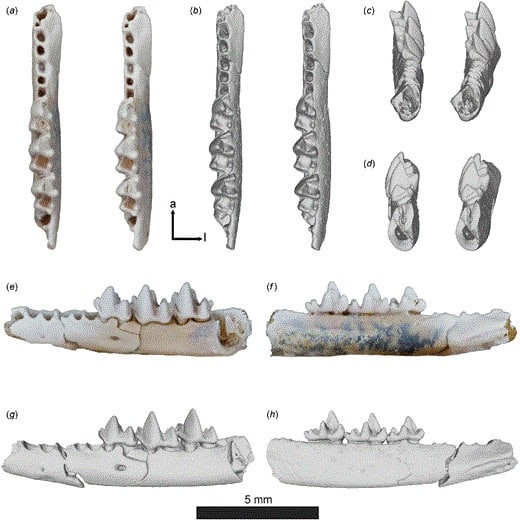
Analysis indicates this species diverged from other dasyurids earlier than any other known member, making it the most ancient and basal dasyurid identified to date.
An Older Origin for Dasyurids Than Previously Believed
This discovery also shifts the timeline of dasyurid development. Combining fossil data with genetic analyses of living marsupials, scientists propose the broader dasyurid lineage emerged around 25.6 million years ago.
This age is roughly three million years earlier than previously theorized. Although the fossil record contained later dasyurid species, Miyumba chrisdickmani confirms the family’s existence much deeper in Australia’s past.
“The fossil record contains 20 dasyurid species in eight genera that include living species and two genera that include only living species known from Australian Plio-Pleistocene deposits,” Dr. Timothy Churchill, the study’s lead author, and his colleagues from the University of New South Wales noted.
This species bridges the evolutionary gap between the family’s origins and the more recent fossils that are easier to classify, revealing that early dasyurids inhabited rainforest ecosystems millions of years ago.
Unraveling New Guinea’s Marsupial Connections
The fossil also provides insights into links between ancient Australian ecosystems and present-day rainforest species in New Guinea. The dental features of Miyumba chrisdickmani closely resemble those of today’s rainforest marsupials from New Guinea, particularly species within the genus Murexia.
“New Guinea has retained extensive rainforest cover since the Miocene, preserving a faunal assemblage that likely reflects the ecological structure of Sahul’s former lowland rainforests,” said the study authors.
The team emphasizes that New Guinea has maintained vast rainforest habitats since the Miocene, conserving fauna that may be reminiscent of the ecosystems across Sahul, the ancient land conglomerate linking Australia and New Guinea.
They propose that Miyumba chrisdickmani might represent one of several marsupial lineages once broadly distributed but subsequently confined to New Guinea.
- Categories:
- Science

0 comments
Sign in to Comment